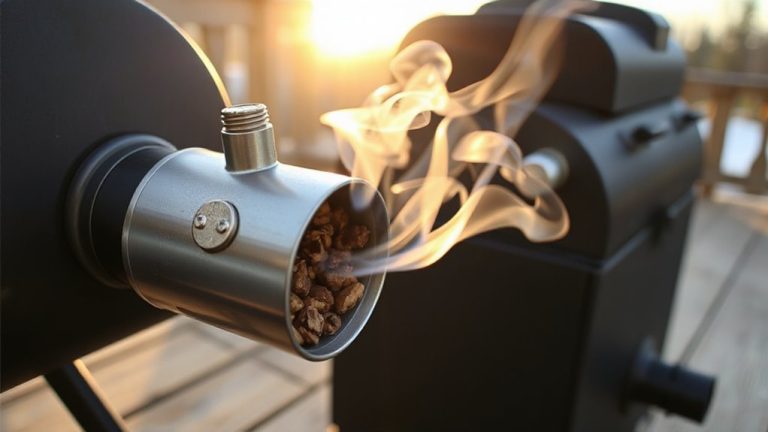
Smoking Oysters Directly on Charcoal Using Lemon-Infused Almond Wood Chunks
You should scrub oysters clean, then shuck them, keeping the cupped side down to preserve juices. Place them shell-side up on a bed of salt over indirect heat. Use a two-zone charcoal setup and add dry lemon-infused almond wood chunks directly to the coals-they burn clean and cool, delivering a mild, citrus-kissed smoke that complements, not masks, the oyster’s brininess. Smoke with the lid closed at 225°F–250°F until the edges curl and internal temp hits 145°F. Finish with citrus zest and fresh herbs for balance. There’s more to mastering the technique than just timing.
Notable Insights
- Prepare oysters by scrubbing shells and shucking carefully to retain natural juices.
- Set up a two-zone charcoal grill with indirect heat for even smoking and temperature control.
- Place dry lemon-infused almond wood chunks directly on coals for clean, citrus-kissed smoke.
- Smoke oysters shell-side up on a bed of salt at 225°F–250°F for 15–25 minutes.
- Serve when edges curl and internal temperature reaches 145°F, garnished with citrus zest and herbs.
Prep the Oysters for the Grill
While preparing your oysters for the grill, the key is guaranteeing they’re clean and properly stabilized to prevent tipping during smoking. You’ll want to scrub the shells thoroughly under cold water to remove any grit-this avoids contaminating the meat during cooking. For best results, use a reliable oyster shucking technique: insert the knife near the hinge, twist gently, and slide the blade to sever the adductor muscle. Keep the oyster cupped side down to preserve precious juice. Once opened, place them shell-side up on a bed of rock salt or a cast-iron plate to maintain balance. Proper grill temperature control is essential-aim for 225–250°F. Too hot, and the oysters toughen; too low, and they won’t cook evenly. These steps guarantee a tender, smoky finish every time.
Set Up Your Charcoal for Smoking
Since consistent heat is essential for properly smoked oysters, setting up your charcoal the right way makes all the difference. Proper charcoal arrangement guarantees steady heat control, preventing flare-ups and undercooking. Use the two-zone setup: stack lit coals on one side, leaving the other empty for indirect heat. This gives you flexibility and precision during the smoke.
| Zone | Purpose |
|---|---|
| Direct | For initial sear if needed |
| Indirect | Primary area for smoking |
| Coal Side | Maintains radiant heat |
| Empty Side | Allows gentle, even conduction |
Keep the grill lid on to trap smoke and regulate temperature. Adjust vents to fine-tune heat control-open for hotter burns, partially closed to lower temps. A well-planned charcoal arrangement transforms your grill into a convection-like oven, essential for delicate oysters. With stable heat, you’ll avoid rubbery textures and guarantee clean, smoky flavor development-no guesswork required. Choosing the right grill model can enhance this process, and reviewing the best charcoal grills helps ensure optimal performance and heat retention.
Smoke the Oysters With Lemon-Almond Wood
Once your grill’s two-zone fire is stable and the temperature holds steady between 225°F and 250°F, you’re ready to introduce the wood that’ll define the dish-leemon-infused almond wood. You’ll want to place a chunk directly over the coals; its low, steady burn delivers a refined smoke intensity-enough to flavor without overwhelming. Almond wood burns cleaner and cooler than hickory, making it ideal for delicate seafood. The citrus infusion complements briny notes in the oysters without masking them. As smoke gently curls around the shells, it seeps in, subtly transforming the oyster texture from slick to silken, never rubbery. This balance of smoke intensity and heat guarantees flavor builds gradually, enhancing rather than dominating. Unlike stronger woods, lemon-almond won’t require soaking and performs best when used dry. You’ll notice how evenly it chars and smolders, providing consistent airflow and flavor development critical for quality smoked oysters. For best results, choose from top-rated smoking woods that are specifically suited for seafood and light meats.
Know When Smoked Oysters Are Done
Perfectly smoked oysters strike a balance between patience and precision, rewarding careful observation with a rich, clean flavor and ideal texture. You’ll know they’re done when the edges just begin to curl and the flesh turns opaque, which usually takes 15 to 25 minutes over steady heat. For accuracy, perform an internal temperature check-the oysters should reach 145°F to guarantee they’re safe to eat without being overcooked. At this point, the meat firms up slightly but remains plump and juicy. A quick texture check confirms it: press gently with a fork, and it should offer mild resistance, not mushiness or toughness. Going beyond this stage risks rubbery results, so timing and attention matter. Unlike larger seafood, oysters cook fast, making real-time monitoring essential. Trust both the thermometer and tactile feedback-they’re your best guides to nailing that ideal smoke-to-tenderness ratio every time. For reliable results, use a digital instant-read thermometer calibrated for seafood.
Serve With Citrus and Herb Accents
You’ve pulled the oysters from the smoker at just the right moment-flesh opaque, edges lightly curled, and still juicy to the touch. Now, elevate that delicate smokiness with bright, complementary accents. A fine shower of citrus zest-lemon or bergamot-adds vibrancy without overwhelming the briny richness. The oils in the zest burst upon contact, releasing aromatic top notes that cut through the smoke. Follow with a sparse herb garnish: micro cilantro, dill fronds, or chervil lend freshness while preserving the oyster’s star role. Avoid heavy applications; subtlety maintains balance. These accents aren’t mere decoration-they’re functional enhancements, sharpening flavor dimensions and bridging the gap between fire-kissed depth and oceanic sweetness. In outdoor cooking, where bold techniques dominate, such refined touches distinguish excellent from average. A well-placed citrus zest and thoughtful herb garnish demonstrate mastery not just of heat, but of harmony.
Why Lemon-Infused Wood Beats Other Woods?
Why does the choice of wood matter so much when smoking oysters? Because the wrong wood overwhelms their delicate taste, but lemon-infused almond wood nails the citrus smoke balance. You want subtle citrus notes that lift the briny sweetness, not mask it. Other woods often have high wood flavor intensity, clashing with the oyster’s natural finesse. With lemon-infused almond wood, you get mild smoke richness enhanced by bright citrus undertones-perfect for seafood.
| Wood Type | Wood Flavor Intensity | Citrus Smoke Balance |
|---|---|---|
| Hickory | High | Poor |
| Mesquite | Very High | None |
| Apple | Medium | Fair |
| Oak | Medium-High | Poor |
| Lemon-Infused Almond | Low-Medium | Excellent |
You’ll notice cleaner flavors, better complexity, and a finish that lingers pleasantly. It’s not just different-it’s better.
On a final note
You’ve now seen how smoking oysters over charcoal with lemon-infused almond wood delivers rich, nuanced flavor unmatched by milder woods. The smoke penetrates evenly, complementing the briny meat without overpowering it. This method outperforms gas or electric smokers in depth of taste, while the wood’s citrus notes enhance natural oyster sweetness. For backyard chefs seeking bold results, this technique offers reliable, restaurant-quality outcomes with minimal equipment.