Mastering the Art of Flipping Fish Fillets on an Outdoor Grill
Choose firm, thick-skinned fish like halibut or swordfish-they hold up better on the grill. Dry the fillets well, then oil both the fish and preheated grates to prevent sticking. Keep your grill at 375–400°F for a clean sear that releases easily. Use a thin, flexible metal spatula and flip just once, with confidence. If the fish resists, it’s not ready-wait for it to let go. You’ll soon see why technique makes all the difference.
Notable Insights
- Choose firm-textured fish like halibut or swordfish to prevent breaking during flipping.
- Dry fillets thoroughly and oil both fish and grates to minimize sticking.
- Preheat grill to 375–400°F for optimal searing and natural release.
- Use a thin, flexible metal spatula to slide under fillets without tearing.
- Flip only once, using a swift motion, after the fish releases easily from the grates.
Choose Fish That Flip Easily
While some fish are better suited for careful spoon-turning than bold flips, you’ll save yourself frustration and a broken fillet if you pick species that hold together well on the grill. You want firm-textured fish like halibut, swordfish, or mahi-mahi-these handle high heat without falling apart. Skin thickness matters: thicker skin acts like a protective layer, helping the fillet stay intact and simplifying the flip. Thin-skinned fish, like sole, often stick or tear under direct flame. Bone content also plays a role; lower bone content means more uniform structure and better grill stability. Fish with fewer small bones, such as cod loins or tuna steaks, respond well to grilling and tolerate turning. Avoid delicate, highly segmented species unless you’re using a grate or plank. Choosing the right fish isn’t just preference-it’s the foundation of a clean, confident flip every time.
Prep Fillets for a Clean Flip
You’ve picked a sturdy fish that can handle the heat and stay whole on the grill, but that’s only half the battle-how you prepare the fillet makes all the difference in securing a clean flip. Start by drying the surface; moisture causes sticking. Seasoning properly isn’t just about flavor-it helps form a light crust that supports structural integrity. Don’t skip oiling grates, a non-negotiable step for a clean release. Use a high-smoke-point oil and a folded paper towel held with tongs to coat evenly. Flip only when the fish lifts easily; resistance means it’s not ready.
| Step | Purpose | Best Practice |
|---|---|---|
| Dry fillets | Reduce sticking | Pat with paper towels |
| Seasoning properly | Enhance flavor & texture | Apply evenly, pre-grill |
| Oil fillets | Prevent adhesion | Light coat on flesh side |
| Oiling grates | Protect grill & fish | High-heat oil, even layer |
| Preheat grill | guarantee proper sear | 5–10 minutes on high |
Heat the Grill Perfectly for Easy Flipping
Getting the heat right means the difference between a flawless flip and a frustrating mess on the grates, so don’t underestimate how essential temperature control is when grilling delicate fillets. You’ll want a preheated grill with a stable grill temperature around 375–400°F-hot enough to sear but not so high that the fish sticks or curls. This sweet spot guarantees quick development of a crisp exterior while protecting the tender interior. Always apply a light oil coating to both the grates and fillets; it reduces surface tension and promotes even browning. A well-oiled grate at ideal temperature prevents tearing, letting the fish release naturally when ready. Too cool, and the fillet absorbs grease and drags; too hot, and it scorches before flipping. Consistent grill temperature isn’t just ideal-it’s non-negotiable for success. Trust the process, not guesswork.
Use the Right Spatula to Flip Without Tears
A thin, flexible metal spatula is your best ally when flipping fish fillets, and skipping it risks leaving half the catch stuck to the grates. The right spatula material-preferably stainless steel or tempered aluminum-provides durability and a firm edge that slides easily under delicate flesh without tearing. Flexible enough to glide beneath a flounder, yet stiff enough to offer control, it balances precision and strength. Equally important is grip comfort; a contoured, heat-resistant handle reduces hand fatigue and prevents slips, even when grill temperatures soar. Poor grip comfort can undermine a confident flip, leading to hesitation or missteps. Look for ergonomic designs with non-slip textures, ideally with a slight weight balance toward the blade for better maneuverability. While silicone or plastic tools may suit vegetables, they lack the structural integrity fish demands. Invest in a well-made metal spatula-you’ll notice the difference in control, consistency, and cleanup after every use. Just as selecting the right best knives for deer butchering ensures precision in game processing, choosing a high-quality spatula is essential for maintaining the integrity of delicate fish fillets on the grill.
Flip Once: And Do It Confidently
Wait until the fish releases easily from the surface before attempting the flip-it’s a telltale sign that proper searing has occurred and the time has come. Flipping once isn’t just a guideline; it’s a principle rooted in timing precision and heat control. When you delay or hesitate, you risk tearing delicate flesh or creating uneven cooking. But with a confidence mindset, the motion becomes fluid and effective. Use a firm wrist and a sturdy spatula, sliding it fully beneath the fillet before making one swift, decisive turn. This technique preserves structure and locks in moisture. Repeated flipping disrupts protein coagulation and leads to sticking, even with oil-rich fish. Grilling outdoors demands patience and attentiveness-two traits that define successful BBQ. Trust the process: let the grill do its work, then commit fully. One flip, done right, delivers ideal texture, color, and flavor every time.
Fix Sticking, Tearing, or Falling Apart
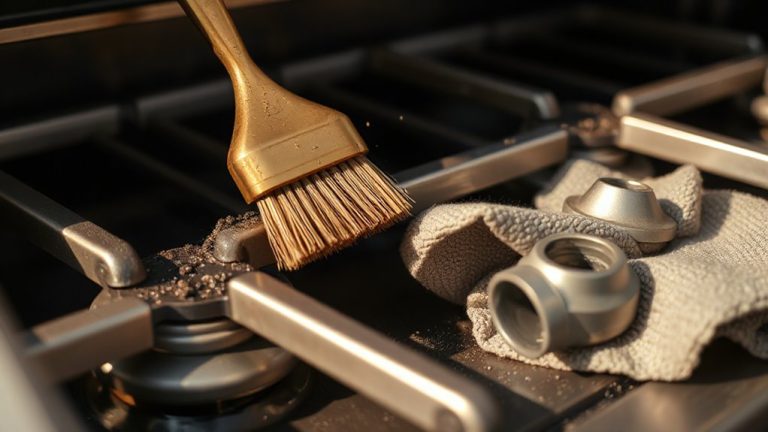
Sticking, tearing, or fish falling apart on the grill isn’t just frustrating-it’s usually preventable. The problem often starts with poor prep: if your grates have built-up oil residue or inconsistent grill texture, delicate fillets will catch and rip. Always clean the grill thoroughly before cooking; use a stiff brush to remove gunk and guarantee even heat distribution. A well-maintained best grill brushes for safe, easy cleaning ensures your grates stay in top condition for delicate foods. Preheat the grill so the metal expands and creates a naturally smoother surface. Lightly oil the fish, not the grates-this gives better control and reduces sticking. Opt for firmer fish like salmon or halibut if you’re new to grilling; they handle heat better. And let the fillet sear fully before flipping-rushing causes tears. With clean grates, proper heat, and patience, you’ll preserve both the meal and your confidence.
On a final note
You’ve got this: picking firm fish like halibut, prepping skin properly, and heating the grill to a steady 375–400°F sets you up for success. A wide, thin spatula gives leverage, and one confident flip prevents tears. When sticking happens, it’s usually timing-wait for natural release. Flipping fillets well isn’t luck; it’s technique backed by heat control and tool choice. Master these, and your grilled fish will consistently come out intact, flavorful, and impressively professional.