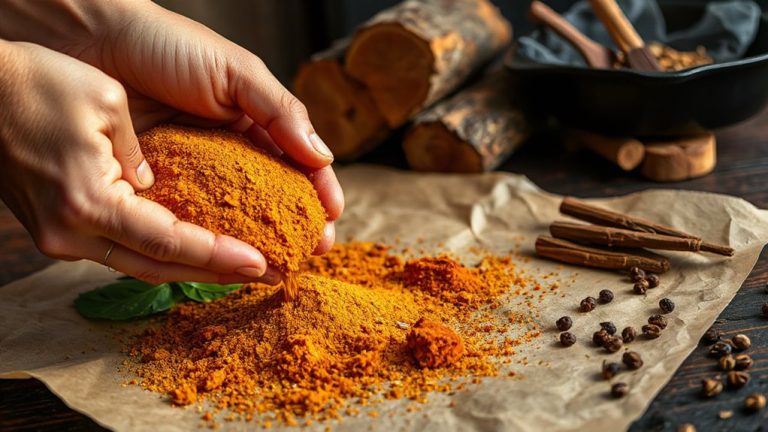
A Comprehensive Approach to Crafting Flavorful Marinades for All Types of Outdoor Cooking
You’ll get the best results by balancing oil, acid, and seasonings in your marinade-use a 3:1 oil-to-acid ratio to tenderize without mushiness. Match bold flavors like soy or garlic to beef, while chicken loves citrus and herbs. Marinate delicate proteins for 30 minutes to 2 hours; tougher cuts can go longer. Always use non-reactive containers and pair marinades with complementary woods when grilling. You’ll discover how global spice blends and smart technique can elevate every outdoor meal.
Notable Insights
- Balance oil and acid in a 3:1 ratio to enhance flavor penetration and moisture retention during outdoor cooking.
- Match marinade ingredients to protein type, such as citrus for chicken or soy and ginger for beef.
- Limit marinating time for delicate proteins like fish to 30 minutes, while tougher cuts can marinate up to 12 hours.
- Use non-reactive containers and ensure marinade coats meat evenly without pooling for consistent flavor.
- Pair global marinade profiles with complementary grilling techniques and wood types to maximize aroma and taste.
Master the 4 Essentials of a Great Marinade
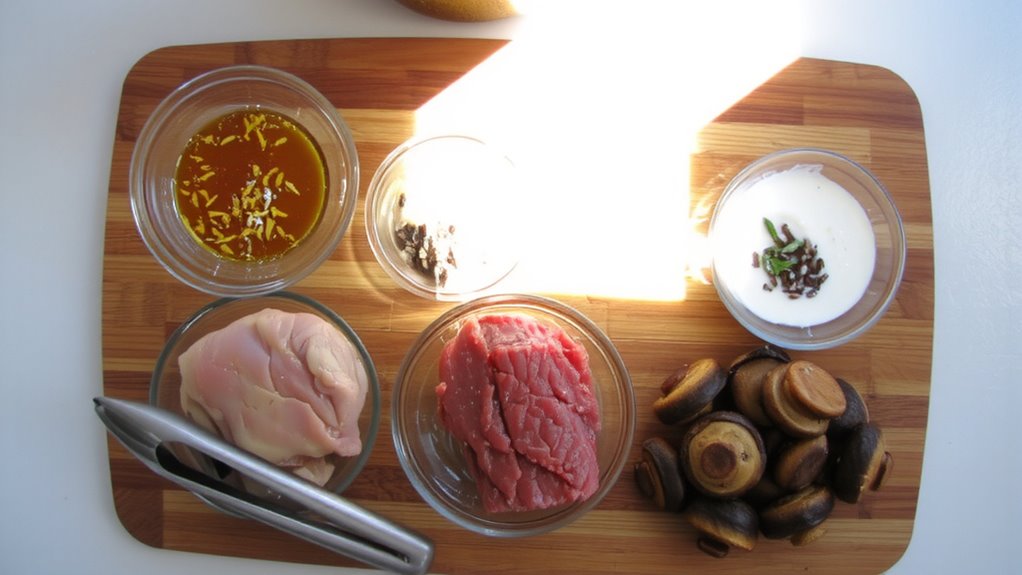
While you might think marinating is just about soaking meat in a flavorful liquid, getting it right actually depends on balancing four key components-acid, oil, seasonings, and time. You need acid, like vinegar or citrus, to begin breaking down proteins, but too much can make your meat mushy. Oil carries flavor and helps maintain moisture, especially over high heat. Your seasonings-herbs, spices, garlic, mustard-build complexity through flavor layering, creating a more dynamic taste profile. Marinade consistency matters: it should coat, not pool, ensuring even coverage without washing away taste. Time varies by cut and density, but even 30 minutes can make a difference. For outdoor cooking, where direct heat can dry meat quickly, a well-balanced marinade improves both tenderness and taste. Skip the guesswork-master these essentials, and you’ll elevate every BBQ outcome with precision and confidence. For those short on time, Best Bottled Marinades for Chicken offer a convenient and consistently flavorful alternative.
Match Marinades to Your Meat: Chicken, Beef, Pork, and More
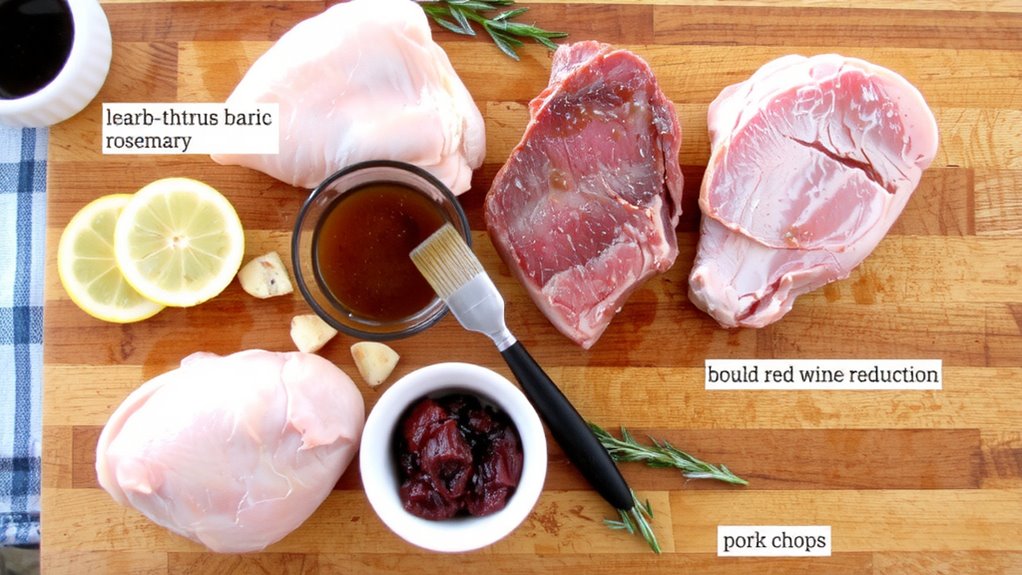
Think of your protein as a canvas-each type absorbs and reacts to marinades differently, so choosing the right blend isn’t just about flavor, it’s about chemistry. For chicken, go with acidic components like lemon juice or vinegar; they help tenderize lean meat while delivering bright notes that enhance, not overpower. Beef handles bold flavors well-rich soy stringstream, garlic, and robust herbs create excellent flavor pairing without masking its natural savoriness. Pork’s slight sweetness welcomes contrasting elements like ginger or apple cider, improving marinade compatibility through balance. Lamb works best with aromatic herbs like rosemary or mint, which cut through its richness. Delicate fish? A short soak in citrus or olive oil preserves texture while boosting taste. Choosing your marinade based on these principles guarantees your outdoor cooking results in well-matched, deeply layered dishes every time. Marinade compatibility isn’t just smart-it’s essential. For convenient yet flavorful results, consider trying a top premade chicken marinade that combines balanced acidity and seasoning for optimal tenderness and taste.
Choose the Right Marinating Time for Tender, Juicy Results
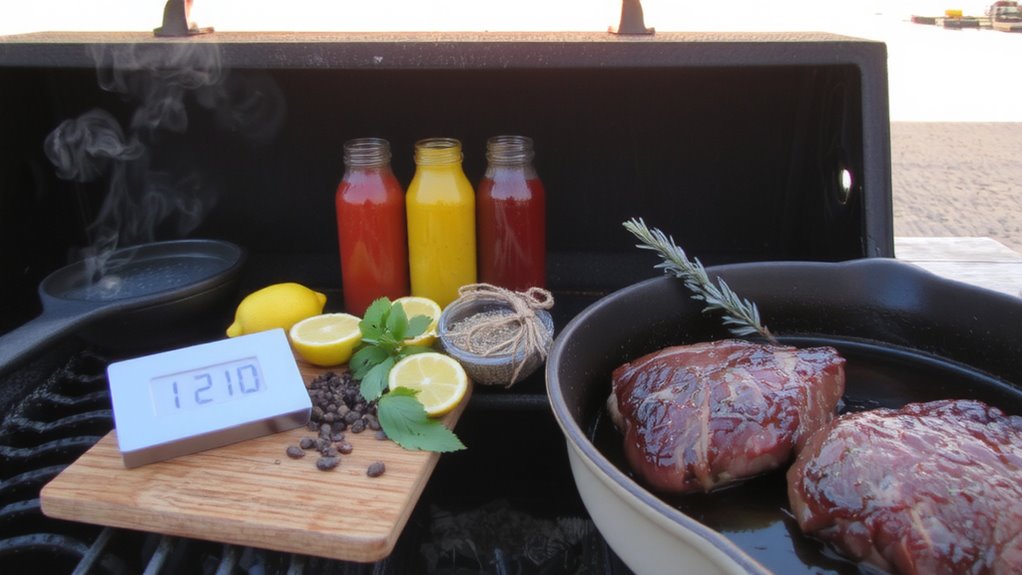
Since marinating too long can ruin texture as easily as too little time can leave flavor flat, getting the duration right is key to achieving tender, juicy results on the grill. You’re not just adding taste-you’re enabling flavor diffusion, the slow process where seasonings penetrate the meat’s surface. For most cuts, 30 minutes to 12 hours is plenty; delicate proteins like chicken breast or fish need only 30 minutes to 2 hours, while tougher steaks or pork shoulder benefit from longer exposure. Don’t fall for marinating myths suggesting more time always equals better flavor-over-marinating, especially in acidic blends, can turn textures mushy. Think of it as a timing sweet spot, not a race. Your marinade’s strength, the meat’s density, and cooking method all influence ideal duration. With thoughtful timing, you’ll maximize both juiciness and depth without compromising structure.
Balance Oil, Acid, and Time for Better Marinades
When it comes to building a marinade that truly elevates your grilled dishes, getting the ratio of oil, acid, and marinating time just right makes all the difference. You’ll want to balance acidic ingredients like vinegar or citrus juice with enough oil to coat and protect the protein-typically a 3:1 ratio of oil to acid works best. Different oil types, such as olive, avocado, or sesame, not only carry flavor but also influence texture and smoke point. Always use non-reactive marinating containers like glass or food-grade plastic to avoid unwanted metallic tastes. Over-marinating, especially with strong acids, can toughen proteins, so timing matters as much as ingredients. For most meats, 30 minutes to 12 hours is ideal. This balance guarantees flavor penetration, moisture retention, and a better sear-all key markers of skillful outdoor cooking.
Add Global Flair: Mediterranean, Asian, and Latin Marinades
You’ve got the foundation-oil, acid, and timing-working in harmony to tenderize and flavor your proteins, but now it’s time to let your marinades travel. Elevate your outdoor cooking by embracing global profiles that transform familiar cuts into exciting dishes. A Mediterranean blend might use olive oil, lemon, and Harissa paste for heat, while Latin versions lean on citrus and cumin. For Asian-inspired flair, a rich soy glaze balances sweetness and umami, ideal for chicken or tofu. These profiles aren’t just flavor-they reflect time-tested techniques that maximize taste and texture.
| Region | Key Ingredients | Best For |
|---|---|---|
| Mediterranean | Harissa paste, oregano, lemon | Lamb, chicken |
| Asian | Soy glaze, ginger, sesame | Beef, tofu, pork |
| Latin | Lime, garlic, cumin | Steak, shrimp |
Grilling and Smoking Marinade Tips for More Flavor
While marinades lay the groundwork for flavor, how you apply heat can make or break the final result-grilling and smoking aren’t just cooking methods, they’re flavor amplifiers. You need precise grill temperature control; too high, and you burn off delicate notes, too low, and the marinade never caramelizes. Aim for 325–375°F when searing marinated meats to lock in juices and develop that rich crust. Charcoal selection matters just as much-use lump charcoal for hotter, cleaner burns or briquettes for steady, long burns during smoking. Hickory or mesquite adds boldness, while fruitwoods like apple pair better with sweeter marinades. Don’t flare-up by placing wet marinade-heavy items directly over flames. Instead, start over indirect heat, then finish with a sear. Proper heat management transforms your marinated proteins into deeply flavored, restaurant-quality results every time. For optimal results, consider using one of the best charcoal grill smokers, as they offer superior heat retention and smoke distribution. best charcoal grill smokers
Safely Turn Used Marinade Into Serving Sauces
Though you might be tempted to pour that leftover marinade over your grilled protein for extra flavor, doing so without proper precautions could introduce harmful bacteria from raw meat juices. To guarantee safety, always practice marinade pasteurization by bringing used marinade to a rolling boil for at least one minute-this kills pathogens and makes it safe for serving. Never reuse marinade as a sauce without this step, as it’s a critical part of cross contamination prevention. Consider reserving a portion of fresh marinade before adding raw meat if you want a ready-to-use sauce. This method preserves flavor while eliminating risk. Pasteurized marinade can enhance grilled dishes with depth and gloss, but only if handled correctly. Proper technique doesn’t just protect health-it elevates your outdoor cooking game with both safety and sophistication.
On a final note
You’ve now got the tools to build better marinades, no matter what you’re grilling. Balancing oil, acid, and flavor isn’t just science-it’s smart cooking. Matching proteins to marinades and timing them right guarantees juicy, tender results every time. Whether you’re smoking ribs or searing skirt steak, these principles hold. And with global flavors and safe sauce techniques, your outdoor cooking gains both depth and versatility. Simple changes make a real difference.