Cooking for Large Groups: Scaling Campfire Recipes for 10+ People
You’ll need durable tools like cast-iron pots, griddles, and long-handled tongs to handle the scale. Set up a two-zone fire for better heat control and place prep surfaces downwind to avoid ash. Pre-chop ingredients at home and store them in sealed, organized containers. Stick to one-pot meals like chili or Dutch oven stews-they’re reliable and feed crowds evenly. Foil packets simplify serving and cleanup. You’ll also want to know how to keep food safe and warm as people arrive at different times.
Notable Insights
- Use durable, large-scale tools like cast-iron Dutch ovens and griddles to efficiently cook for 10+ people over a campfire.
- Prep and pre-portion ingredients at home to minimize on-site work and reduce contamination or cooking delays.
- Opt for one-pot meals like chili or stews and foil packet servings to simplify cooking and feeding large groups.
- Set up a two-zone fire for versatile heat control, allowing searing and slow cooking simultaneously.
- Organize a safe, clean cooking area downwind with separate zones for raw and cooked foods to prevent cross-contamination.
Set Up Your Campfire Cooking Station for 10+ People
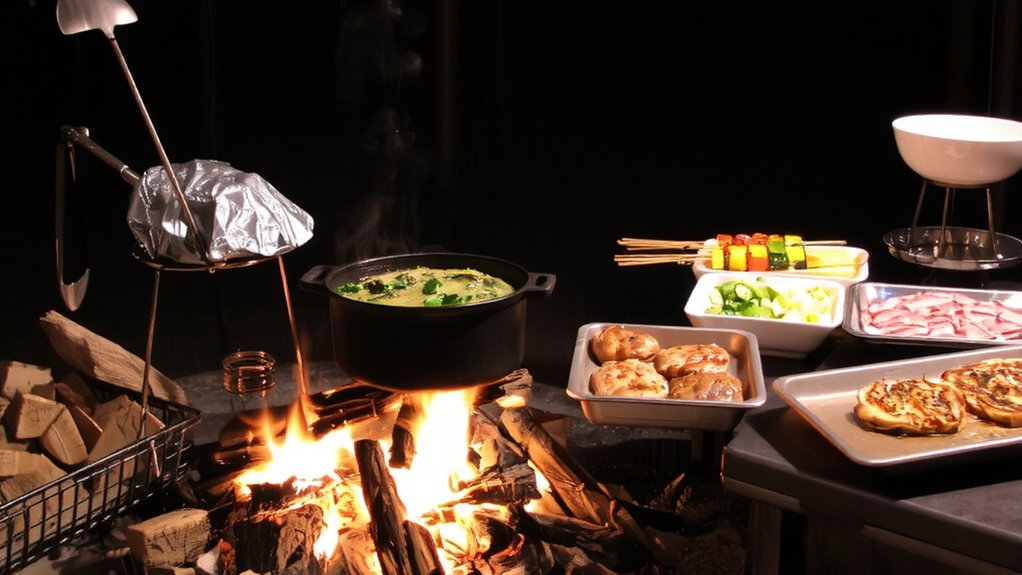
With camp cooking for over ten people, the key to success starts long before the fire is lit-it begins with a well-organized cooking grinding built for efficiency and safety. You’ll need durable cooking tools arranged within easy reach: griddles, long-handled spatulas, tongs, and cast-iron pots that handle high heat. Position your prep table downwind to avoid ash contamination, and keep raw ingredients separated from cooked foods. Fire safety is non-negotiable-maintain a clear perimeter around the fire, have water or sand nearby, and never leave flames unattended. Use a stable grill grate and monitor flare-ups, especially when fats drip. A well-placed fire reflect grinding boosts heat control, reducing fuel waste. This setup scales smoothly, allowing multiple cooks to work without crowding. Proper organization minimizes accidents and maximizes output. When the station supports workflow and fire safety from the start, your entire meal benefits-hot food, calm team, and fewer surprises. For consistent results, choose one of the best campfire grills that can handle high-volume cooking with even heat distribution.
Choose Recipes That Work for Big Groups
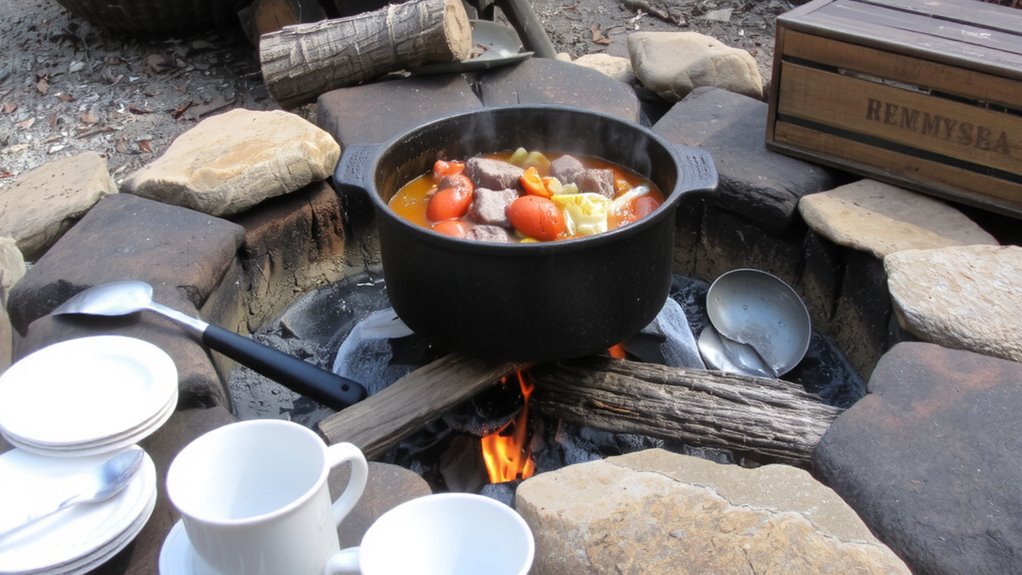
Since large-group cooking demands efficiency without sacrificing flavor, you’ll want to choose recipes that scale well and rely on simple, proven techniques-think one-pot stews, foil packet meals, or grilled kebabs that cook evenly over open flame. Dishes like Campfire chili are ideal because they deepen in flavor over time and feed a crowd with minimal equipment. You can simmer a big batch over coals with little stirring, making it forgiving and hands-off. A Dutch oven stew is another top performer-layer ingredients once, cover, and let the coals do the work. It retains moisture evenly and handles diverse ingredients without breaking down. Both recipes tolerate ingredient adjustments, essential when feeding varied tastes. They also reheat well, stretching meals across days. Avoid finicky foods that require precise timing or constant attention. Stick to hearty, flexible dishes that thrive in the unpredictable campfire environment.
Prep Ingredients Before You Hit the Campsite
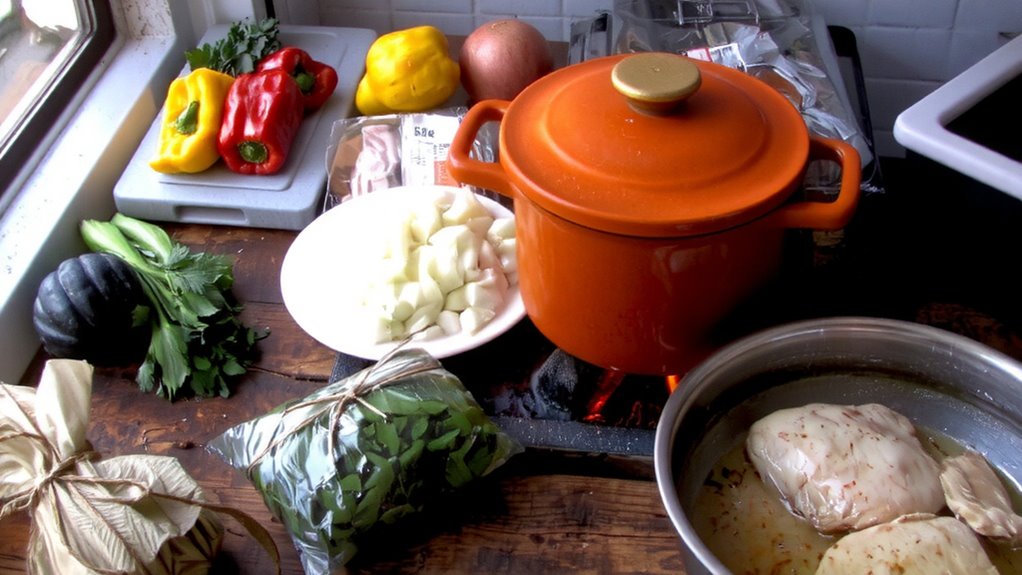
If you want to save time and reduce stress at the campsite, prepping your ingredients at home is the smartest move. Meal planning becomes far more effective when you’ve already diced vegetables, measured spices, and pre-portioned proteins. This level of ingredient organization prevents cross-contamination, speeds up cooking, and minimizes mess in the field. Instead of juggling knives and cutting boards on uneven ground, you’ll simply unpack containers and start cooking. Vacuum-sealed bags or rigid, stackable bins keep items fresh and accessible. For large groups, this preparation cuts down on errors and guarantees consistency across batches. While some foods, like lettuce or delicate herbs, are best prepped fresh, most ingredients tolerate pre-trip handling without quality loss. Proper packaging also reduces exposure to pests and moisture. When cooking over open flames, having everything ready lets you focus on heat control and timing. Smart prep isn’t just convenience-it’s a cornerstone of efficient, safe campfire cooking. Using a reliable best vacuum sealer for deer meat ensures game meat stays fresh and protected during transport and storage.
Manage Heat and Timing for Large Batches
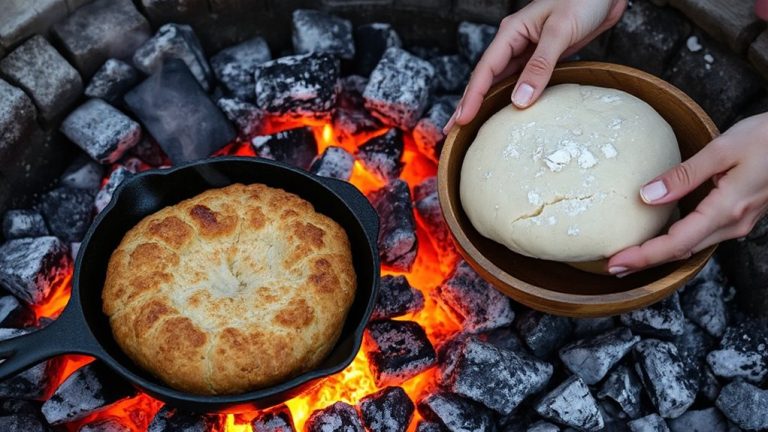
Though you might be tempted to crank up the heat to feed a crowd quickly, managing fire intensity is essential when cooking large batches over a campfire. Proper heat control prevents scorching and guarantees even cooking across bulk portions. Instead of one roaring flame, use a two-zone fire setup-hot for searing, cooler for slow cooking. This allows you to adjust placement based on real-time needs. A consistent cooking rotation lets each batch cook evenly while keeping food warm without overcooking. Rotate pans or grills every few minutes, especially near edges where temperatures vary. Cast iron holds heat well but requires monitoring to avoid hot spots. Adjust airflow or add logs gradually to maintain steady output. Mastering heat control and cooking rotation reduces waste, improves taste, and keeps meals on schedule-critical when serving 10 or more. These techniques elevate campfire cooking from chaotic to reliable. For protein-rich meals, consider using high-quality natural casing hot dogs, which offer superior texture and flavor when grilled over open flames.
Cook One-Pot Meals and Foil Packets for 10
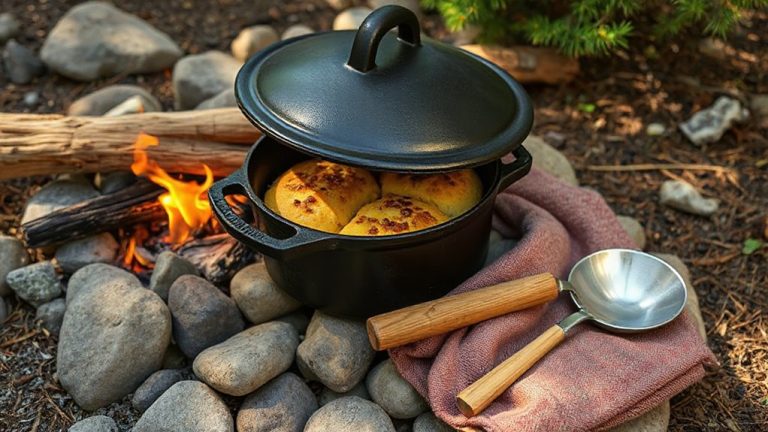
Managing your fire setup carefully means you’re already halfway to feeding a group efficiently, but when it comes to simplifying cleanup and streamlining cooking, one-pot meals and foil packets are your best tools for serving 10 without added stress. Use a large cast iron Dutch oven for stews or pasta-its even heat retention prevents scorching. For individual servings, wrap meats and veggies in heavy-duty aluminum foil; this locks in moisture and minimizes mess. You can stack multiple packets directly in the coals or on a grate. Cast iron requires seasoning and care, but it lasts decades. Aluminum foil is disposable but effective for quick turnover. Below are common uses:
| Method | Best For |
|---|---|
| Cast iron | Chili, soups, baked beans |
| Aluminum foil | Fish, potatoes, grilled veggies |
| One-pot simmer | Rice dishes, curries |
| Foil grilling | Sausages, corn on the cob |
| Bulk sauté | Stir-fries, scrambled eggs |
Keep Food Safe and Warm for Late Arrivers
After your meal finishes cooking, keeping it both safe and warm for stragglers isn’t just convenient-it’s essential. Proper temperature control prevents bacterial growth, especially critical when serving ten or more. You’ll want to keep hot foods above 140°F, the threshold for food safety. A covered Dutch oven nestled in warm coals or a chafing dish over a small flame works well, maintaining consistent heat without scorching. Insulated coolers can hold heat too-if you pre-warm them with hot water first. Aluminum foil traps steam but isn’t enough alone; it lacks sustained temperature control. For longer waits, rotate dishes to the edge of the fire, where residual warmth gently sustains heat. Relying on guesswork risks food safety, so use a reliable thermometer to monitor internal temps. Smart prep and steady observation guarantee everyone eats well-on time or late-without compromise.
On a final note
You’ve got the tools and strategies to cook well for ten or more at the campfire. One-pot meals and foil packets save time and cleanup. Proper prep, heat management, and food safety make the difference between chaos and success. While outdoor cooking demands more planning than indoor, the results-flavorful, communal, and resilient-are worth it. With practice, scaling campfire recipes becomes efficient and reliable, turning group meals into highlights of any adventure.