The Essential Role of Salts in Elevating the Flavor Profile of Your Grilled Dishes
You’re not just seasoning-you’re transforming your meat when you salt ahead of grilling. Salt draws out moisture, then pulls it back in seasoned, boosting juiciness and tenderness. It dries the surface for a better sear and accelerates the Maillard reaction, building a rich, flavorful crust. Kosher salt is your best bet for even coverage, though smoked or sea salt can elevate certain cuts. Time it right-40 minutes or more-and you’ll see how deeply flavor and texture improve. There’s more to mastering this than just sprinkling and searing.
Notable Insights
- Salt enhances flavor by penetrating meat and improving taste perception through controlled seasoning timing.
- Proper salting draws out moisture, then reabsorbs it, boosting juiciness and tenderness before grilling.
- Salt promotes a better sear by reducing surface moisture, enabling faster Maillard browning and crust development.
- Kosher salt is ideal for even application and controlled dissolution, preferred for consistent grilling results.
- Pairing salt types-like smoked or sea salt-with meats elevates depth, texture, and overall flavor complexity.
Why Salt Makes Grilling Better
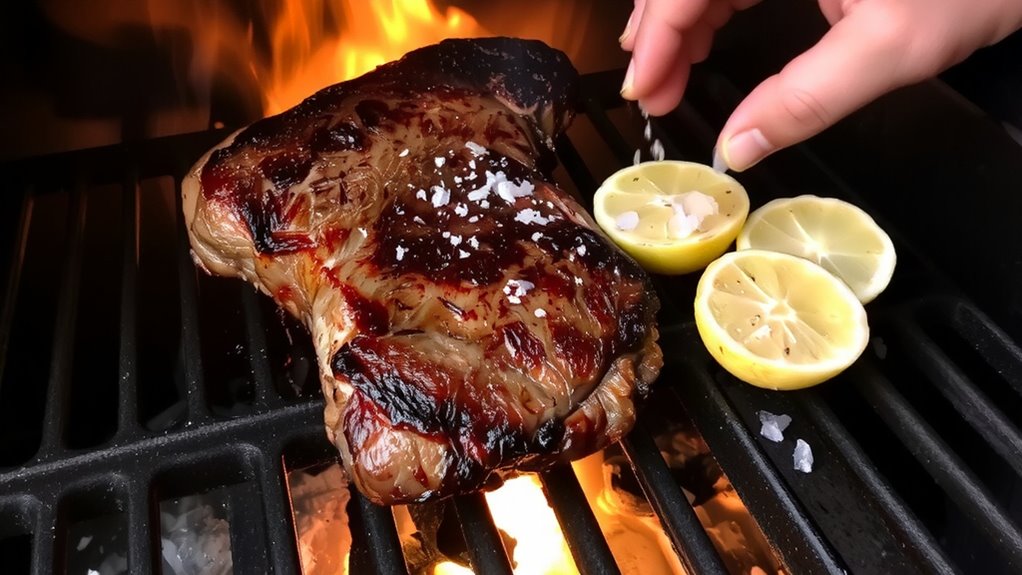
While you might think seasoning your meat before grilling is just about flavor, salting actually transforms the entire cooking process in ways that go beyond simple taste. When you apply salt, it initiates a process rooted in salt chemistry-drawing out moisture, then reabsorbing it along with the salt, which enhances juiciness and tenderness. As heat reaction takes place on the grill, this pre-salted meat develops a better sear, thanks to improved surface drying and more efficient Maillard browning. You’ll notice the crust forms faster and more evenly, locking in savory depth. It’s not just tradition; it’s science. Proper salting changes the protein structure, yielding meat that’s flavorful, moist, and texturally superior. Skip it, and you’re missing a key performance factor. Whether you’re using table salt or flaky sea salt, understanding this interaction gives you control, turning a basic cook into a reliable, high-quality result every time. For best results, consider using best salt for steak based on expert recommendations.
When to Season: Timing Secrets for Juicy, Flavorful Results
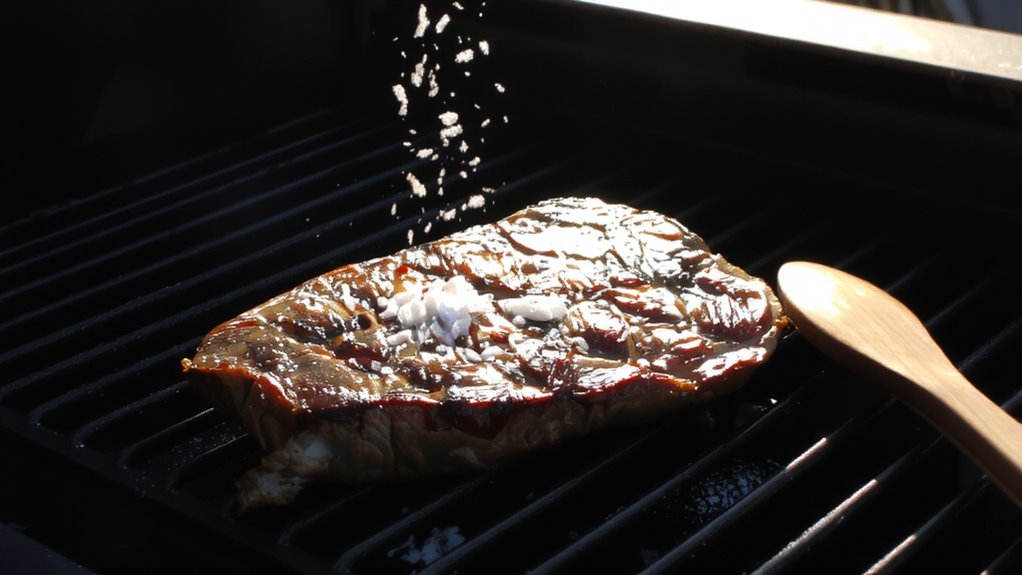
When should you actually salt your steak or chicken before it hits the grill? For the best results, season at least 40 minutes ahead-this gives salt time to draw out moisture, then pull it back in, enhancing flavor and texture. If you’re using a marinade, allow a solid 2 to 12 hours for effective marinade infusion, especially with poultry or tougher cuts. The ideal resting period post-seasoning is vital; it lets the salt dissolve and penetrate, improving juiciness. Avoid seasoning right before grilling-this only leads to surface moisture and uneven flavor. While some prefer overnight salting for deep seasoning, a well-timed 1-hour pre-salt often delivers excellent balance. This approach supports better moisture retention and uniform taste without drying out the meat. Proper timing isn’t just detail-oriented-it’s essential for consistently flavorful, juicy results. For best results, use a high-purity coarse kosher salt specifically recommended for brining and seasoning meats.
How Salt Creates a Better Crust on the Grill
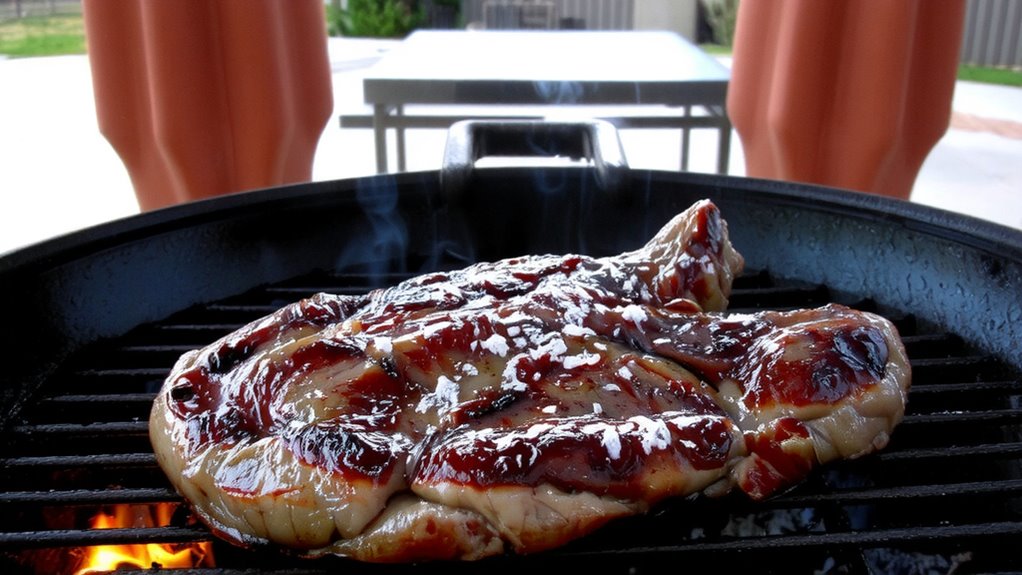
Since salt draws moisture to the surface and jumpstarts protein breakdown, it sets the stage for a deeper, more consistent sear the moment your steak hits the griddle or grill. That initial sizzle? That’s the start of superior crust formation. As the surface moisture evaporates, proteins denature and bond, creating a rich, flavorful exterior. Salt enhances this process by promoting even browning and reducing excess surface water, which can hinder the Maillard reaction. But it’s not just about browning-salt also improves moisture retention within the meat. By dissolving myosin, a key muscle protein, it helps the interior stay juicy, even under high heat. You’re not just seasoning; you’re engineering texture. A properly salted cut delivers a crisp, caramelized crust without sacrificing tenderness. Skip this step, and you’ll likely end up with pale, steamed edges instead of the robust, complex crust you want. Proper salting is essential for grilling success.
Kosher vs. Sea vs. Smoked: Which Salt Works Best on the Grill?
You’ve seen how salt transforms your steak’s surface, setting the stage for a deep sear and a juicy interior, but now it’s worth asking: does the *type* of salt actually matter on the grill? Absolutely. Kosher salt’s flaky structure offers even distribution and excellent texture contrast, dissolving just enough to enhance browning without oversaturating. Sea salt brings a mineral-rich flavor infusion and a more pronounced crunch, ideal for finishing grilled vegetables or thick chops. Smoked salt, with its deep, campfire-like aroma, delivers bold flavor infusion and a rustic texture contrast, but use sparingly-its intensity can overwhelm. While all three perform well, kosher remains the grill master’s go-to for reliability and control. Sea salt shines when you want a briny brightness, and smoked salt adds complexity to heartier fare. Each has strengths, but performance depends on how you apply them. For those seeking depth and variety, exploring the best sea salts can elevate your grilling game-consider trying best sea salts for a range of mineral profiles and textures.
Match Your Salt to What’s On the Grill
The right salt can elevate your grilled dish from good to exceptional, but only if it complements what’s sizzling on the grates. For delicate fish or veggies, opt for flaky sea salt-it dissolves quickly and offers a clean finish that enhances, not overwhelms. With robust meats like ribeye or lamb, coarse kosher salt works best, adhering well and delivering even flavor balancing through its larger crystals. Smoked salt, meanwhile, shines when paired with grilled sausage or brisket, adding depth that aligns with the char. This kind of salt pairing isn’t just about seasoning-it’s strategic enhancement. You’re not masking the ingredient; you’re highlighting its natural qualities. Always consider texture, smoke exposure, and fat content when choosing. A thoughtful salt pairing respects the ingredient’s character while ensuring the final bite is layered, harmonious, and memorable. It’s a small step with an outsize impact.
How to Avoid Oversalting (and Fix It If You Do)
While grilling gives food a bold, smoky character, it’s easy to tip the balance with salt-especially when seasoning over open flame where flavors concentrate and juices reduce. You want to enhance, not overwhelm, so apply salt gradually and consider your cut’s thickness and marbling. Lean proteins like chicken breast need less salt than fatty steaks, which absorb seasoning more evenly. Always aim for taste balance-salt should lift other flavors, not dominate. When in doubt, under-season slightly; you can always add more at the table. If you’ve oversalted, don’t panic-there are emergency fixes. For grilled veggies or meats, serve with unsalted sides like grilled corn or plain rice to dilute the intensity. You can also add an acid, like lemon juice or vinegar, to distract the palate. Prevention, though, beats correction: taste as you go and keep your hand light on the salt.
On a final note
You’ve seen how salt transforms grilled food-not just seasoning, but shaping texture and crust. Timing matters: early for penetration, late for pop. Different salts suit different proteins and techniques; kosher’s ideal for even coverage, smoked for depth. Over-salting happens, but balance is fixable. Mastering salt means mastering flavor control. It’s not magic-it’s method. A well-salted grill elevates every bite, turning good barbecue into something consistently great.