Slow-Cooking Pulled Pork Overnight in a Dutch Oven Using Retained Heat
Pick a 4–5 pound Boston butt with good marbling for your overnight pulled pork. Sear it first to build flavor, then place it in a Dutch oven with a splash of liquid and cover tightly. Cook it at 200–225°F for 8 to 10 hours-the heavy pot traps heat and moisture, breaking down collagen into tender, succulent shreds. You’ll find the results far exceed slow cooker versions. There’s more to learn about perfecting texture and sauce pairings.
Notable Insights
- Use a 4–5 pound Boston butt pork shoulder for optimal fat and connective tissue.
- Sear the pork on all sides to develop flavor before transferring to a Dutch oven.
- Cook covered at 200–225°F overnight for 8–10 hours to break down collagen slowly.
- A heavy Dutch oven retains heat and moisture, enhancing tenderness and flavor.
- Shred meat in its juices post-cooking and serve with sauce on toasted buns.
Choose the Best Pork Shoulder for Overnight Pulled Pork
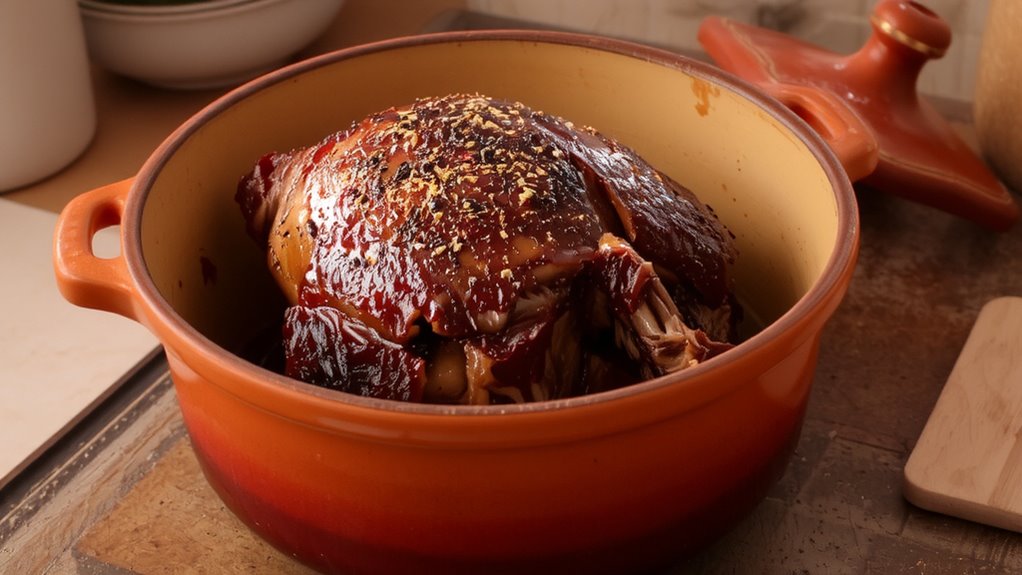
When it comes to slow-cooking pulled pork overnight, the cut you choose makes or breaks the dish-so your pork shoulder matters more than you might think. Your cut selection should focus on pork shoulder, specifically the Boston butt, not the picnic roast-this part has the ideal balance of muscle, connective tissue, and fat content. The intramuscular fat renders slowly, basting the meat from within and yielding tender, juicy shreds by morning. Too lean, and the result will be dry, stringy pork; too much external fat, and the flavor turns greasy. You want a well-marbled shoulder, around 4–5 pounds, with a thick cap of fat on one side-this protects the meat during long, unattended cooking. Though other cuts may seem cheaper, only a well-chosen shoulder guarantees depth of flavor and succulent texture. Smart cut selection upfront saves trouble later-this isn’t just meat, it’s the foundation. For the best value without sacrificing quality, aim for pork shoulders labeled with best prices.
Sear, Cover, and Let It Cook Overnight
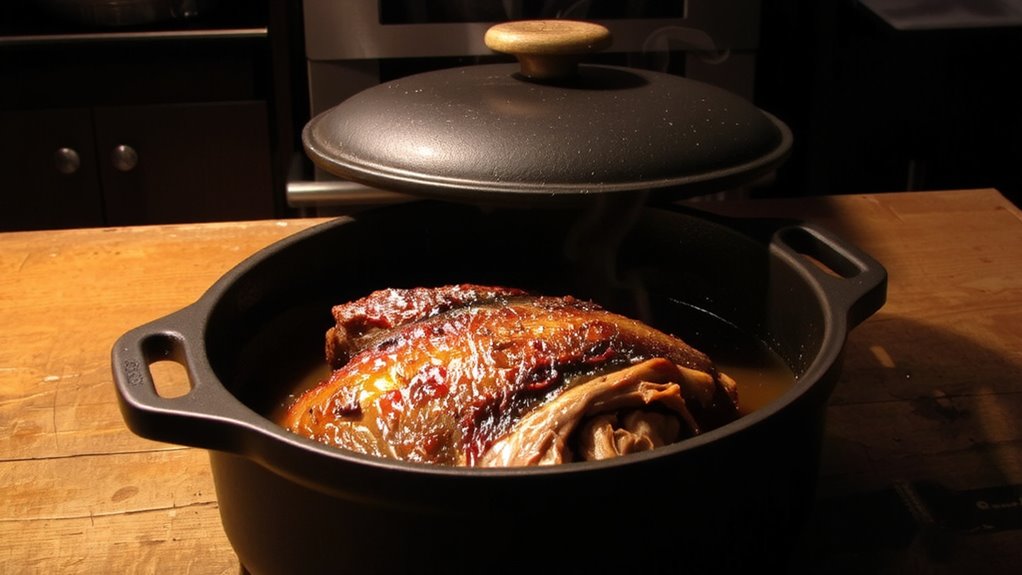
Now that you’ve picked a well-marbled pork shoulder with a solid fat cap, it’s time to lock in flavor before the long cook. Pat the meat dry, then sear it on all sides over medium-high heat to develop a rich crust-this slow sear enhances depth and texture. Once browned, transfer the pork to your Dutch oven and add a small amount of liquid, like broth or apple cider, to maintain moisture. Cover tightly with a lid to trap steam and heat. Move the pot to a preheated oven and reduce to low heat, ideally around 200–225°F. This gentle temperature guarantees the collagen breaks down gradually without drying out the meat. The enclosed environment mimics a slow cooker but with better heat retention and control. Let it cook undisturbed overnight-typically 8 to 10 hours-for tender, pull-apart results.
How Retained Heat Tenderizes Pulled Pork
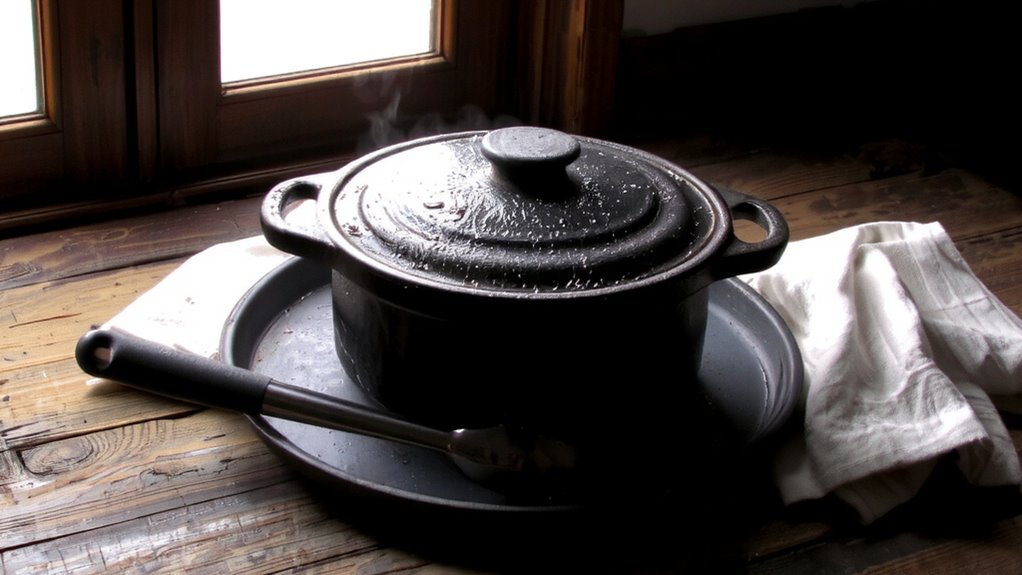
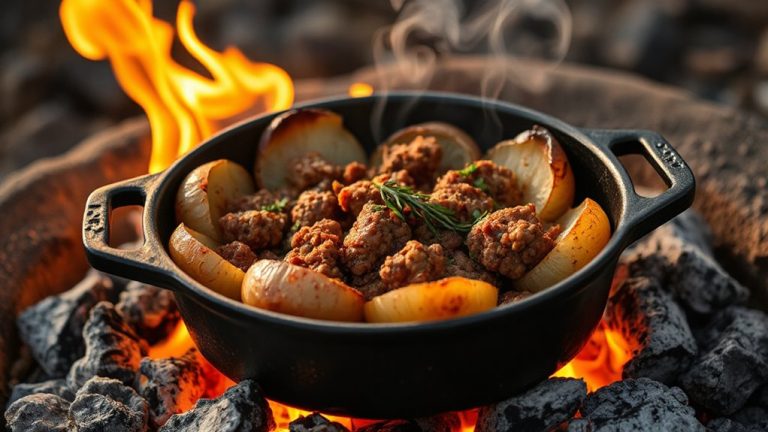
Though it might seem counterintuitive, the secret to tender pulled pork lies not in high heat but in the slow, steady application of retained warmth. You’re relying on low temperatures over many hours, and that’s where your Dutch oven truly shines. The thick walls trap heat efficiently, maintaining a stable environment that promotes even collagen breakdown without drying out the meat. As temperatures stay just right, connective tissues soften into gelatin, giving you that luxurious mouthfeel. Moisture retention is exceptional because the tight-fitting lid prevents steam from escaping, keeping the pork supple. You’ll notice less shrinkage and deeper flavor concentration compared to faster, hotter methods. Retained heat cooking isn’t flashy, but it delivers consistent, hands-off results-perfect for overnight preparation. This approach maximizes texture and juiciness, proving that patience and insulation matter just as much as seasoning and sear.
Shred and Serve Juicy Pulled Pork Right
You’ve waited through the night, and that tender, slow-cooked pork shoulder is ready to transform into something even better-shredded meat bathed in its own rich, concentrated juices. Pull the pork apart with two forks, letting the fibers separate easily; the texture should be succulent, not stringy, a sign the retained heat did its job. Toss the shreds gently in the Dutch oven to coat them evenly with the rendered fats and juices. For sauce variations, consider tangy vinegar-based blends for a Carolina twist or smoky Kansas City–style sauces for depth. Skip overly sweet options if the pork already has a caramelized crust. As for serving suggestions, load the pork onto toasted buns with pickles and slaw, or serve it over cornbread or baked potatoes. The meat’s natural moisture makes heavy sauce unnecessary-let quality speak for itself. When short on time, high-quality frozen pulled pork can offer a convenient alternative without sacrificing flavor.
Fix Dry or Tough Overnight Pulled Pork
If the long overnight cook left your pulled pork drier than expected or still a bit tough, don’t write it off just yet-there are reliable ways to revive it. First, assess the texture improvement needed: if the meat is chewy, return it to low heat with a bit of liquid like broth, apple juice, or leftover cooking juices. Covering it helps with moisture retention by trapping steam, gently rehydrating the fibers. Let it sit off direct heat in your Dutch oven for another 30–60 minutes. Shred again afterward-you’ll notice the strands pull more easily. For dry pork, toss it in a warm barbecue sauce with a touch of vinegar to restore tang and plumpness. Avoid boiling, which can worsen toughness. These methods work because residual heat and controlled re-steaming support collagen breakdown and moisture retention without overcooking. You can also consider using high-quality pre-made pulled pork for consistent results when time is limited.
On a final note
You’ve got a reliable method here: slow-cooking pulled pork overnight in a Dutch oven leverages retained heat effectively, delivering tender, flavorful results with minimal effort. The heavy pot maintains consistent temperature, mimicking low-and-slow barbecue conditions. While not as smoky as traditional outdoor smoking, it’s a practical, indoor alternative that yields juicy meat when done right-proving controlled heat retention matters more than equipment complexity.