How to Source Non-Toxic Woods for Roasting Sticks Near Riverbank Campsites
Choose dry, fallen hardwoods like maple, apple, or hickory near riverbanks-they burn clean and won’t taint food with soot or resin. Avoid pine, fir, or any wood with milky sap or shiny leaves, as these can release toxic smoke. Strip bark and side branches, then lightly char the tip to prevent splintering. Always harvest deadfall only, never damage live trees. You’ll find safer, more reliable results with proper selection and prep-better choices await with a closer look at sustainable practices.
Notable Insights
- Choose dry hardwoods like maple or apple, which burn cleanly and are safe for roasting near riverbanks.
- Avoid softwoods such as pine or fir, common near rivers, due to high resin and toxic smoke when burned.
- Inspect wood for glossy leaves, milky sap, or hairy vines to avoid poisonous plants like poison ivy or sumac.
- Harvest only deadfall branches, not live wood, to prevent environmental damage and ensure sustainable practices.
- Test wood dryness by snapping a branch; a clean break means low moisture and safe roasting conditions.
Choose Safe Wood for Roasting
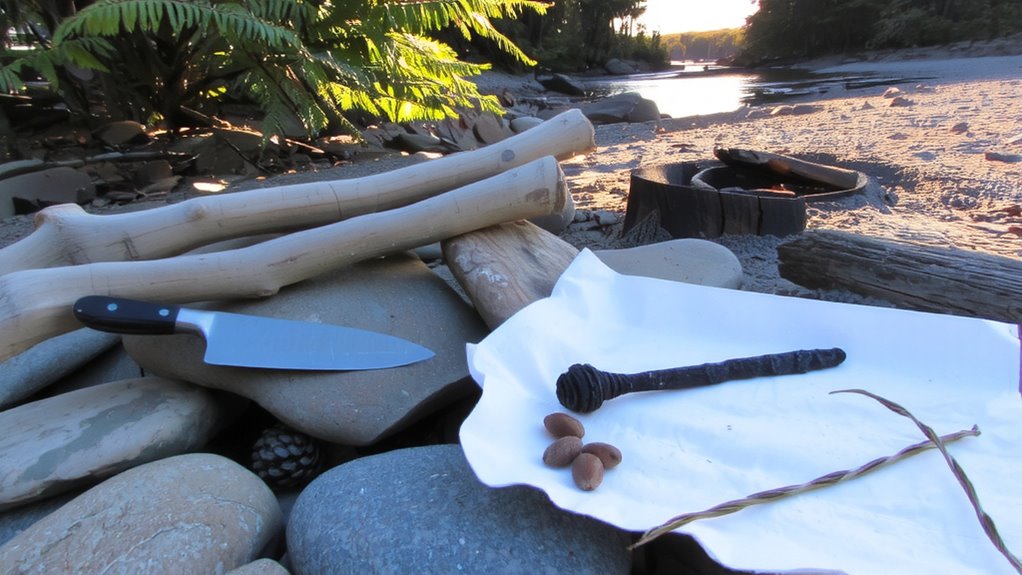
While you might be tempted to grab any fallen branch for roasting marshmallows or hot dogs, not all wood is safe for cooking over an open flame-some can release toxic smoke or impart unpleasant flavors. You need to practice proper wood identification to distinguish safe, food-friendly species like maple, apple, or hickory from unsuitable ones. These hardwoods burn clean, produce steady heat, and add a subtle, pleasant aroma to your food. Softwoods, like pine or fir, are a poor choice-they flare up easily and leave behind sooty residues. Beyond safety, sustainable sourcing matters: take only deadfall, never damage living trees, and respect local gathering rules. Ethical harvesting guarantees future campfires stay green and responsible. With careful selection and an eye for quality, your roasting sticks won’t just perform better-they’ll support long-term outdoor stewardship.
Avoid Poisonous Campfire Woods
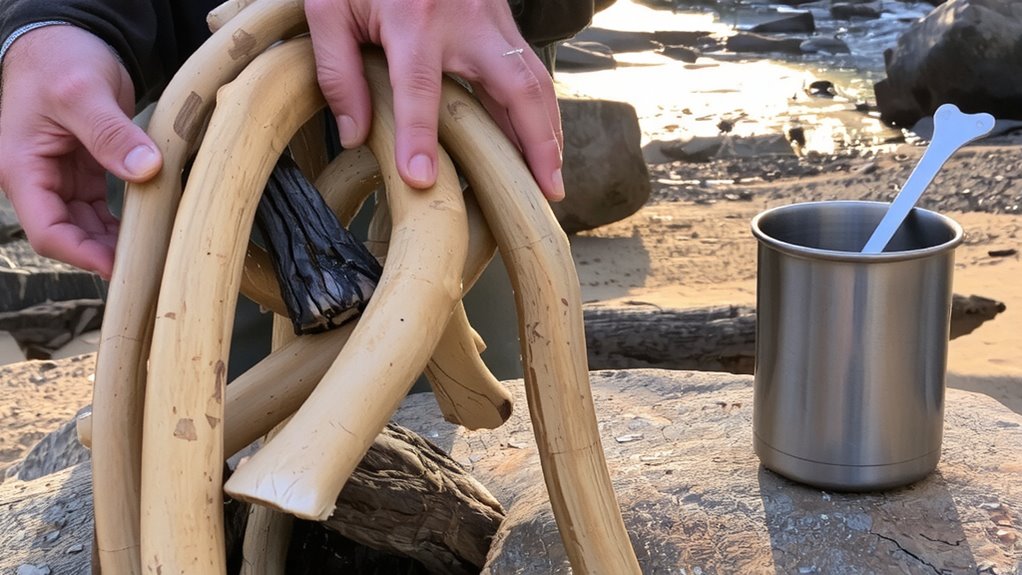
Some campfire woods can do more than ruin your meal-they can make you sick. You need to identify toxic plants before tossing any wood on the fire. Plants like poison ivy, poison sumac, and oleander release urushiol and other irritants when burned, which means their smoke becomes dangerous. You won’t just risk a bad taste-you might inhale hazardous smoke that triggers respiratory issues or allergic reactions. Even a small amount can affect sensitive individuals. Always inspect your woodpile carefully; look for shiny leaves, hairy vines, or milky sap-common signs of toxic species. When in doubt, leave it out. You’re better off using clean, dry hardwoods like maple or ash. Being able to recognize hazardous smoke-thick, acrid, or unusually pungent-is just as essential as picking the right wood. Your health and cooking experience depend on it.
Harvest Sticks Responsibly
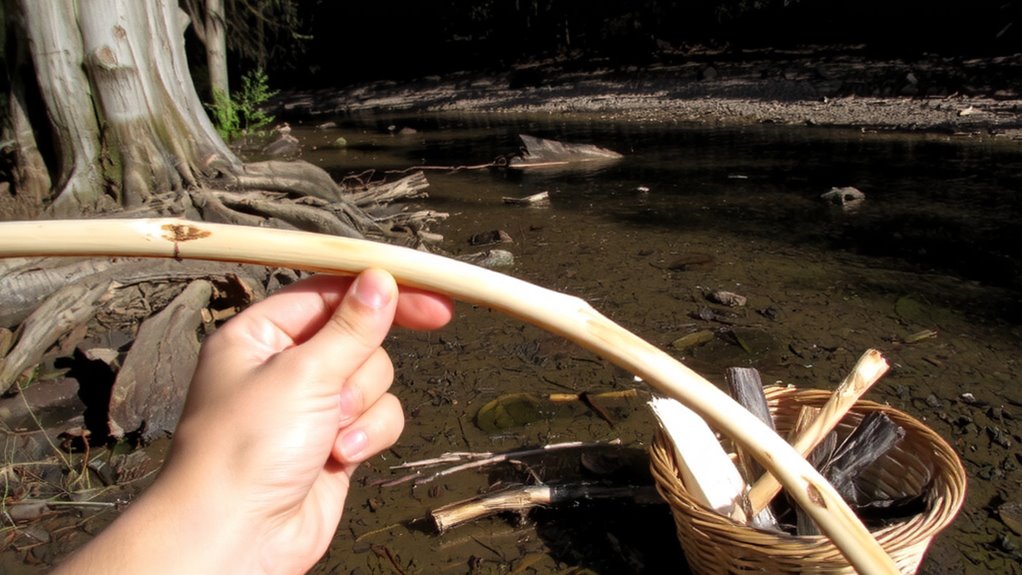
Since you’re gathering wood for roasting sticks, it’s important to do so in a way that respects both the environment and future campers. Practicing sustainable harvesting means taking only what you need and avoiding live branches or rare tree species. Look for fallen limbs or deadwood-these are ideal because they minimize harm to living trees and reduce your environmental impact. Strip only enough material for your immediate use, and don’t strip bark from standing trees, as this can kill them. Remember, overharvesting degrades habitats and diminishes the quality of shared outdoor spaces. Your actions set an example for others, so responsible collection supports broader conservation efforts. Sustainable harvesting isn’t just ethical-it guarantees future campers enjoy the same natural resources. By choosing restraint and awareness, you maintain ecological balance while still achieving functional, safe roasting sticks.
Check for Dryness and Resin Content
A well-seasoned stick makes all the difference when you’re roasting food over an open flame, so you’ll want to check for dryness and resin content before settling on your choice. Start with moisture testing-snap a small branch; if it breaks cleanly and sounds crisp, it’s dry. Green or damp wood bends and resists breaking, which means it’ll steam instead of roast your food. For resin identification, look for sticky sap or glossy spots-these indicate high resin content, which can impart bitter flavors or even toxic fumes when burned. Woods like pine or fir are common near riverbanks but risky due to sap. Opt instead for low-resin hardwoods like willow or maple. Proper dryness guarantees steady heat, while smart resin identification protects both taste and health. Trust observation and simple field tests-they’re your best tools in effective stick selection.
Trim and Char Your Roasting Stick
Every successful roasting session depends on proper stick preparation, and that means you’ll want to trim your stick carefully before use. Remove side branches and peel bark to reduce smoke and prevent flare-ups, both of which can interfere with your roasting technique. A clean, smooth stick not only handles better but also improves stick durability by minimizing weak points that could snap over the fire. After trimming, lightly char the tip in the fire for 30–60 seconds. This carbonizes the wood, hardening it slightly and making it less likely to splinter when pierced into food. Charring also creates a protective layer that resists burning too quickly, extending usability. Though simple, this step enhances control and consistency while you cook. Proper trimming and charring aren’t just about safety-they reflect a thoughtful approach to outdoor cooking, where preparation directly shapes performance and outcome.
Roast Food Safely Over Open Flame
Safety starts the moment your stick meets flame, and keeping it under control means watching three key factors: heat level, distance from fire, and food placement. Proper heat control prevents charring while ensuring even cooking-hold food at least six inches above the flames, where radiant heat is steady. Flames licking your food directly lead to burns and harmful smoke, especially if the wood isn’t seasoned. You reduce risks by using glowing embers instead of active flame, which supports better fire safety. Position sticks at a 45-degree angle to manage flare-ups and allow quick pulls back if heat surges. Always supervise your roast; distractions cause accidents. Sturdy, non-resinous sticks won’t snap or drip toxins, making them safer for cooking. With good technique, open-flame roasting is efficient and delicious. Prioritize control, stay alert, and you’ll enjoy safer, tastier meals by the river.
On a final note
You’ve picked safe, non-toxic wood like maple or birch, avoided toxic types like sumac, and harvested responsibly near the riverbank. Dry, low-resin sticks char evenly and won’t impart harmful smoke. Trimming and pre-charing improves performance, ensuring cleaner roasting. These steps support reliable, safe outdoor cooking-critical for enjoyable, risk-free campfire meals. Smart preparation enhances both flavor and safety every time.