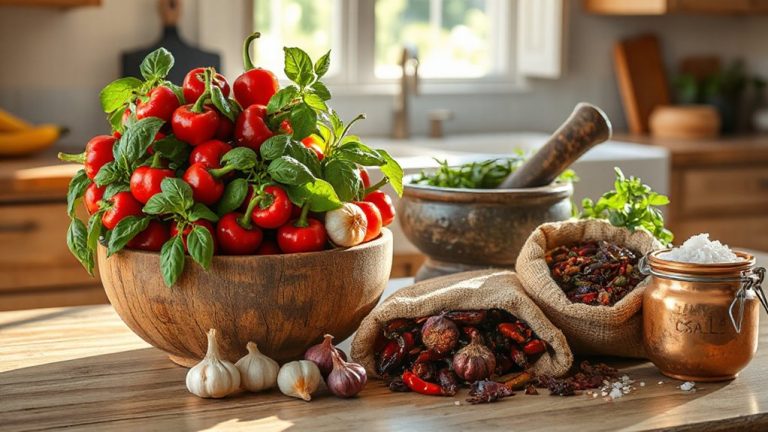
Unveiling the Secrets Behind Flavorful Grilled Vegetables: A Step-by-Step Guide
Pick firm, in-season vegetables like carrots or zucchini-they hold up better on the grill. Cut them evenly, toss with a high-smoke-point oil, and preheat your grill to 375–450°F for ideal sear and texture. Use a two-zone fire to char first, then finish gently. Flip just once to lock in flavor, and never skip marinating with oil, acid, and smart herb pairings. Finish with flaky salt or fresh herbs to elevate the dish. There’s more to mastering the grill than heat and timing-details that transform good veggies into great ones are just ahead.
Notable Insights
- Choose vegetables like carrots, beets, and zucchini in season for peak sweetness and firmness ideal for grilling.
- Cut vegetables uniformly and use a sharp knife to ensure even cooking and prevent breakage on the grill.
- Preheat your grill to 375°F–450°F and use a two-zone setup for proper searing and controlled cooking.
- Let vegetables develop grill marks undisturbed before flipping just once to preserve sear and enhance flavor.
- Marinate with olive oil, acid, and complementary herbs, then finish with flaky salt and fresh garnishes for depth.
Choose the Best Vegetables to Grill
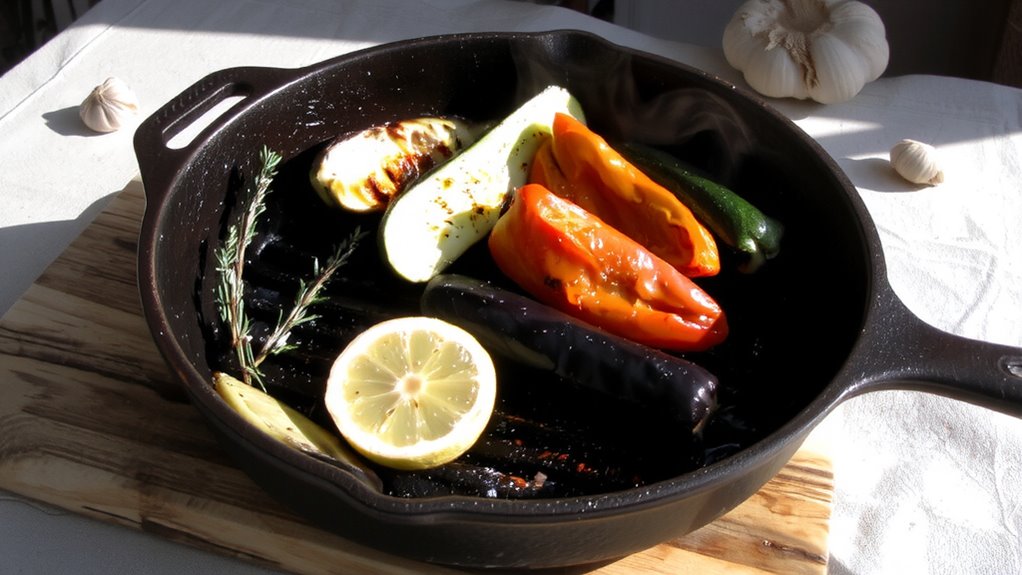
When it comes to grilling, vegetables aren’t just afterthoughts-they’re stars waiting for their moment. You’ll get the best results when you choose produce built to stand up to high heat and direct flame. Root varieties like carrots, beets, and parsnips hold their structure well, offering a sweet, earthy depth after charring. Their dense texture prevents them from turning to mush, making them ideal for longer grill times. Equally important are seasonal picks-zucchini in summer, Brussels sprouts in fall-because they’re at peak freshness, flavor, and firmness. Off-season vegetables often lack the sugar content and crispness needed to shine on the grill. Selecting the right vegetables isn’t just about taste; it’s about performance under fire. With smart choices like these, your grilled vegetables won’t just accompany the meal-they’ll define it.
Chop and Oil for Even Cooking
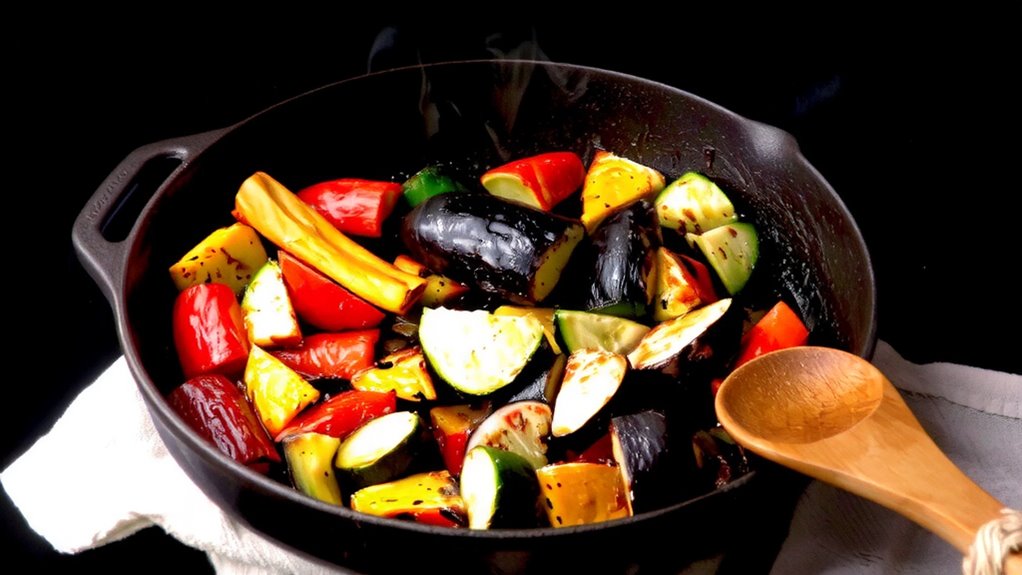
Now that you’ve picked vegetables suited to the grill’s intensity, the next step is preparing them properly so they cook evenly and develop that desirable charred exterior without burning or steaming. To achieve consistent results, you’ll want to cut uniformly-pieces of the same size cook at the same rate, preventing some from charring while others stay raw. Thick chunks of potato or zucchini, for instance, won’t cook through if paired with thin slices of eggplant. A sharp knife guarantees clean edges that hold up on the grates. After cutting, oil lightly-just enough to coat each piece. Too much oil causes flare-ups; too little leads to sticking and uneven browning. A neutral oil with a high smoke point, like canola or grapeseed, performs best under high heat. This prep method enhances texture and flavor, making your grilled vegetables reliable and restaurant-quality every time.
Get the Heat Right on Any Grill
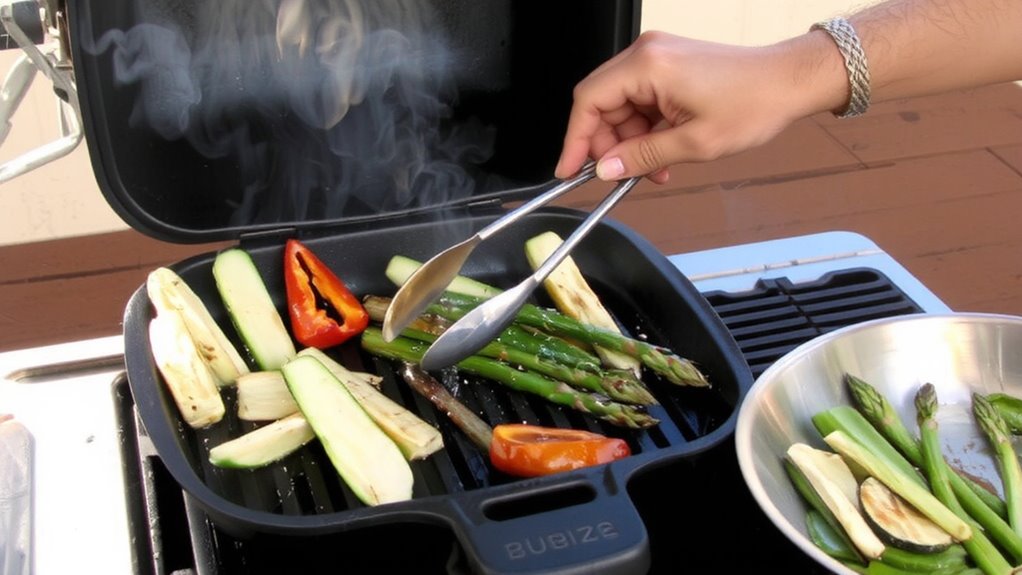
Though your vegetables are prepped and oiled, getting the heat right makes or breaks the final result-too low and they dry out instead of charring; too high and they blacken before cooking through. You need steady grill temperature, ideally between 375°F and 450°F, to achieve even cooking with that desirable caramelized exterior. Gas grills offer precise heat control, letting you adjust flames instantly, while charcoal demands more attention but delivers deeper flavor. Always preheat your grill for 10–15 minutes and use a two-zone setup-direct heat for searing, indirect for finishing. This balance prevents burning and guarantees tenderness. Proper heat control isn’t just about flipping skills; it’s about managing airflow and fuel. Whether you’re roasting peppers or searing zucchini, maintaining consistent grill temperature transforms good vegetables into great ones.
Flip Once for Perfect Char
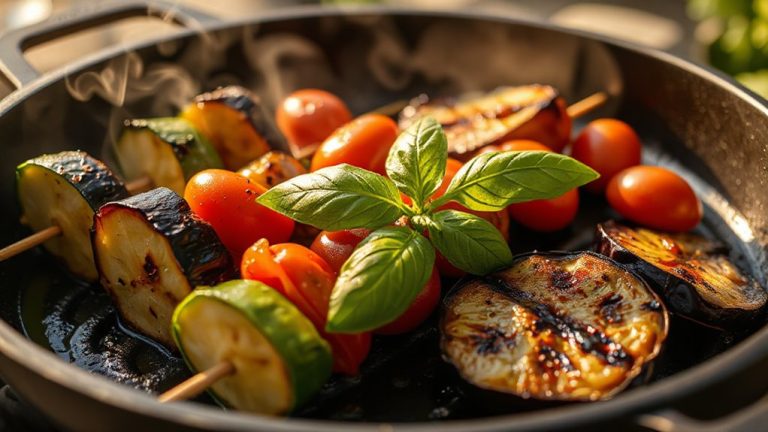
Getting the grill to the right temperature sets the stage, but how you handle the vegetables once they hit the grates determines whether you end up with smoky sweetness or frustrating char. You want distinct grill marks, which means placing veggies over high heat zones and letting them sit undisturbed. Moving them too soon breaks the sear and steals flavor. Flip only once, after 3–5 minutes, depending on thickness. This technique locks in moisture while promoting caramelization. Dense vegetables like zucchini or bell peppers respond best, developing deep color without falling apart. Using heat zones wisely lets you move items to indirect heat after searing to finish cooking gently. Flipping more than once interrupts this balance, risking uneven texture and pale results. One confident turn guarantees consistent doneness, visual appeal, and that signature charred edge that defines great grilled vegetables. Patience here pays off in both taste and appearance.
Season With Marinades and Finishing Touches
While the grill does much of the work in developing flavor, your seasoning strategy-from marinade to plate-makes the difference between good and exceptional results. You’ll want to marinate vegetables for at least 30 minutes; this boosts moisture retention and deepens taste. Use olive oil as a base, then add acid like lemon juice or vinegar to help ingredients adhere and tenderize slightly. Your success hinges on smart herb pairing-rosemary with mushrooms, thyme with zucchini, dill with eggplant. Spice blending matters just as much: a mix of smoked paprika, garlic powder, and cumin adds warmth without overpowering. Toss in a little red pepper flake if you like subtle heat. After grilling, finish with flaky salt, a drizzle of good-quality oil, or fresh herbs. These touches refine texture and elevate aroma, turning simple vegetables into a standout dish worth repeating.
Skip These 5 Grilling Mistakes
If you’ve ever pulled vegetables off the grill only to find them charred on the outside and raw within, you’re likely making one of several common mistakes that undermine even the most thoughtfully prepared dishes. Skipping prep steps-like cutting veggies evenly-leads to inconsistent cooking and flavor loss. Don’t overcrowd the grill; it traps steam and prevents proper searing. Many overlook preheating the grates, which helps avoid sticking and guarantees clean grill marks. Failing to oil vegetables (not just the grill) increases the chance of charring before tenderness sets in. Finally, flipping too often or too early disrupts even caramelization. These common pitfalls seem minor but greatly affect texture and taste. With high heat and direct exposure, grilled vegetables demand attention to timing and technique. Avoid these errors, and you’ll preserve both moisture and flavor-delivering results that are tender inside, slightly crisp outside, and rich with the smoky depth true grilling provides.
On a final note
You’ve got the tools to elevate grilled vegetables from bland to exceptional. Choosing fresh, firm produce, cutting evenly, and oiling properly guarantees consistent results. Mastering heat control and flipping just once develops rich char without drying out flesh. Seasoning with smart marinades and finishing touches enhances natural flavors. Avoid common missteps like overcrowding or skipping preheating. With attention to technique, your grill becomes a precision tool for vibrant, smoky-sweet dishes that impress without pretense.