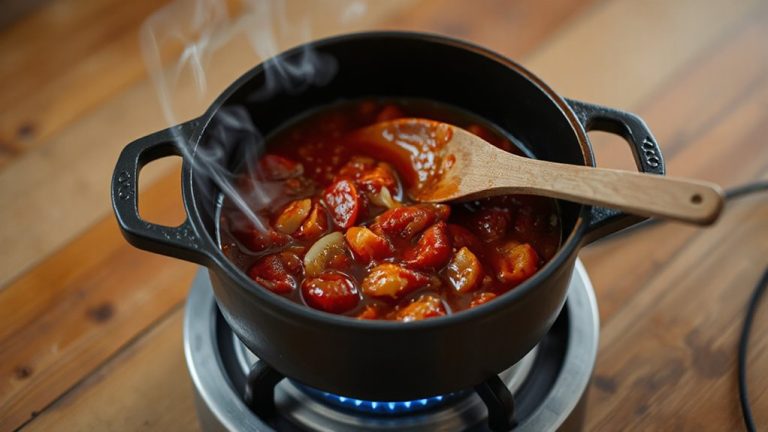
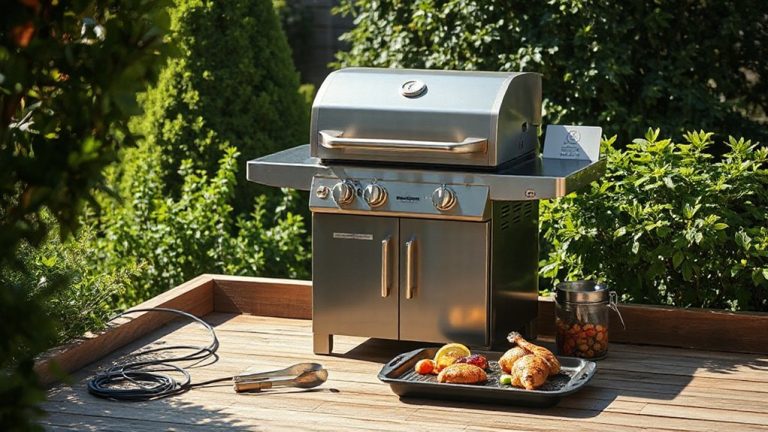
Cooking Fajitas in a Smoking Hot Cast Iron Skillet at the Tailgate Party
You’ll get restaurant-quality fajitas at your tailgate by searing thin strips of skirt steak and veggies in a smoking hot cast iron skillet-it retains heat superbly over open flame. The seasoned surface prevents sticking while building flavor over time. Pair it with a high-BTU burner and proper tongs for control. Sear in batches, warm tortillas directly on the grill, and serve with fresh toppings. Keep the skillet hot between batches, and you’ll see how performance meets convenience out in the field.
Notable Insights
- Use a preheated cast iron skillet for superior heat retention and even searing over open flames.
- Select skirt steak for fast, flavorful cooking and optimal texture in high-heat conditions.
- Slice bell peppers and onions uniformly to ensure consistent vegetable doneness on the grill.
- Marinate meat and veggies briefly with lime, garlic, cumin, and chili powder for bold flavor.
- Keep tortillas warm and skillet hot using a towel-lined cooler for serving at peak temperature.
Cast Iron Skillets Are Perfect for Tailgate Fajitas
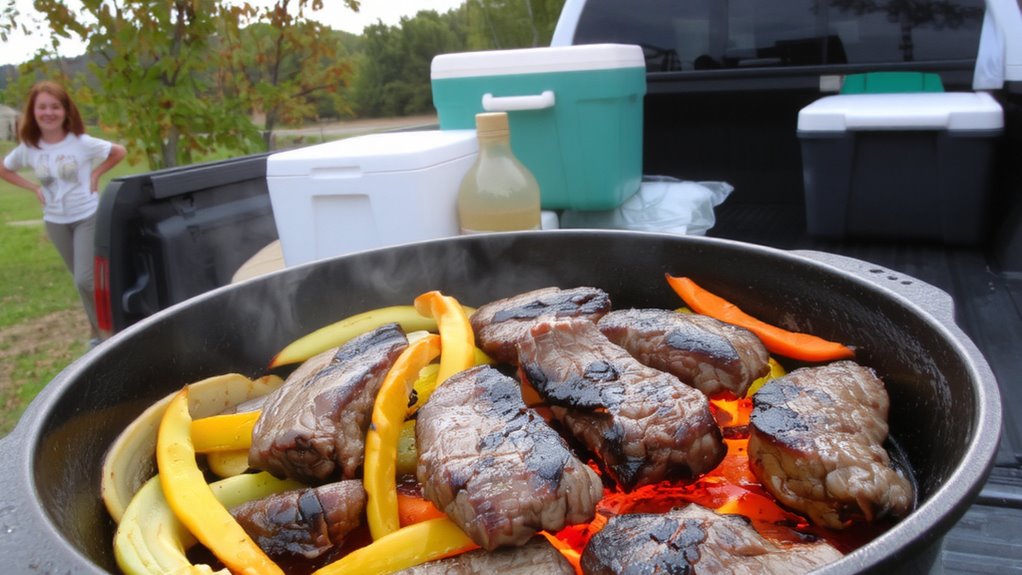
A cast iron skillet isn’t just a piece of cookware-it’s a reliable workhorse for tailgate fajitas, where high heat, durability, and even cooking matter most. You’ll sear peppers and onions fast because cast iron delivers excellent heat distribution, holding temperature steadily over open flames or grills. That consistent, intense heat guarantees your steak or chicken browns evenly, locking in juices and building flavor retention with every sizzle. Unlike thinner pans, it won’t warp or cool down when food hits the surface, so you avoid steaming and achieve true caramelization. The seasoned surface improves over time, naturally enhancing non-stick performance and deepening flavor retention with repeated use. It’s heavy, yes, but that mass aids thermal stability. You’re not just cooking-you’re leveraging physics and tradition. For outdoor fajitas, few tools match its performance. With proper care, your skillet becomes a go-to asset, night after night, delivering diner-worthy results in the middle of a parking lot. Top Picks from trusted brands ensure you’re getting a durable, high-performing skillet tailored for grilling.
Bring the Right Gear for Skillet Fajitas on the Go
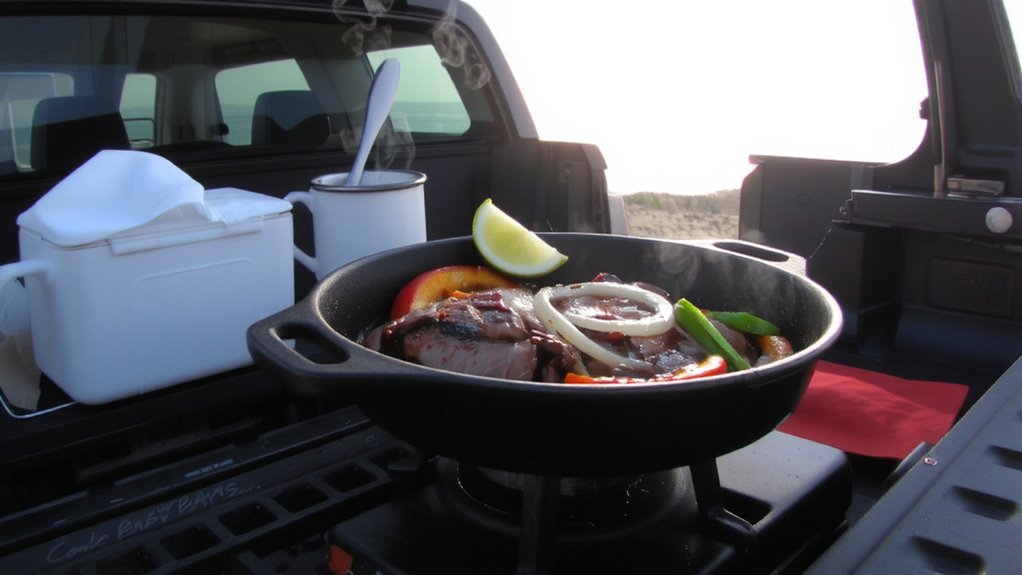
You’ve got your cast iron skillet ready-now it’s time to think about what else you’ll actually need when cooking fajitas on the road. Portable cookware is essential, and your skillet should be just one part of a well-chosen kit. A compact, high-BTU burner gives you reliable heat control, vital for searing meats and softening peppers without scorching. Look for tripods or folding grills that securely hold your skillet over the flame. Don’t forget long-handled tongs and a splatter guard-safety matters when cooking in open spaces. A sturdy heat-resistant glove helps manage the skillet when it’s smoking hot. Proper tools make a difference: they improve performance and guarantee consistent results. With the right gear, your portable cookware setup isn’t just functional-it’s efficient, responsive, and nearly as effective as a kitchen stove. Plan smart, pack light, and you’ll maintain heat control wherever you cook. Consider a best portable grill for even more versatility when you’re tailgating or camping.
Pick the Best Steak for Fast, Flavorful Fajitas
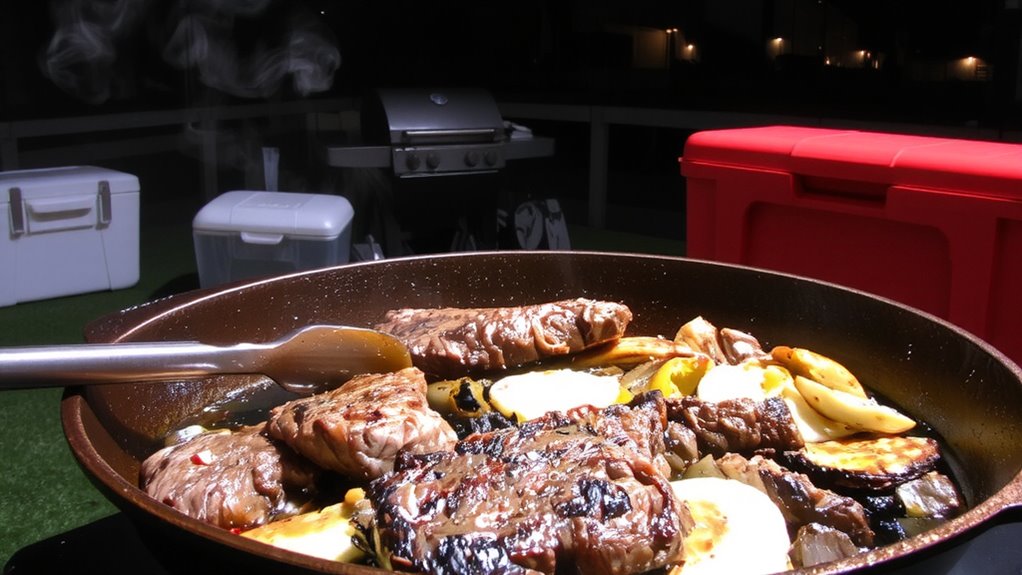
Flavor and texture start with the cut-choosing the right steak makes or breaks your fajitas, especially when cooking outdoors where heat control is trickier. You want a cut that’s tender, well-marbled, and cooks quickly over high heat. Skirt steak is your best bet; it’s thin, flavorful, and sears fast in a smoking hot cast iron skillet. Flank steak’s a close second, though slightly leaner and less forgiving. Both respond exceptionally to marinade choices-acidic components like lime juice or vinegar tenderize while letting spice blends penetrate deeply. A mix of cumin, chili powder, garlic, and smoked paprika boosts authenticity and char. Avoid thick cuts like ribeye; they take too long and risk overcooking. With skirt steak, you’ll get that ideal balance: crisp edges, juicy interior, and bold, seasoned crust. Your fajitas won’t just taste good-they’ll perform under tailgate conditions, staying flavorful even when the grill’s fierce. For added variety, consider serving with a drizzle of best sauce for shrimp, which can double as a zesty topping for grilled steak.
Chop and Sear Fajita Veggies That Sizzle
Once the steak’s picked and prepped, it’s time to turn your attention to the vegetables-just as important in building that signature fajita sizzle. Slice bell peppers and onions into even strips so they cook uniformly over high heat. For depth, don’t skip veggie marination-toss them in olive oil, lime juice, and a splash of soy sauce to enhance flavor and texture. The real key, though, is spice blending: mix cumin, smoked paprika, garlic powder, and a pinch of cayenne to match the steak’s seasoning. Let them sit for 15 minutes-no longer, or they’ll turn soggy. When the cast iron’s ripping hot, add the veggies in a single layer. Searing them properly locks in color and crunch while avoiding steam. You want distinct edges, not mush. Tailgating means limited space, so efficient prep and smart marination make all the difference out here.
Sear Steak Perfectly on Your Tailgate Grill
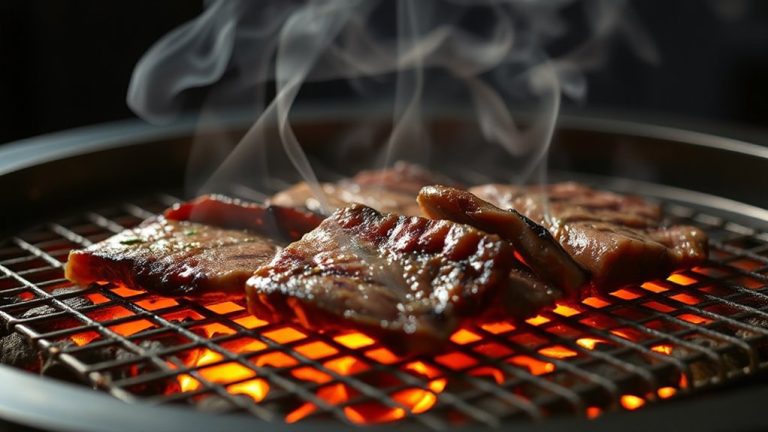
While high heat is essential for a proper sear, timing and surface contact matter just as much when cooking steak on a tailgate grill. You’ve got one shot to get it right, so start with smart marinade selection-something acidic with oil and spices boosts flavor and aids browning. Let the steak sit at room temp before grilling to guarantee even cooking. Preheat your cast iron skillet over the grill until smoking hot; that’s when you lay the steak down with firm, uninterrupted contact. Avoid constant flipping-let a crust form. Heat management is key: too low, and you’ll steam instead of sear; too high, and the edges burn before the center cooks. Use a two-zone setup if possible, moving the steak to cooler metal after searing. This balances doneness with that rich, caramelized exterior everyone wants.
Warm Tortillas and Top Fresh for Serving
A well-warmed tortilla can make or break your fajita experience, especially when serving outdoors where heat retention is harder to maintain. Tortilla warmth isn’t just about comfort-it guarantees pliability and enhances texture, preventing tears when you fold in steaming fillings. For best results, warm corn or flour tortillas directly over a low flame or on a grill griddle for 20–30 seconds per side. You’ll notice a richer aroma and slight blistering, which adds depth to each bite. Serving freshness matters just as much: assemble toppings-diced onions, fresh cilantro, lime wedges-right before passing the fajitas around. This preserves crunch and flavor, keeping the experience vibrant. Together, proper tortilla warmth and serving freshness elevate outdoor fajitas from passable to standout, aligning texture, temperature, and taste in every handmade wrap.
Keep Fajitas Hot and Ready for the Whole Crowd
Keeping your fajitas hot from skillet to table guarantees everyone gets a flavorful, satisfying bite, especially when feeding a group outdoors where ambient temperatures and delays can sap heat quickly. Your cast iron skillet’s superior heat retention keeps the meat and veggies sizzling minutes after cooking. To maximize warmth during service, use a preheated insulated tray or nest the skillet in a towel-lined cooler. This simple serving strategy maintains temperature without overcooking. Timing is key-coordinate cooking with guest readiness to avoid lag.
| Moment | Feeling |
|---|---|
| First sizzle | Anticipation |
| Serving hot | Satisfaction |
| Shared platter | Togetherness |
Plating in stages disrupts warmth, so batch properly and serve swiftly. Cast iron outperforms aluminum here, holding heat longer. This isn’t just cooking-it’s crowd care through smart heat retention and timing. A solid serving strategy turns good fajitas into a memorable tailgate highlight.
On a final note
You’ve seen how a cast iron skillet holds steady heat, searing fajitas evenly over open flame. Its durability and heat retention make it ideal for tailgating, where conditions are unpredictable. With proper preheating and seasoning, it outperforms nonstick pans. Paired with quick-cooking skirt steak and crisp peppers, it delivers restaurant-style results outdoors. Just maintain it well-clean, dry, and oiled-and your skillet will last decades, proving essential for any serious outdoor cook.