How Fresh Garlic Chives Add Onion-Garlic Complexity to Asian-Inspired BBQ
You get a burst of onion-garlic complexity when you use fresh garlic chives in your Asian-inspired BBQ. Their flat, crisp stems deliver pungent depth and bright sulfur notes that cut through rich meats like pork belly. Unlike common chives, they’re more aromatic and robust, enhancing umami without overpowering. Adding them raw or barely cooked preserves texture and flavor. For best results, slice them just before serving. You’ll find the full potential of this banchan when paired with slow-grilled dishes.
Notable Insights
- Fresh garlic chives deliver a pungent, aromatic blend of onion and garlic notes that enhance the umami depth of grilled meats.
- Their sulfur-rich compounds intensify when paired with smoky BBQ flavors, adding complex, garlicky sweetness without overpowering the palate.
- Crisp, flat stems retain texture when served raw, offering a refreshing contrast to rich, fatty dishes like pork belly or beef brisket.
- Used in uncooked banchan like Buchu Muchim, they contribute brightness with vinegar and soy, cutting through heavy, savory barbecue elements.
- Properly stored garlic chives maintain peak flavor for up to a week, ensuring consistent onion-garlic complexity in every serving.
What Is Buchu Muchim?
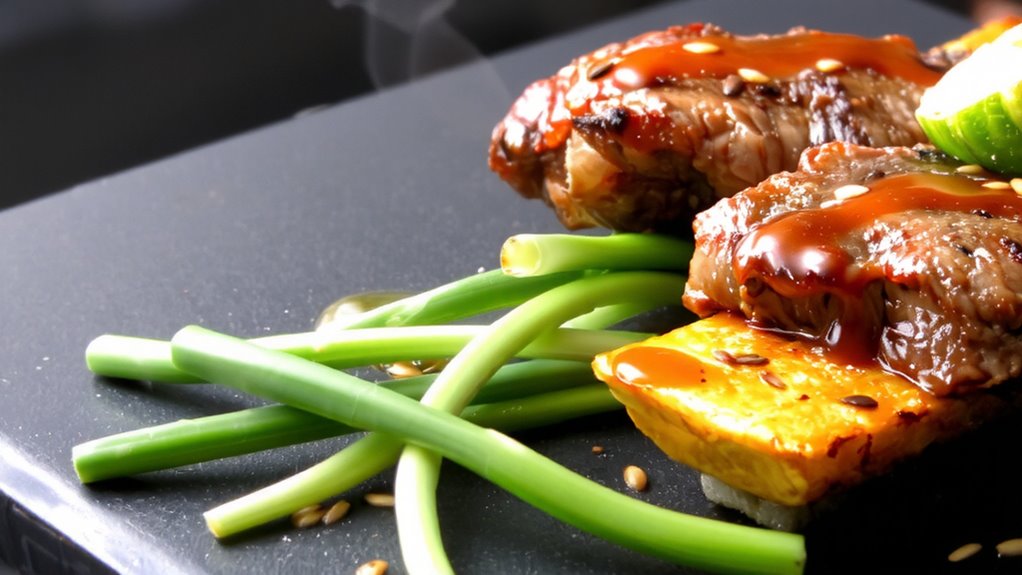
Ever wondered what gives Korean banchan that bold, aromatic kick without any cooking involved? It’s Buchu Muchim, a fresh, uncooked salad where Garlic Chives shine. You’ll find these flat, narrow leaves packed with a punchy garlic-onion flavor, distinct from common chives, bringing a sulfur-rich depth you can’t ignore. Mixed with soy sauce, apple cider vinegar, olive oil, brown sugar, and black pepper, the dressing balances sweet, savory, and tangy in every bite. Served cold or at room temperature, it’s a crisp contrast to hot, smoky BBQ. At about 114 calories per serving-6g carbs, 2g protein, 9g fat-it’s light but satisfying. Garlic Chives aren’t just flavor enhancers; they’re central, lending authenticity and complexity. Their robustness holds up next to grilled meats without wilting, making Buchu Muchim not just a side, but a strategic complement in any Asian-inspired meal setup. You’ll appreciate how freshness drives performance here.
Why Garlic Chives Boost BBQ Flavor
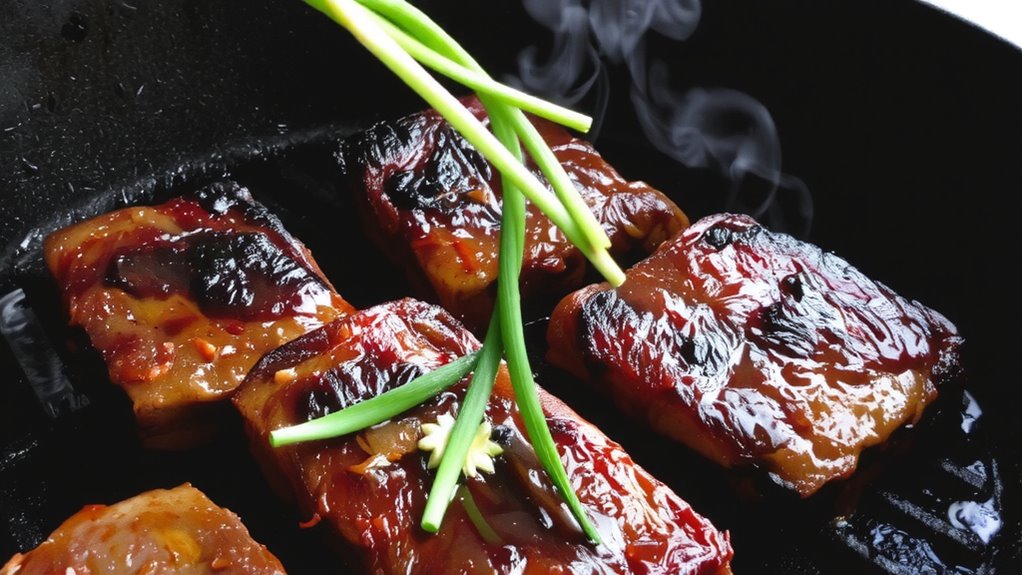
You already know garlic chives bring a sharp, aromatic lift to cold banchan like Buchu Muchim, but their real impact comes when paired with the smoky, savory intensity of Asian BBQ. The sulfur-rich compounds in fresh garlic chives enhance umami, adding depth that complements charred, fatty meats like pork belly. Their flat, solid stems carry a flavor closer to fresh garlic than common chives, offering a robust, nuanced bite. When grilled meats release rich, oily juices, garlic chives cut through with mild pungency and a hint of sweetness, balancing heaviness without overwhelming. Added after cooking, they retain their aromatic intensity and deliver a bright, clean finish. Beyond flavor, they boost nutrition-each serving packs vitamin C and potassium. Fresh garlic chives don’t just garnish; they transform BBQ, elevating both taste and texture with complexity and contrast that few herbs can match.
How To Cut And Cook Garlic Chives
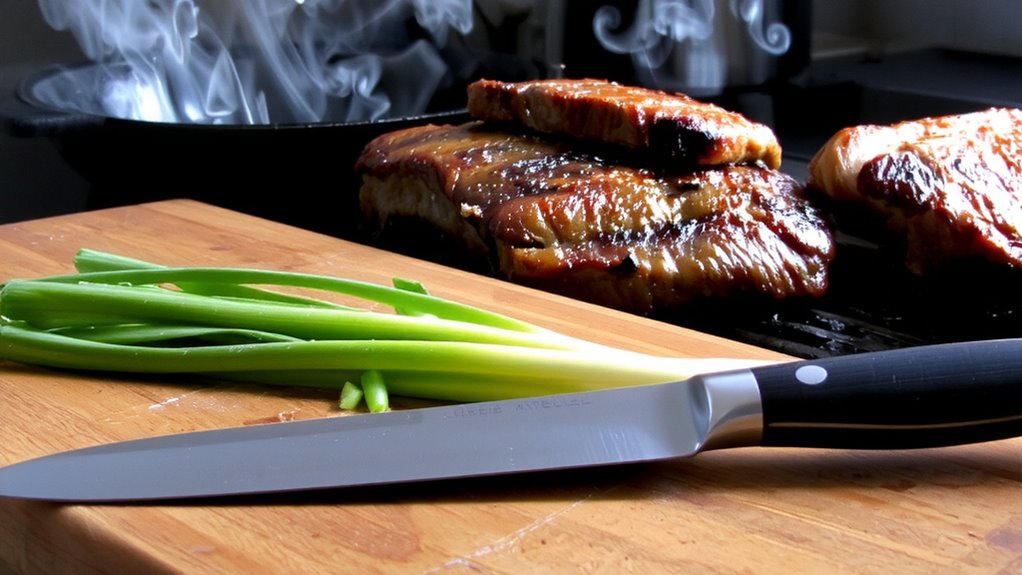
A clean cut makes all the difference when working with garlic chives, ensuring both flavor and texture shine in your Asian BBQ dishes. When you cut and cook garlic chives properly, their crispness and aromatic complexity enhance grilled flavors without overpowering them. Always use a sharp knife to slice them just before use-this preserves their vibrant color and pungent garlic-onion kick. Wash thoroughly and cut into 6–7 cm lengths for even texture and easier handling on the grill or in stir-fries. To cut and cook garlic chives effectively, add them at the end of cooking; prolonged heat diminishes their sulfur-rich compounds and softens their crunch.
| Step | Tip |
|---|---|
| Cut | Use sharp knife, 6–7 cm lengths |
| Cook | Brief stir-fry or steam, add at end |
| Store | Unwashed, in bag at 4°C, up to one week |
Make Korean Garlic Chive Salad (Buchu Muchim)
Crunch and aroma define the essence of Buchu Muchim, a Korean garlic chive salad that elevates simple ingredients into a vibrant, flavor-packed banchan. You’ll use 40g of garlic chives, cut into 6–7 cm lengths, then toss them with 8 cloves of fresh garlic baked until golden at 180°C. For the Chive Salad dressing, mix 2 tsp soy sauce, 2 tsp apple cider vinegar, 2 tsp olive oil, 1 tsp brown sugar, and a few sprinkles of black pepper. Lightly coat the chives and roasted garlic-no cooking needed-to preserve their crisp texture and sharp, onion-garlic punch. Buchu, with its flat stems and robust taste, outperforms common chives in depth and complexity. This vegetarian banchan, served cold or at room temperature, delivers 114kcal per serving, with 6g carbs, 2g protein, 9g fat, and 338mg sodium. It’s a low-calorie, high-character side that complements rich Asian-inspired BBQ, especially dishes like Bossam.
Roast Garlic For Richer Flavor
That golden-brown finish on roasted garlic isn’t just for looks-it’s the result of careful heat application that transforms sharp, pungent cloves into something rich and nuanced. When you roast garlic at 180°C with 2 tsp olive oil and a pinch of sea salt, its natural sugars caramelize, yielding a creamy, mellow base perfect for banchan. The Maillard reaction adds deep umami, balancing the zesty punch of fresh garlic chives. Roasting 8 cloves enhances complexity without overwhelming delicate textures, especially in chilled dishes like Garlic Chive and Baked Garlic Salad. You’ll notice the fat content-9g per serving, mostly from olive oil-carries flavor and smoothness.
| Method | Effect on Flavor |
|---|---|
| Raw garlic | Sharp, pungent |
| Roast garlic | Sweet, rich, nuanced |
Store Garlic Chives For Longest Freshness
To keep your garlic chives at their peak for Asian BBQ applications, proper storage is essential-think beyond just tossing them in the crisper. First, wash your garlic chives thoroughly and dry them completely, since moisture accelerates spoilage. Trim off any wilted or yellowed tips to maintain the quality of the usable stems. Store the garlic chives in a dry plastic bag, pushing out excess air before sealing-this limits oxidation and retains crispness. Keep the bag away from high-moisture zones like the fridge’s produce drawer edges, where condensation builds. When stored correctly, garlic chives hold freshness for up to a week, though peak flavor fades after 5–7 days as aromatic compounds degrade. For best results in grilling and basting, use them within this window. Proper storage guarantees your garlic chives deliver that bright, onion-garlic complexity your Asian-inspired barbecue deserves.
Serving Buchu Muchim With Bossam
A well-prepared Buchu Muchim elevates the Bossam experience by introducing a sharp, aromatic counterpoint to the dish’s rich, tender pork. You’ll find that the 40g of fresh garlic chives per serving, cut into 6–7 cm lengths, deliver a crisp texture and subtle onion-garlic complexity that cuts through the fat beautifully-a hallmark of thoughtful Korean BBQ pairing. The roasted garlic, baked at 180°C until golden, adds sweet depth, while the dressing-2 tsp soy sauce, apple cider vinegar, olive oil, brown sugar, and black pepper-balances umami, acidity, and sweetness. Served cold or at room temperature, Buchu Muchim retains its vibrant bite, making it ideal alongside steamed wraps. In the context of Korean BBQ, where richness dominates, this banchan isn’t just a side; it’s a necessary contrast that refines each bite, proving how smart accompaniments define the meal as much as the meat.
On a final note
You’ll find garlic chives elevate Asian-inspired BBQ with their balanced onion-garlic punch, adding complexity without overpowering. When roasted or chopped fresh, they bring depth to dishes like buchu muchim or bossam. Proper storage maintains crispness, ensuring longer usability. Their performance in both raw and cooked applications proves reliable, enhancing aroma and flavor. For outdoor cooking, they’re a smart, versatile upgrade worth keeping on hand.