Transitioning From Charcoal to Propane Mid-Cook to Rescue Over-Smoked Wings
Switch from charcoal to propane after 45 minutes to stop over-smoking and rescue your wings before bitter notes set in. Use thin blue smoke as your cue-once it turns thick and white, creosote is building. Preheat your propane grill for 10–15 minutes with two-zone heat so you can transfer quickly without losing temperature. Keep the meat on the indirect side to finish evenly. You’re balancing smoke depth with clean control-and there’s a smarter way to nail it every time.
Notable Insights
- Switch to propane after 45 minutes to prevent over-smoking and bitter flavors from excessive smoke exposure.
- Transfer wings before charcoal produces thick white smoke, which indicates creosote and off-flavors.
- Preheat the propane grill fully to maintain temperature and ensure even cooking during the transfer.
- Use a two-zone setup on the propane grill to gently finish wings without drying or scorching.
- Monitor wing internal temperature with a digital probe to avoid overcooking during the fuel transition.
When to Switch From Charcoal to Propane
While you’re aiming for that deep, smoky flavor at the start, there’s a point where sticking with charcoal becomes more hassle than it’s worth-typically when temperature control starts slipping and flare-ups become unpredictable. That’s when you should consider the timing switch to propane. After about 45 minutes to an hour of smoking, most proteins have absorbed the maximum beneficial smoke, and further exposure risks bitterness. You’ll want to assess smoke level closely; thin blue smoke is ideal, but thick white smoke means creosote buildup, signaling it’s time to shift. Maintaining consistent heat on charcoal requires constant tweaking, especially in wind or cold. Propane offers steady temperatures with minimal effort, critical for finishing delicate items like chicken wings without drying them out. The switch isn’t a compromise-it’s strategic. You preserve flavor while gaining control, ensuring even doneness and avoiding over-smoked results. Know when to shift, and your cook improves dramatically. A well-designed charcoal grill smoker can enhance smoke quality during the initial phase, making the transition even more effective.
Set Up Your Propane Grill for Finishing
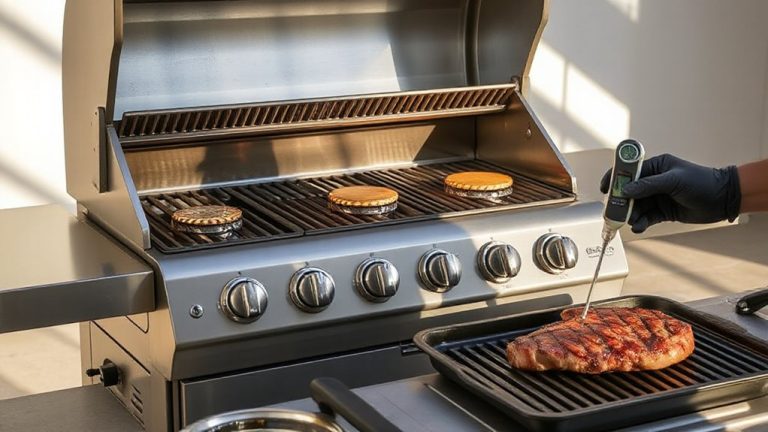
Heat control is your biggest advantage when switching to propane, and setting up the grill properly makes all the difference. Preheat your propane grill on high for 10–15 minutes to guarantee consistent temperatures across the grates. Then, configure it for two-zone cooking: turn one side to medium-high for direct heat, leaving the other side off or on low for indirect. The direct heat zone allows for quick, even searing, essential for crisping skin without drying out the meat. Position the burners evenly and clean the grates beforehand to prevent sticking and promote uniform browning. Propane heats faster and more precisely than charcoal, giving you reliable feedback during the finish. This setup gives you full command over doneness and texture, turning an over-smoked wing into a balanced, flavorful result. With the right prep, propane becomes a precision tool, not just a convenience. A well-chosen model ensures optimal performance and best gas grills for seamless transitions mid-cook.
How to Transfer Wings Without Losing Heat
Since maintaining consistent temperature is critical when moving between heat sources, you’ll want to move the wings quickly but deliberately to avoid a major drop in cooking temperature. Wing transfer timing matters-aim to shift them just before the charcoal begins overpowering the flavor, typically around the 30- to 40-minute mark, depending on your setup. Use heat retention methods like keeping both grills covered until the last second and preheating the propane grill fully beforehand. Tongs with a secure grip let you transfer efficiently, minimizing lid-open time. Carry the charcoal grate briefly, if safe, to reduce double-handling. Though some heat loss is inevitable, proper planning reduces thermal shock to the wings, preserving cook consistency. These methods reflect smart workflow design-essential for backyard pros aiming to balance smoke depth with control. A grill mat can also help prevent sticking and simplify transfers when finishing on the propane grill.
Fine-Tune Temperature on Propane
Once you’ve got the wings onto the propane grill, you’ll need to adjust the burners carefully to maintain a steady cooking environment-fluctuations past 25°F above or below your target can lead to uneven searing or stalling the crisp-up phase. Propane offers superior temperature control compared to charcoal, especially mid-cook, when consistency is critical. Use incremental flame adjustment to stabilize heat-turn the knobs slowly and monitor the lid thermometer closely. Most home grills cycle air unevenly, so placing the wings away from direct burner zones prevents scorching. You’ll find that dual-burner models allow zone management, letting you balance sear and safe carryover. Reliable temperature control isn’t just about the flame; it’s about feedback-your thermometer’s accuracy matters. Cheap sensors lag, giving false confidence. Invest in a digital probe to verify actual wing core temps. With precise flame adjustment and real-time monitoring, you turn a rescue cook into a controlled finish.
Keep Smoke Flavor Balanced
You’ve got the temperature dialed in and the wings cooking evenly, but don’t overlook what’s happening on the flavor front-smoke balance can make or break the final bite. Even if you switch to propane mid-cook, residual charcoal smoke can linger, risking an overpowering taste. That’s where flavor control becomes essential. You want smoke balance, not dominance-enough to enhance, not mask, the meat’s natural savor. Propane produces minimal smoke, so the shift naturally dilutes intensity, helping you regain control. Monitor the visual cues: a thin blue smoke early on is ideal; thick, white smoke often brings bitterness. By shifting fuels partway, you cap the smoke exposure while maintaining texture and doneness. It’s a strategic move for nuanced results. Ultimately, mastering smoke balance isn’t just about fuel choice-it’s about timing, observation, and knowing when to pivot for cleaner, more refined flavor control.
Avoid Common Dual-Fuel Grilling Mistakes
How often do you fire up the grill only to end up with unevenly cooked meat or a flare-up that chews through your sear? When using both charcoal and propane, fuel consistency is critical-switching between them without planning disrupts temperature stability. You risk creating hot or cold zones that sabotage even cooking. Poor heat management leads to underdone centers or charred exteriors, especially when shifting fuels mid-session. Always monitor the grill’s temperature gauge and adjust air vents or gas levels accordingly. Don’t just swap fuels blindly; anticipate how each affects radiant and ambient heat. Charcoal delivers intense, lingering heat, while propane offers precise control. Mismatched use causes more problems than it solves. For best results, establish a clear strategy: use charcoal for initial searing and smoke, then switch to propane for steady finishing. This approach balances flavor and control, reducing common dual-fuel errors that hurt performance and outcomes.
On a final note
You’ve saved those wings by switching to propane, and that’s smart grilling. Charcoal builds bold smoke, but propane gives precise control when things go too far. Transferring mid-cook works if done fast, keeping carryover heat in mind. Balancing flavor without overwhelming is key-too much smoke masks, not enhances. Dual-fuel isn’t a fix-all; it’s a strategy. Plan ahead, monitor temps, and let equipment work together. Done right, it’s efficient, flavorful, and reliable.