Camping Hack: Nesting Pots and Utensils Inside Cleaned Dutch Ovens for Compact Transport
Store your pots and utensils inside a clean Dutch oven for compact, organized transport-its heavy base stabilizes nested gear while protecting delicate coatings. Nest smaller pots upside down, filling gaps with lightweight tools like spatulas or sporks. Avoid sharp or rigid items that won’t fit. Clean thoroughly with hot water post-use, dry immediately, and use a dust cover to shield against grit and moisture, preserving both seasoning and performance. You’ll discover smarter ways to streamline your setup.
Notable Insights
- Clean and dry a Dutch oven thoroughly to prevent rust and flavor transfer when using it for storage.
- Place the heaviest nested pot at the base for stability, typically the Dutch oven itself.
- Nest smaller pots upside down inside the Dutch oven to save space and avoid scratches.
- Fit lightweight utensils like silicone spatulas and sporks into gaps between nested cookware.
- Use a padded, zippered carry bag with exterior pockets to transport the bundle securely and organized.
Store Pots and Utensils in a Clean Dutch Oven
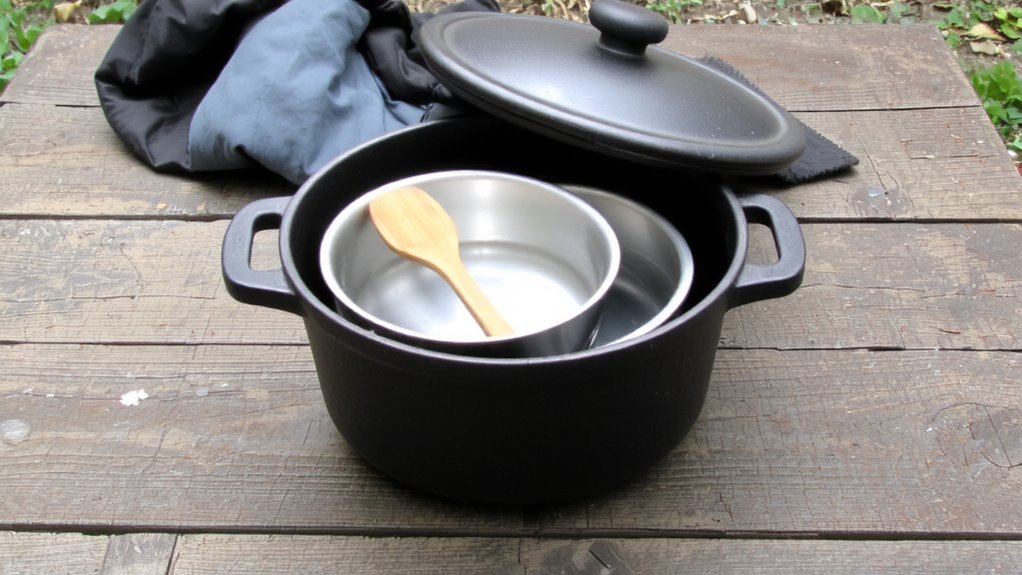
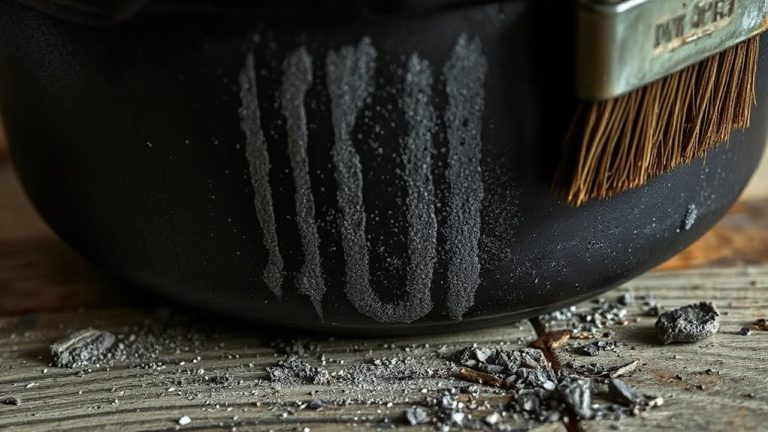
A clean Dutch oven isn’t just for cooking-it’s the backbone of an efficient outdoor kitchen, especially when you use it to store your nesting pots and utensils. Its heavy construction offers excellent heat retention, ensuring even cooking over coals, but that same density means residual oils and food particles can lead to flavor transfer if not properly cleaned. After cooking, scrub it thoroughly with hot water-avoid soap to preserve the seasoning-and dry immediately. Once clean, it becomes a sturdy, protective container. Nest your smaller pots inside, then tuck in spatulas, tongs, and even spice jars. The wide rim keeps contents secure, while the lid seals out dirt. You’re not just saving space; you’re protecting gear from moisture and abrasion. This method simplifies packing and maintains your cookware’s performance. Proper care prevents rust and maintains efficiency, making your Dutch oven as functional in storage as it is on the fire.
How to Nest Cookware for Maximum Space
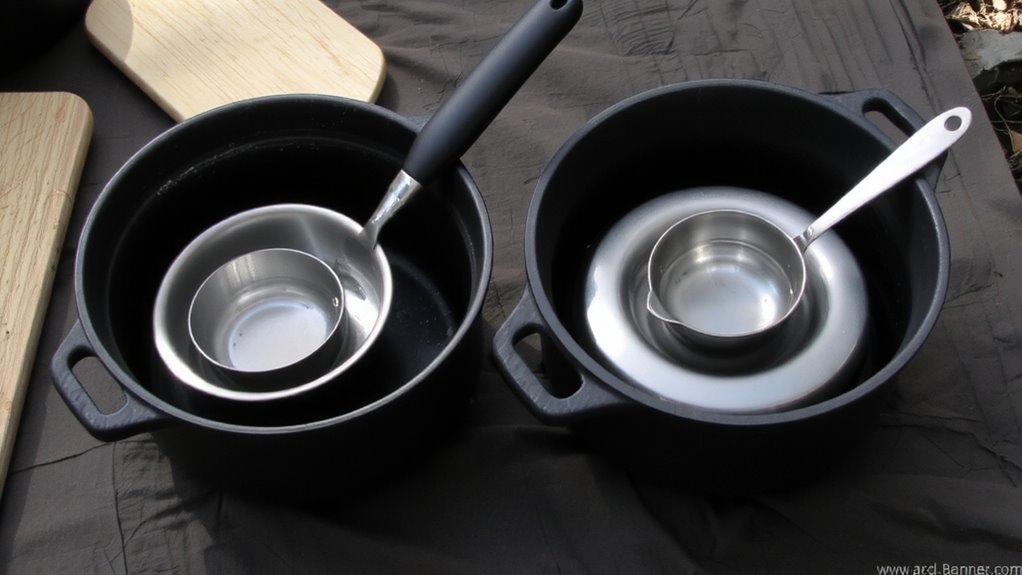
Smart organization starts with how you stack. Proper stacking techniques make all the difference when packing for backcountry trips. Begin by placing your heaviest pot-usually the Dutch oven-at the base. Then nest smaller pots inside, upside down, to maximize interior space and prevent scratching. Fit lightweight utensils in gaps, but avoid over-packing. Pay close attention to weight distribution: a balanced load prevents shifting during transport and makes your backpack or crate more stable. Center heavier items low and near the middle to maintain balance. Well-nested cookware isn’t just compact-it’s efficient and safer to carry. Thoughtful arrangement reduces wear on gear and streamlines meal prep at camp. When done right, stacking techniques transform bulky kits into streamlined systems, letting you pack more with less bulk. It’s not just about fitting things in-it’s about smart, functional design that performs under real outdoor conditions.
What Fits Inside a Dutch Oven (And What Doesn’t)
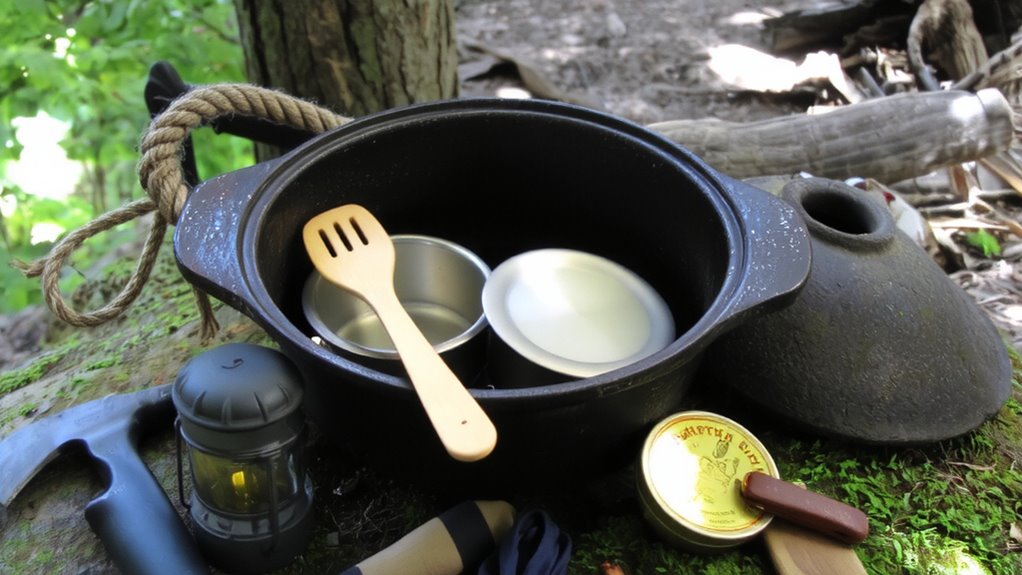
Space inside your Dutch oven matters-every inch counts when you’re optimizing for weight and efficiency on the trail. Pot size directly affects what you can nest inside. Most 10- to 12-inch models accommodate smaller pots, folding camp cups, and compact stoves with room to spare. Nesting works best when you stack cookware by descending diameter. Utensil types like silicone spatulas, sporks, and collapsible ladles fit easily, but bulky items like wooden spoons or large tongs often don’t. Avoid nesting sharp tools-they can damage enamel coatings. You’ll find that flatware and spice containers tuck neatly in gaps, but only if you plan your layout. Rigid items with odd shapes, such as coffee presses or fuel bottles, usually won’t squeeze in without risking closure or creating imbalance. Match your gear to your Dutch oven’s interior dimensions, and you’ll maximize packing efficiency without sacrificing access.
Keep Nested Gear Clean While Traveling
After securing your nested cookware, keeping it clean during transit means balancing protection with practicality. Dust covers are essential-they shield your gear from trail grit and unpredictable weather without adding bulk. A well-fitted cover lets you block debris while still allowing some airflow, reducing the chance of trapped moisture and mildew. Sealing rings, often overlooked, make a noticeable difference when used on latched cookware stacks. They create a tighter barrier against dust and can improve stacking stability. While not all setups include them, adding aftermarket rings boosts performance, especially on bumpy backcountry roads. You’ll find that combining dust covers with intact sealing rings keeps flavors uncontaminated and surfaces ready for cooking. Simple maintenance-like wiping rings clean and checking covers for tears-extends gear life. This setup isn’t perfect for monsoon conditions, but for most overlanding or car camping, it strikes the right balance between cleanliness and convenience.
Transport Your Camp Kitchen in One Bundle
You’ve got your nested pots sealed and shielded from dust, but even clean gear means little if it’s scattered across your pack or vehicle. For true camp kitchen hygiene and smart travel organization, consolidate everything into one transportable bundle. Slide your cleaned Dutch oven-now housing nested pots and utensils-into a padded, zippered carry bag with exterior pockets for spices and fuel. This method limits cross-contamination, keeps components secure, and speeds up setup. Compared to loose packing, bundled transport reduces wear, prevents lost items, and maintains cleanliness. It’s especially effective for car camping and off-grid base camps where efficiency matters. Well-designed bundles distribute weight evenly, making them easier to carry long distances. While not all kits include insulation or ventilated compartments, choosing one that does improves long-term gear maintenance. Ultimately, a single-kitchen bundle reflects thoughtful design and practical field performance.
On a final note
You’ll save space by storing compact pots and utensils inside a clean Dutch oven, but only if they fit without forcing. This method works best with nesting cookware and slender tools like spatulas or tongs. Avoid bulky or sharp items that could damage surfaces. Wipe the oven interior dry to prevent rust during transport. While efficient, remember that tight packing may lead to scratches or trapped debris. Properly maintained, this system streamlines packing, keeping your camp kitchen organized and ready.