The Ultimate Guide to Wood Chip Selection for Grilling Perfection
Your wood choice shapes the flavor of every grilled dish, so pick wisely. Hickory adds boldness to pork, while applewood gently complements poultry and fish. Skip soaked chips-they steam more than smoke and delay flavor. Dry, seasoned hardwoods burn cleaner and last longer, especially in long smokes like brisket. Avoid green wood and overcrowding the smoker. Match mild woods to quick grills, dense logs to slow cooks. Blend flavors carefully to balance sweetness and strength-there’s more to master about timing and technique.
Notable Insights
- Choose wood based on smoke intensity and flavor, as it directly impacts the final taste of grilled food.
- Pair hickory with pork and beef, applewood with poultry or salmon, and alder with fish for optimal flavor matches.
- Use dry, seasoned wood chips instead of soaked ones to ensure steady smoke and avoid steam interference.
- Avoid green or unseasoned wood, which produces soot and inconsistent smoke due to high moisture content.
- Match wood density to cooking method-use mild woods for fast grilling and dense woods for long, low-and-slow smoking.
How Your Wood Choice Shapes Smoke Flavor
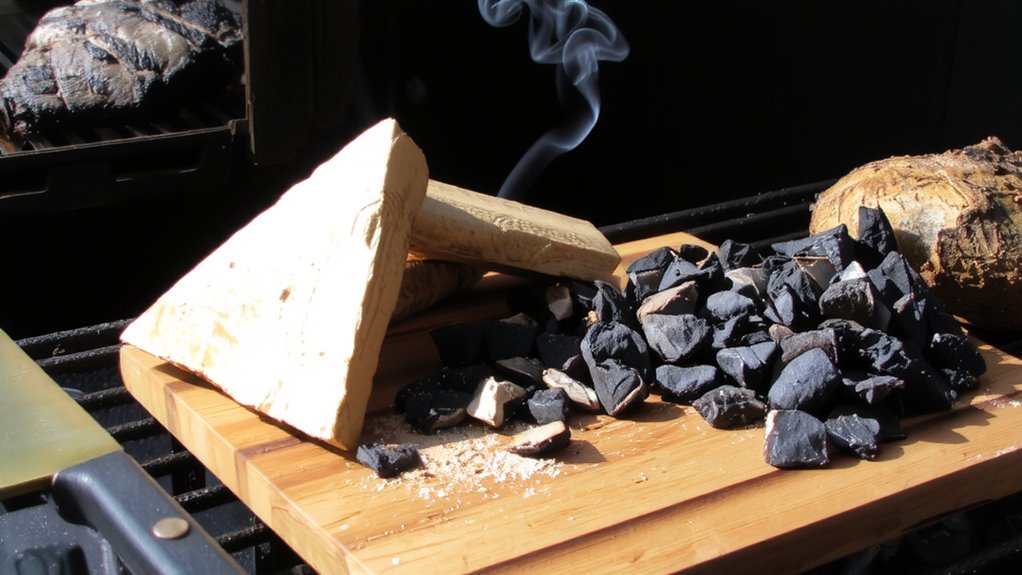
While every detail matters when grilling over wood, the type you choose directly determines the character of the smoke-and that changes everything about your final dish. You’re not just adding heat; you’re introducing flavor compounds that bind to the food’s surface. Smoke intensity varies widely between woods-hickory packs a strong, bold punch, while alder barely whispers. Your choice should match both the protein and your desired outcome. Wood origin plays a key role, too; fruitwoods like apple or cherry from well-drained orchards yield cleaner, sweeter smoke, whereas poorly sourced or damp wood creates acrid, harsh flavors. Hardwoods grown in mineral-rich soils often produce more consistent combustion and stable smoke profiles. Understanding these variables lets you control the outcome with precision. You’re not just grilling-you’re orchestrating chemistry, where smoke intensity and wood origin become your primary tools. For best results, consider using wood chips for smoking that are 100% natural and free of additives to ensure authentic, balanced flavor.
Best Wood Chips for Meats and Fish
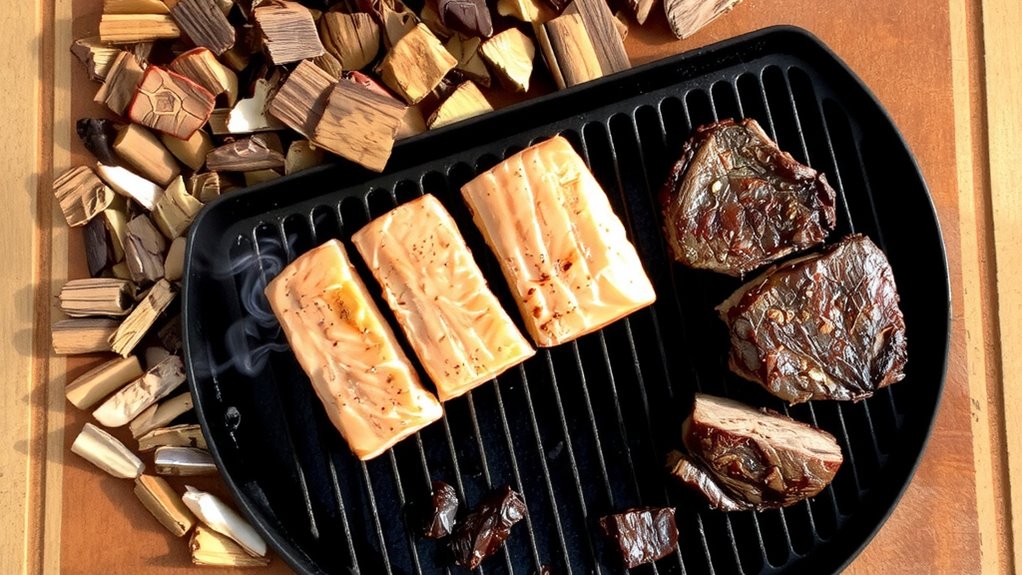
You’ll want to match your wood chips to the food you’re cooking-some bring boldness that stands up to red meat, while others offer subtlety ideal for delicate fish. When smoking bacon, hickory or maple delivers richness without overpowering, enhancing the savory-sweet balance. For grilling salmon, alder or applewood gives a gentle smoke that complements its oil-rich flesh. Mesquite, though potent, can dominate unless used sparingly with hearty cuts like brisket. For those smoking chicken, selecting the right wood is key to achieving best wood chips for smoking chicken flavor without overwhelming the meat. Here’s a quick guide:
| Wood Type | Best For |
|---|---|
| Hickory | Pork, smoking bacon |
| Apple | Poultry, grilling salmon |
| Alder | Fish, light meats |
| Mesquite | Beef, bold flavors |
| Maple | Breakfast meats, veggies |
Dry Vs. Wet Chips: What Burns Better?
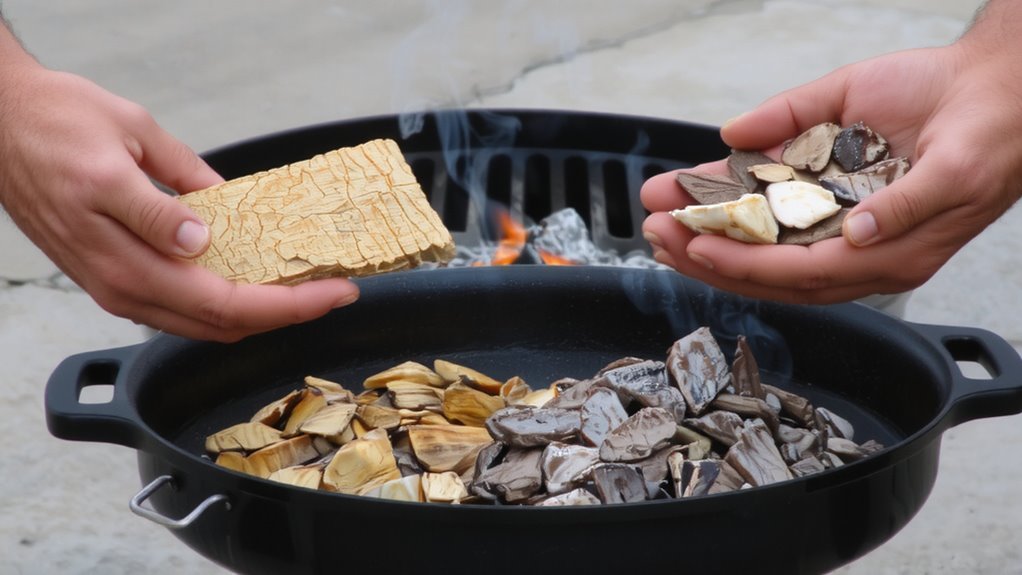
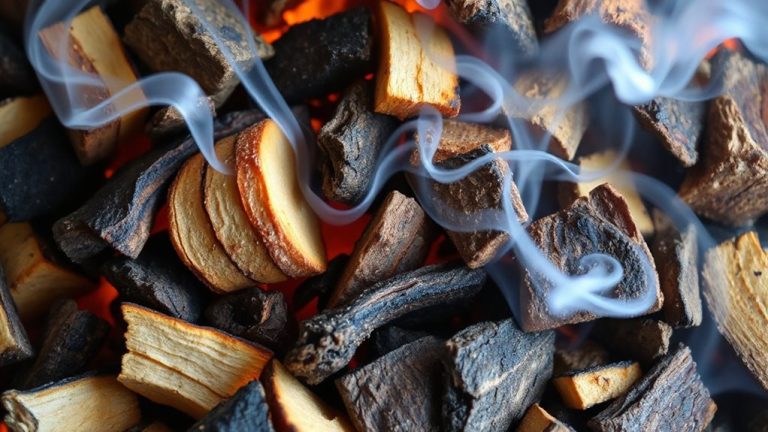
If you’re aiming for consistent smoke and steady heat on the grill, dry wood chips are usually your best bet-moisture content directly affects burn efficiency, and soaked chips often steam more than smoke, disrupting flavor development. High chip moisture slows ignition and creates uneven burn rates, which can lead to inconsistent smoking. Dry chips ignite faster and maintain a steady burn rate, delivering reliable flavor over time. Many experienced grillers prefer dry chips because they offer better control and predictable smoke output. While soaking chips is often touted to extend burn time, it usually just delays smoke production and may douse coals if added too soon. You’ll get cleaner combustion and more efficient fuel use with dry chips. Ultimately, managing chip moisture is key-dry means efficient; wet means complications. For real grilling precision, skip the soak and focus on proper airflow and chip prep instead. Top-rated options in the best smoking wood category are specifically seasoned for low moisture content to ensure optimal burn performance.
Common Wood Chip Mistakes to Avoid
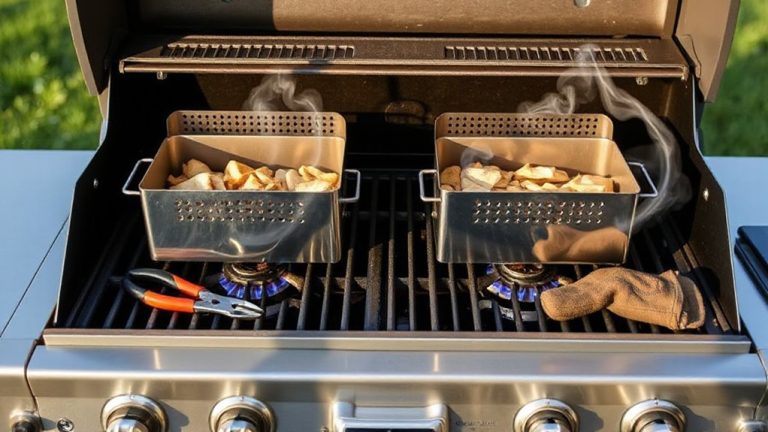
A surprising number of grill enthusiasts make avoidable errors when using wood chips, often undermining the flavor and consistency of their smoked dishes. You might be tempted to dump too many chips at once, which can lead to overheating equipment and bitter, acrid smoke that ruins your meat. Instead, use a measured amount-about a handful for most grills-and monitor the burn rate. Inconsistent smoke is another red flag; it usually means poor airflow or incorrect chip placement. Position your wood chips directly over heat sources, but not so close that they ignite rapidly. A smoker box or foil pouch helps regulate release. You’ll get cleaner, steady smoke, enhancing flavor without overwhelming the food. Avoid green or unseasoned wood, which creates excess steam and soot. Choose properly dried chips for efficient burning and ideal, aromatic results every time.
To Soak or Not to Soak? The Real Answer?
Why do so many backyard grillers still soak their wood chips before throwing them on the fire? You’ve probably heard it helps them smolder longer. But here’s the truth: soaking doesn’t improve smoke duration-it just delays ignition. Wet chips spend precious time steaming off moisture before they can produce smoke, robbing you of consistent flavor early in the cook. Once dry, they burn similarly to dry chips. Plus, the difference in smoke output isn’t significant enough to justify the wait. Your chip size matters more: smaller chips ignite faster but burn quicker, while larger chunks sustain smoke longer. If you’re after steady flavor, focus on chip size and airflow instead of soaking. Dry chips give more predictable results, especially for shorter grilling sessions. Skip the soak-it won’t hurt, but it won’t help much either.
Fast Grill Vs. Long Smoke: Pick the Right Wood
What happens when you pair a quick-searing steak with a wood meant for low-and-slow barbecue? You end up with bitter, overwhelming smoke that ruins your food. For fast grilling, choose a chip type with a short burn time-like alder or cherry-so the mild smoke complements, not dominates. These woods ignite quickly and fade fast, perfect for burgers, fish, or vegetables cooked over high heat in under 20 minutes. But for long smokes-think brisket or pork shoulder-you need dense, slow-burning chips such as hickory or oak. Their extended burn time sustains flavor over hours, integrating deeply into the meat. Matching chip type to cook method isn’t just practical; it’s essential. Pick light, fast chips for brief grills, and heavy, slow chips for marathon smokes. Do this, and you’ll nail the balance every time.
How to Mix Wood Flavors Like a Pro
Ever wonder how seasoned pitmasters achieve that complex, layered smoke flavor without overpowering the meat? It’s all in the wood blending techniques and smart flavor pairing tips. Mixing woods lets you balance strength and subtlety-like pairing strong mesquite with mild pecan to avoid bitterness while adding depth. Use robust woods for long smokes and delicate ones for short grills. Below are key combinations that spark nostalgia, comfort, and satisfaction:
| Wood Blend | Flavor Profile | Emotional Response |
|---|---|---|
| Hickory + Apple | Sweet, smoky | Childhood backyard cookouts |
| Oak + Cherry | Rich, slightly sweet | Weekend warrior pride |
| Mesquite + Pecan | Bold, nutty | Bold flavor confidence |
| Maple + Alder | Mild, smoky-sweet | Cozy family meals |
| Cherry + Whiskey Chips | Fruity, warm | Celebration & indulgence |
Mastering this art elevates your BBQ from good to unforgettable.
On a final note
You’ve got the tools to master wood chip selection, and it makes a real difference in flavor. Choose hardwoods for boldness, fruitwoods for subtlety, and always match your wood to cook time and protein. Soaking chips? Unnecessary-it just delays smoke. Dry chips ignite faster and deliver consistent flavor. Mixing woods works when done thoughtfully. Avoid common errors like over-smoking or using softwoods. Your grill performs better with clean, seasoned wood, giving you control, depth, and true BBQ character every time.