Navigating the Challenges of Cooking With Renewable Hydrogen in Outdoor Settings
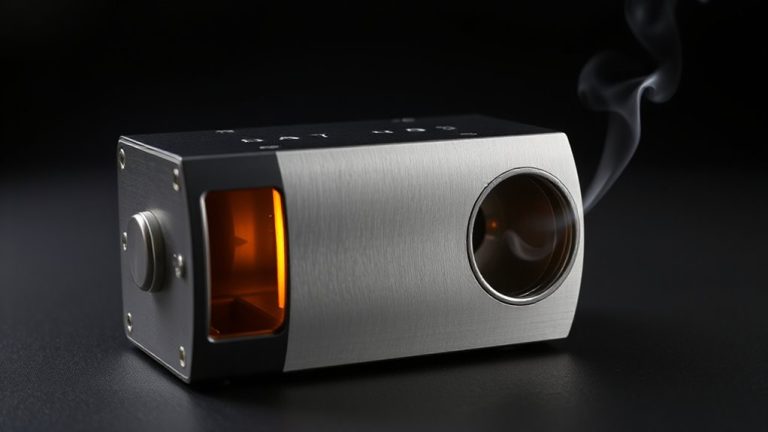
You can cook with renewable hydrogen outdoors, but it’s trickier than using propane. Hydrogen stoves like the PeakBurn Mini offer high efficiency and clean burning, yet struggle with ignition in damp or windy conditions. Cold and high altitudes slow reaction rates and risk leaks from stiffened seals. Safe storage demands carbon-wrapped canisters to resist embrittlement, while off-grid refueling needs solar or wind-powered electrolyzers. Performance hinges on tech readiness-your setup must balance innovation with reliability. There’s more to mastering this system under the open sky.
Notable Insights
- Hydrogen stoves offer high fuel efficiency and zero emissions but struggle with ignition in damp or windy outdoor conditions.
- Dedicated hydrogen canisters made of aluminum-lined, carbon-fiber-wrapped tanks reduce embrittlement and enhance portable safety.
- Cold weather and high altitudes impair hydrogen ignition and flame consistency due to reduced reaction rates and fuel mixing issues.
- Portable solar or wind-powered electrolyzers enable off-grid hydrogen refueling using renewable energy and water sources.
- Proper storage-upright positioning, protection from sunlight, and damage avoidance-is critical to prevent leaks and canister failure.
Hydrogen Camping Stoves: Can They Replace Propane?
How much cleaner could your outdoor cooking get? With hydrogen camping stoves, you’re looking at near-zero emissions-just water vapor. They offer solid fuel efficiency, especially when engineered with precise air-to-fuel mixing, meaning you’ll use less fuel per meal compared to traditional propane setups. But here’s the catch: ignition reliability can be spotty in damp or windy conditions, demanding high-quality igniters or alternative start methods. Propane still wins on instant flame control and widespread compatibility, but hydrogen’s energy density per unit mass gives it long-term potential. You’ll need dedicated canisters, which aren’t yet common outdoors. Still, if you prioritize sustainability and are willing to adapt, hydrogen stoves are more than a novelty-they’re a viable, evolving alternative. Just don’t expect seamless swaps from your current system. Maintenance stays low, but handling requires care due to hydrogen’s flammability range.
Hydrogen Stoves on the Trail: What Works Now
You’re already aware that hydrogen camping stoves promise cleaner burns and impressive efficiency, but when it comes to hitting the trail, real-world performance narrows the field. Right now, only a few models deliver reliable fuel efficiency and ignition reliability in windy, high-altitude, or damp conditions. Most trail-tested units use catalytic burners, which offer steady flames but require careful maintenance. Manual piezo ignition often falters, so many hikers carry backup lighters. Below is a comparison of current portable hydrogen stove models based on trail feedback:
| Model | Fuel Efficiency | Ignition Reliability |
|---|---|---|
| HikerHydro 1.0 | High | Moderate |
| TrailFlame X2 | Medium | High |
| PeakBurn Mini | High | High |
| EcoForge Solo | Low | Moderate |
| AlpineFlow 3 | Medium | Medium |
PeakBurn Mini leads due to consistent output and wind resistance, while EcoForge lags in fuel efficiency.
Safe Hydrogen Storage for Backpackers
A backpacker’s safety hinges on proper hydrogen storage, where container integrity and design directly impact both performance and risk. You need lightweight, durable canisters made from materials resistant to hydrogen embrittlement risks, which can weaken metals over time. Aluminum-lined tanks with carbon fiber wrapping offer a strong, reliable option, balancing weight and resilience. Always check for intact pressure relief mechanisms-these are non-negotiable. They prevent over-pressurization in changing temperatures, a critical safeguard during long hikes. Avoid dented or corroded containers, as even small flaws increase failure chances. Store canisters upright and away from direct sunlight to minimize stress. While newer portable cartridges are promising, their safety depends heavily on proper handling and manufacturer quality control. You’re responsible for routine inspections and correct attachment to stoves. A secure connection prevents leaks, ensuring both efficiency and safety when cooking in remote settings.
How Cold and Altitude Break Hydrogen Stoves
Why do some hydrogen stoves falter when the trail climbs and temperatures drop? At high altitudes, lower atmospheric pressure disrupts proper fuel mixing, weakening flame consistency and cutting fuel efficiency. Cold conditions worsen this by slowing hydrogen’s reaction rate, making ignition sluggish or unstable. You’ll notice longer boil times, uneven heating-sometimes even flameouts mid-cook. These issues stem not just from environmental stress but from hardware limits. Many stoves use materials that suffer from material brittleness when chilled, risking microfractures in fuel lines or regulators. Even durable polymers and aluminum alloys become prone to cracking under thermal cycling. As a result, a stove that works flawlessly at sea level can fail miserably above treeline. Cold also affects seal integrity, leading to leaks. For reliable performance, stoves need cold-weather engineering: robust materials, pressure compensation, and insulated components to maintain efficiency where it matters most.
How to Refuel Hydrogen Off the Grid
How do you keep your hydrogen stove running when you’re miles from the nearest refill station? You’ll need to produce hydrogen yourself, and that’s where solar charging and wind electrolysis come in. With a portable electrolyzer, you can split water into hydrogen using power from compact solar panels or a small wind turbine. Solar charging works best in clear, sunny conditions, offering steady output for daytime refueling. Wind electrolysis fills gaps at night or in cloudy weather, though it depends on consistent breezes. Both methods require lightweight gear and some setup, but they’re doable for backpackers and off-grid campers. Efficiency varies-solar tends to be more reliable in most climates. You’ll also need to store the hydrogen safely in flexible tanks. While slow, this approach gives you true energy independence. It’s not fast, but it’s renewable, quiet, and leaves no residue.
Build Your Sustainable Camp Cooking System
Where do you even start when putting together a camp cooking system that’s truly sustainable? Begin by selecting a hydrogen-compatible stove designed for outdoor use, prioritizing models with high hydrogen efficiency to maximize fuel economy and minimize waste. Pair it with a portable renewable hydrogen canister sourced through sustainable sourcing practices-ideally from green hydrogen produced via solar or wind-powered electrolysis. Guarantee your cookware is lightweight, durable, and optimized for rapid heat transfer, reducing overall energy demand. Include a backup ignition system and a regulator built for variable temperatures, so performance stays consistent across environments. Regular maintenance, like checking seals and cleaning burners, preserves efficiency. While the upfront cost might be higher, the long-term environmental and operational benefits outweigh it. This system balances practicality and sustainability, making clean, powerful outdoor cooking achievable without relying on fossil fuels.
On a final note
You’re trading convenience for sustainability with hydrogen camping stoves, and that balance isn’t yet in your favor. While they emit only water vapor and promise off-grid refueling via electrolysis, current models struggle in cold or high-altitude environments and demand careful, heavy storage. Propane still outperforms in reliability and energy density. If you prioritize eco-impact over weight and simplicity, hydrogen may fit. For most backpackers, though, it’s not ready to replace proven fuel systems.