Why Hickory Delivers a Stronger Smoke Taste Than Pecan in Slow-Cooked Meats
You get a stronger smoke from hickory because it’s denser and richer in resins than pecan, burning hotter and longer with more intense flavor. Its high lignin content releases bold, bacon-like phenols that cling to meat over hours. Pecan, softer and more porous, gives a milder, sweeter smoke-better for delicate dishes. For robust barbecue, hickory’s depth outperforms. Pair it wisely, and you’ll discover how balance elevates the whole cook.
Notable Insights
- Hickory’s dense, resinous wood burns hotter and longer, producing more intense smoke than pecan.
- Tight grain structure and low porosity in hickory slow combustion, enhancing smoke concentration and flavor retention.
- Higher lignin content in hickory releases more volatile phenols, creating a bolder, bacon-like smokiness.
- Pecan’s higher porosity and cellulose content yield a milder, sweeter smoke with less intensity.
- Hickory’s robust flavor sustains over long cooks, while pecan’s delicate notes suit shorter or blended smoking.
Why Hickory Smokes Stronger Than Pecan
Many backyard smokers notice right away that hickory delivers a bolder, more assertive flavor than pecan-often within just the first few minutes of a smoke session. That intensity comes not just from personal taste but from the wood’s origin; hickory grows dense and resinous in the central and eastern U.S., where its slow growth concentrates aromatic compounds. Pecan, while botanically related, comes from trees bred primarily for nut production in southern regions, resulting in a milder smoke. Regional availability also influences usage-hickory is widespread and traditionally favored in barbecue-heavy states, reinforcing its reputation. You’ll find it easier to source consistent, dry hickory splits, which burn hotter and release more robust phenols. Pecan, though accessible in the South, often lacks the same curing standards. So when you’re aiming for that deep, smoky punch in brisket or ribs, hickory’s origin and reliable availability make it the go-to choice over subtler pecan. For those seeking optimal results, selecting the right best smoking wood can significantly impact flavor and cooking performance.
How Wood Density Impacts Smoke Intensity
Density’s role in smoke intensity can’t be overlooked-hickory’s tight grain structure burns hotter and longer than pecan, releasing a heavier concentration of flavor compounds over time. That sustained, consistent heat means more smoke development where wood porosity and resin concentration play key roles. Less porous hickory holds more resins, which ignite at higher temperatures, amplifying flavor output. Pecan, being more porous, burns faster and cooler, reducing smoke density and taste depth. Best wood chips for smoking offer balanced density and resin levels to enhance flavor without overpowering the meat. You’ll notice hickory’s smoke lingers stronger on meats because its compact fibers and lower wood porosity slow combustion-giving you richer, longer-lasting smoke with every burn. That’s why pitmasters favor it for bold profiles.
What Makes Hickory Chemically More Intense
You already know hickory burns longer and hotter than pecan, thanks to its dense, tightly grained structure-but that’s only part of what makes its smoke so powerful. The real punch comes from its lignin composition, which breaks down more aggressively when heated, releasing a higher concentration of volatile phenols. These compounds are the backbone of smoke flavor, and hickory produces more of them than pecan, especially during steady, low burns. You’ll notice this as a bold, almost bacon-like smokiness that clings to meat. That chemical intensity means you need less wood to achieve deep flavor, but it also demands careful control-too much hickory can overwhelm. Still, for pitmasters who want a robust, unmistakable taste, hickory’s richer phenolic output makes it the go-to. It’s not just stronger; it’s structurally built to dominate. For those seeking the best results, selecting premium Best Hickory Picks ensures optimal smoke quality and consistency.
Why Pecan Smoke Is Sweeter and Milder
While hickory commands attention with its bold, assertive smoke, pecan takes a more delicate approach, delivering a flavor that’s noticeably sweeter and milder due to its lower lignin content and higher cellulose ratio. You’ll notice its smoke integrates smoothly into poultry, pork, and even fish without overwhelming them. Pecan produces subtle floral notes and a gentle nutty aroma, making it ideal when you want complexity without intensity. Because it burns cooler and more evenly than dense hardwoods, it gives you better control during long smokes. You’re less likely to get bitter, acrid off-flavors, even if your smoker runs a bit hot. Barbecue enthusiasts who prefer refined depth over punchy smoke find pecan delivers just enough character to enhance, not dominate. It’s especially effective when blending with fruitwoods for a layered profile. For dishes where balance is key, pecan’s sweetness and mildness offer a sophisticated alternative to heavier smokes.
When to Use Hickory for Bold Flavor
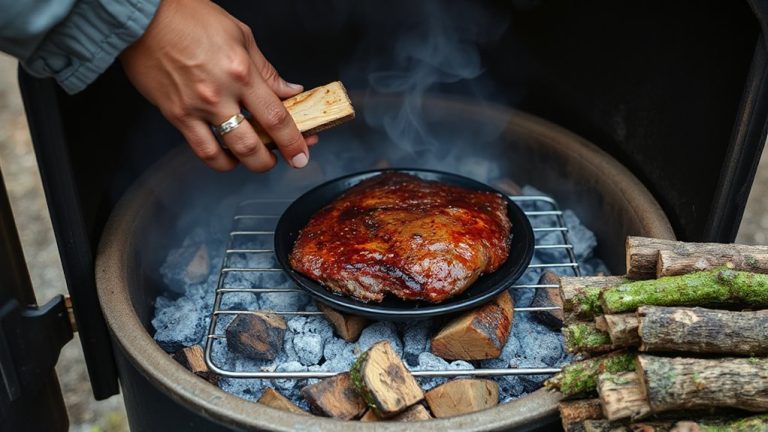
A bold smoke profile isn’t just a flavor choice-it’s a statement, and hickory delivers it with authority. You’ll want hickory when chasing deep, robust notes that stand up to long cooking duration, especially with beef, pork shoulder, or brisket. Its intense smoke holds firm over hours, enriching the meat without fading. Think of it as your go-to when you need smoke to dominate, not just complement. For flavor pairing, hickory shines alongside spices like black pepper, garlic, and paprika-ingredients common in bold rubs. It’s especially effective in traditional Southern BBQ, where strong smoke is expected. Avoid using it on delicate meats like chicken or fish, where its power can overwhelm. Hickory burns hot and slow, making it ideal for steady, controlled smoking. When you’re after that unmistakable, hearty smokiness that lingers on the palate, hickory isn’t just a choice-it’s the cornerstone.
Mixing Pecan With Stronger Woods
Because pecan burns cooler and milder than denser hardwoods, it often plays better in combination than on its own, especially when you’re aiming for depth without overpowering the meat. Wood blending allows you to fine-tune smoke intensity, and pairing pecan with stronger woods like hickory or oak gives you better flavor balance. You get pecan’s subtle sweetness while still achieving the rich, robust backbone needed for long smokes. Here’s how common pairings perform:
| Primary Wood | Blend Partner | Flavor Balance Outcome |
|---|---|---|
| Hickory | Pecan (3:1) | Bold smoke with soft sweetness |
| Oak | Pecan (2:1) | Earthy depth, mild nuttiness |
| Mesquite | Pecan (1:1) | Sharp kick rounded by smoothness |
This approach gives control, letting you sculpt smoke profiles that enhance, not mask, the meat. Wood blending isn’t just practical-it’s essential for nuanced results.
On a final note
You’ll find hickory delivers a bolder smoke because its high density and lignin content produce more intense, lingering compounds when burned. Pecan, softer and richer in natural sugars, gives a sweeter, subtler profile. For robust barbecue-like brisket or ribs-hickory’s depth works best. But when you want nuance, pecan stands alone or blends well with stronger woods, balancing flavor without overpowering. Choose wood like you season: with purpose and taste in mind.