How Additives in Commercial Briquettes Alter the Taste of Grilled Vegetables
Commercial briquettes often contain binders, limestone, and accelerants that release sulfur compounds and volatile organic compounds when burned, tainting your grilled vegetables with bitter, chemical aftertastes. These additives dull the natural sweetness of zucchini, eggplant, and peppers while leaving behind residues that mask true smoky flavor. Switching to natural lump charcoal means cleaner burns, better caramelization, and purer smoke-enhancing, not overpowering, your veggies. You’ll taste the difference from the first bite, and discover even more ways to elevate your grill game.
Notable Insights
- Additives in commercial briquettes release chemical residues that create a bitter, off-putting taste on grilled vegetables.
- Sulfur compounds and VOCs from burning binders contaminate food, dulling natural sweetness and aroma.
- Limestone and coal dust burn unevenly, producing soot that transfers harsh flavors to porous vegetables.
- Chemical aftertaste from additives masks the desired smoky essence, even with proper ventilation.
- Independent tests show PAHs in briquette smoke, contributing to undesirable flavor and potential health risks.
What’s Really in Your Charcoal Briquettes?
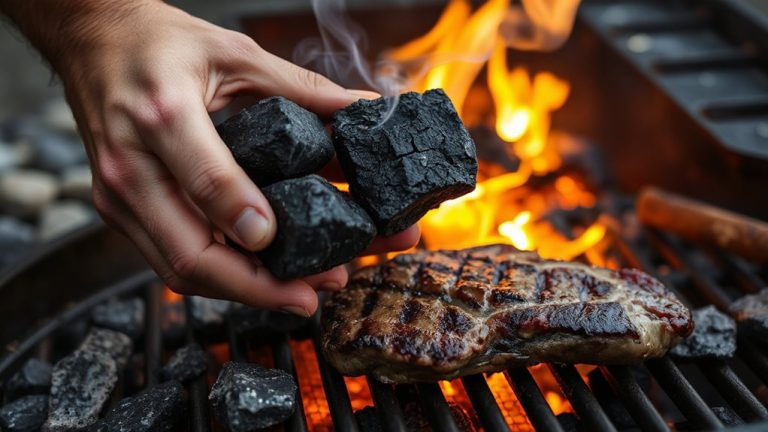
Ever wonder what’s actually burning beneath your zucchini and bell peppers? Most commercial briquettes aren’t just compressed charcoal-they contain binders, accelerants, and limestone to aid ignition and heat consistency. When lit, these additives produce combustion byproducts that rise with the smoke, settling onto your vegetables. You’re not just grilling; you’re potentially exposing your food to chemical residues like sulfur compounds and volatile organic compounds. While they may help maintain steady heat, the trade-off isn’t trivial. Independent lab tests have detected trace amounts of polycyclic aromatic hydrocarbons (PAHs) in smoke from treated briquettes-known irritants and potential carcinogens when consumed in excess. Natural lump charcoal burns cleaner, with fewer combustion byproducts and virtually no added chemical residues. If you care about what touches your food, consider the source of your flame. Your veggies deserve better than hidden additives masquerading as convenience. Choose wisely-flavor and health depend on it. For those seeking cleaner burns and enhanced flavor, top picks for lump charcoal offer a superior alternative to additive-laden briquettes.
How Additives Ruin the Taste of Grilled Veggies
Those chemical additives in standard briquettes don’t just raise health concerns-they also interfere with flavor in ways you can taste. When you grill veggies over these briquettes, you’re likely introducing flavor contamination that dulls their natural sweetness and complexity. Binders like limestone and coal dust burn unevenly, releasing compounds that cling to food. You’ve probably noticed a subtle bitterness on grilled zucchini or bell peppers-that’s the chemical aftertaste of these additives. Unlike clean-burning fuels, they produce off-notes that mask the smoky essence you’re aiming for. Even with proper ventilation, the residues can transfer to your vegetables, especially porous ones like eggplant or mushrooms. This undermines the careful seasoning and prep you put in. If you’re serious about taste, that chemical aftertaste is a dealbreaker. Flavor contamination isn’t just theoretical-it’s on your plate, altering the very experience of outdoor cooking in ways you can’t ignore.
Why Natural Charcoal Makes Vegetables Taste Sweeter
When you choose natural charcoal over conventional briquettes, you’re not just avoiding artificial additives-you’re actively enhancing the flavor profile of your grilled vegetables. Without fillers or chemical binders, natural charcoal burns cleaner and hotter, promoting better caramelization enhancement on vegetable surfaces. That steady, high heat draws out natural sugars, creating a deeper, sweeter flavor through precise Maillard reactions. Plus, the absence of synthetic materials allows the pure, woody aroma of real charcoal to impart a subtle natural smoke flavor-something additives often mask or distort. You’ll notice zucchini, bell peppers, and eggplant develop richer, more balanced tastes, closer to wood-fired grilling than chemical-tinged results. It’s not just preference; it’s chemistry. Real charcoal supports consistent combustion, which translates to even cooking and superior taste development. For flavorful, genuinely sweet grilled vegetables, skip the processed briquettes. Let natural charcoal do the work-your palate will recognize the difference immediately. Exploring top-quality options can lead to noticeable improvements in both performance and flavor, making a Best Charcoal Deals & Buying Guide essential for informed choices.
Best Additive-Free Charcoals for Grilling Veggies
Though not all additive-free charcoals deliver the same performance, selecting the right one can make a noticeable difference in how your grilled vegetables turn out. You’ll want lump charcoal made from hardwoods like oak or maple-they offer clean combustion, steady heat consistency, and moderate smoke intensity, which won’t overpower delicate veggies. Brands like Kamado Joe Classic or Jealous Devil BBQ Lump Charcoal use minimal processing, preserving natural wood properties that enhance flavor without chemical residues. These types ignite reliably and maintain even temperatures, essential for charring zucchini, bell peppers, or eggplant without burning. Avoid charcoals with dust or irregular chunks, as they lead to hot spots and uneven cooking. While pricier, high-quality lump varieties give you greater control and a purer smoke profile. With consistent heat and balanced smoke intensity, your vegetables caramelize evenly, bringing out sweetness and depth without unwanted bitterness or chemical aftertaste. For portable options that maintain these qualities, consider a compact charcoal grill designed for outdoor use.
Easy Fuel Swaps That Enhance Flavor
What if you could elevate your grilled vegetables simply by changing your fuel source? Switching from commercial briquettes to natural lump charcoal gives your veggies a cleaner burn and a more authentic smoky aroma. You’ll notice less chemical aftertaste and better control over heat, which improves char balance-crisp edges without bitterness. Hardwood lump burns hotter and faster, so monitor cooking times, but the flavor payoff is worth it. For a mellower profile, try fruitwood briquettes made without additives; they offer a nuanced smoky aroma that complements zucchini, eggplant, or bell peppers. Even a half-and-half mix of lump and additive-free briquettes can fine-tune temperature stability while enhancing taste. These easy swaps don’t demand new equipment or techniques, just a mindful choice at the checkout. You’re not just fueling the grill-you’re shaping flavor from the ground up.
Switching Fuels: A Tastier Way to Grill Veggies
You’re not just changing fuel-you’re resetting how your vegetables taste on the grill. Switching from commercial briquettes to natural lump charcoal or wood offers better flavor enhancement and heat control. Additives in standard briquettes can leave a chemical aftertaste, while cleaner-burning alternatives highlight the natural sweetness of veggies like zucchini, peppers, and eggplant. With lump charcoal, you get hotter startup temps and less ash, making it easier to manage cooking zones.
| Fuel Type | Flavor Enhancement | Heat Control |
|---|---|---|
| Briquettes | Low | Moderate |
| Lump Charcoal | High | Excellent |
| Wood Chunks | Very High | Variable |
You’ll notice cleaner sear marks and deeper smokiness. For consistent results, pair hardwoods like oak or cherry with medium-density vegetables. This switch isn’t just aesthetic-it’s a functional upgrade for precise, flavorful grilling.
On a final note
You’ve seen how additives in commercial briquettes release harsh fumes that dull the natural sweetness of grilled vegetables. Natural lump charcoal burns cleaner and hotter, enhancing flavor without chemical interference. You’ll notice brighter, smokier notes and better caramelization. For consistent results, switch to additive-free options like hardwood lump or coconut-based charcoals-they perform better and preserve taste. It’s a simple change, but it makes your vegetables taste like they should: fresh, rich, and truly grilled.