How to Cook Seafood on a Hibachi Grill Without Drying It Out
Choose firm, fresh seafood like swordfish, salmon, or scallops-they hold up well on a hibachi grill. Prep your grill with clean grates and a two-zone heat setup to control searing and gentle cooking. Pat seafood dry, oil lightly, and season just before grilling to lock in moisture. Start delicate items over indirect heat, then sear briefly over high heat. Finish with a squeeze of citrus or a dab of herb butter for added juiciness. Watch for these techniques in action, and you’ll see how precision keeps every bite succulent.
Notable Insights
- Choose firm, fresh seafood like swordfish, salmon, or scallops to retain moisture during grilling.
- Prep the grill with clean grates and a two-zone heat setup for precise temperature control.
- Pat seafood dry and lightly oil it to prevent sticking and help retain natural juices.
- Use indirect heat first, then sear briefly over direct flame to avoid overcooking delicate flesh.
- Finish with a splash of citrus or a dab of compound butter to enhance moisture and flavor.
Choose the Best Seafood for Hibachi Grilling
When it comes to hibachi grilling, not all seafood holds up the same under high heat-some flake apart, while others char too quickly. You’ll want firm, resilient options like swordfish, scallops, or tiger prawns; they sear beautifully without falling apart. Salmon and tuna steaks also work well, thanks to their fat content, which helps retain moisture. Always prioritize seafood freshness-the flesh should be glossy, smell clean, and spring back when touched. Anything mushy or overly fishy signals poor handling. Equally important is sustainable sourcing; choosing responsibly harvested seafood supports ocean health and often means better quality. Farmed scallops or wild-caught Alaskan salmon, for example, offer both reliability and ethical sourcing. Avoid thin, delicate fish like sole-they’re prone to drying or sticking. By selecting the right species and verifying freshness and sourcing, you guarantee flavorful, moist results every time.
Prep Your Hibachi Grill for Even Heat
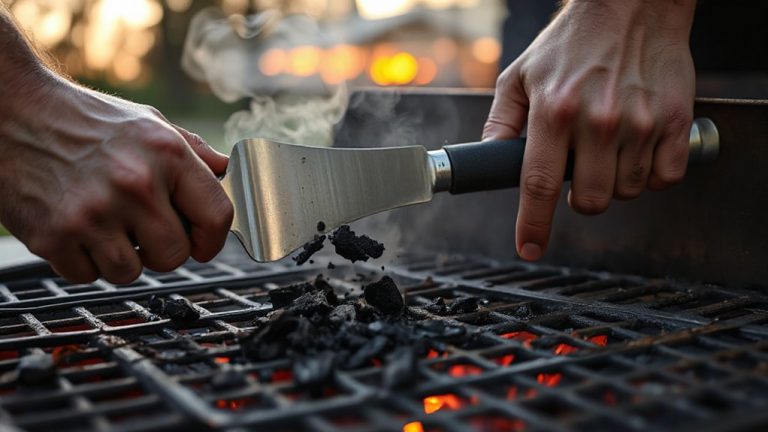
Though you’ve chosen the ideal seafood, getting the grill right is just as critical for keeping it moist and well-seared. Before firing up, prioritize grill maintenance-clean grates prevent sticking and guarantee uniform searing. Built-up residue disrupts heat transfer and can impart off-flavors, so scrub thoroughly with a brass brush while warm. Check for clogged burner ports or grease buildup, which compromise performance. Next, focus on heat calibration. Hibachi grills often deliver intense, uneven heat, so use a two-zone setup: one side high for searing, the other medium-low for gentle cooking. Verify temperatures with an infrared thermometer for accuracy. A properly calibrated grill maintains consistent heat, reducing hot spots that dry out delicate fish. This balance of cleanliness and precision guarantees ideal sear without sacrificing juiciness-essential for superior results every time. For best outcomes, consider choosing one of the top hibachi grills based on performance and design.
Oil and Season for Flavor That Sticks
You’ve got your hibachi clean and properly heated with a solid two-zone setup, so now it’s time to focus on flavor-specifically, how to lock it into your seafood without driving moisture out. Start by patting the seafood dry, then coat it lightly with oil-this creates a base that helps seasoning adhere and prevents sticking. When using a marinade, aim for the right consistency; too watery, and it drips off, too thick, and it burns. A balanced marinade clings well and enhances, not overwhelms. Equally important is spice balance-complement the seafood’s delicacy without masking it. Overpowering chili or salt can ruin texture and taste. Apply seasoning just before grilling to preserve moisture. This method guarantees flavor sticks where it should, enhancing your result with precision, not guesswork.
Control Heat With Direct and Indirect Zones
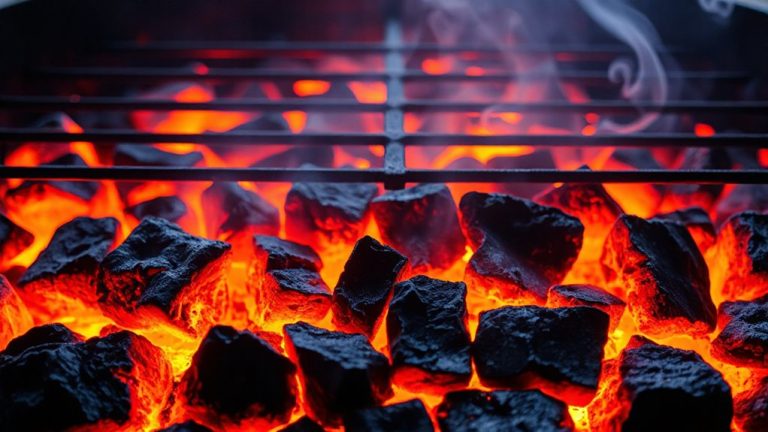
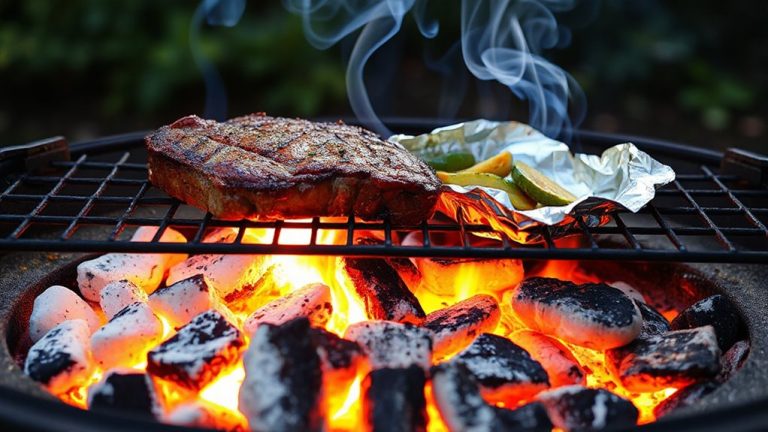
If you’re aiming for perfectly cooked seafood on a hibachi, mastering the balance between direct and indirect heat is essential-you can’t rely on high heat alone without sacrificing tenderness. Set up your grill with coals on one side for searing (direct zone) and leave the other side cooler (indirect zone). Start delicate items like shrimp or fish fillets over indirect heat to avoid overcooking, then move them over direct flame to finish with a smoky char. This setup improves flare control by reducing sudden flames from dripping oils. Maintaining proper heat balance guarantees proteins cook evenly without drying out. You’ll notice more consistent results, especially with thicker cuts like tuna steaks. Rotating between zones gives you precision, mimicking a stovetop’s versatility. Successful hibachi cooking isn’t just about temperature-it’s about managing space and timing. With practice, you’ll leverage both zones like a pro, elevating flavor while preserving moisture.
How to Tell When Seafood Is Perfectly Cooked?
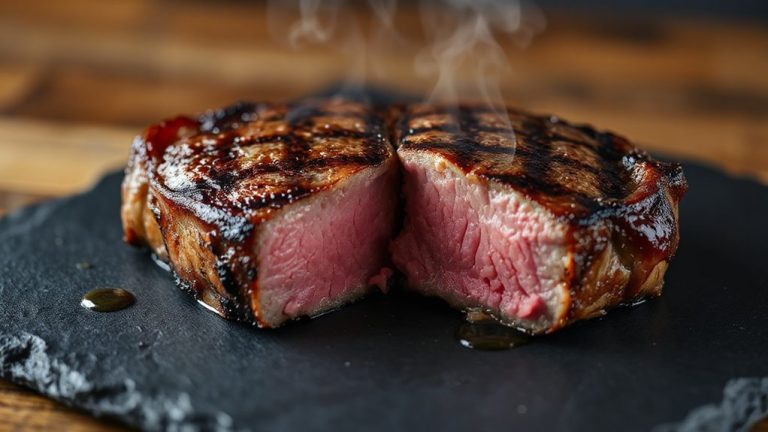
A perfectly cooked piece of seafood shows clear visual and textural cues that, once learned, make grilling with confidence much easier. You’ll notice distinct doneness indicators depending on the type: shrimp turn opaque and slightly curled, scallops become firm with a matte finish, and fish flakes gently when nudged with a fork. Texture changes are key-undercooked seafood feels rubbery or slimy, while overcooked pieces turn dry and tough. For most varieties, the ideal internal temperature is between 125°F and 135°F, but visual cues are often more reliable on the grill. The flesh should spring back slightly when pressed, indicating it’s cooked through but still moist. With thin cuts, like squid or small shrimp, these changes happen fast, so constant attention is essential. Recognizing these signs means you’ll consistently achieve best results without guesswork, enhancing both flavor and eating experience every time.
Finish With Citrus or Butter for Moisture
Grilling seafood to the right doneness sets the foundation, but finishing with a touch of citrus or butter elevates both moisture and flavor in ways that matter on the hibachi. You’ll find that citrus pairing-like a squeeze of lemon or lime just after grilling-adds brightness while helping retain perceived juiciness. The acid doesn’t add moisture, but it enhances taste, making each bite feel plumper and more vibrant. For richer results, try butter basting during the final minute of cooking; the fat coats the surface, sealing in natural juices and creating a silky texture. Whole shrimp, scallops, or thick fish steaks benefit most from this technique. Use compound butter with herbs for extra depth, but don’t overapply-too much can drip and cause flare-ups. Both citrus pairing and butter basting are low-effort, high-reward strategies that refine your hibachi results, ensuring seafood stays succulent and satisfying every time.
Skip These Hibachi Seafood Mistakes
While achieving flavorful, moist seafood on a hibachi seems straightforward, even experienced cooks can fall into avoidable traps that compromise texture and taste. Overcrowding grill space is one of the most common errors-it lowers surface temperature and steams rather than sears, resulting in uneven cooking and rubbery texture. Keep items spaced to guarantee proper heat circulation and caramelization. Another critical mistake is ignoring seafood freshness; dull eyes in fish, slimy texture, or a strong ammonia smell mean it’s past prime, and no amount of grilling技巧 can recover flavor or safety. Always source from reputable suppliers and cook within a day of purchase. Preheat your grill properly and use high smoke-point oils to avoid sticking. These oversights may seem minor, but they directly impact moisture retention and final quality-skip them for consistently excellent results.
On a final note
You’ve got the tools to grill seafood perfectly on your hibachi. Choosing firm, fresh cuts and controlling heat zones prevents dryness. Proper oiling keeps food from sticking, while citrus or herb butter adds moisture and flavor. Watch for visual cues-opaque flesh, easy flaking-to nail doneness. Avoid overcrowding and flipping too soon. With practice, your hibachi delivers restaurant-quality results every time, balancing char and tenderness.