Mastering the Use of a Grill Scraper for Safe Outdoor Cooking
You need a grill scraper to keep your cooking surface safe and hygienic, removing bacteria-laden residue and preventing dangerous flare-ups. Always match your scraper to the grate-use brass or bamboo for porcelain, stainless steel for cast iron. Scrape while the grill’s hot (300–400°F) for easier, safer cleaning. Apply steady pressure with a solid blade, never wire bristles, to avoid damage and contamination. Maintain your tool with proper cleaning and storage. There’s more to get right for consistent, high-quality grilling.
Notable Insights
- Scrape grates after preheating to 300–400°F for effective removal of residue without damaging the surface.
- Choose a scraper compatible with your grate type to prevent coating damage and extend grill life.
- Use smooth, controlled strokes with even pressure to clean efficiently while avoiding grate or scraper damage.
- Avoid wire-bristle brushes; opt for solid metal or silicone-edged scrapers to prevent bristle contamination.
- Clean and inspect your scraper regularly, storing it dry to maintain performance and prevent corrosion.
Start With Why You Need a Grill Scraper
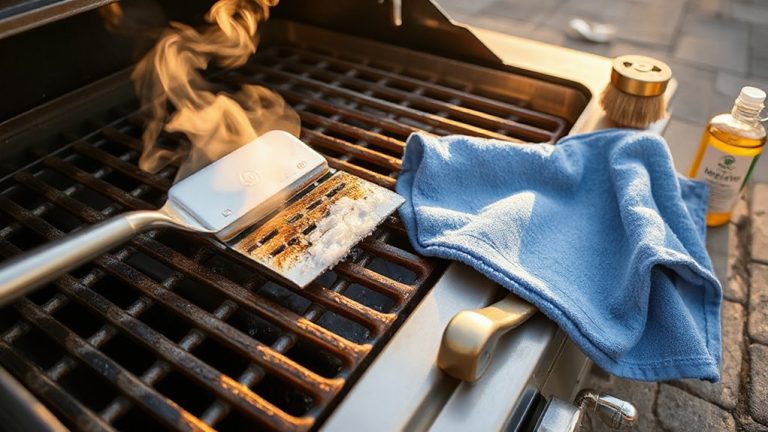
A clean grill is the foundation of every great cookout, and that’s where a reliable grill scraper earns its keep. You’re not just removing charred gunk-you’re safeguarding grill safety and food hygiene. Leftover residue can harbor harmful bacteria, affecting both taste and health, while built-up grease increases flare-up risks. A quality scraper quickly strips away stuck-on debris while the grates are still warm, minimizing cross-contamination and ensuring even heat distribution. Without one, you risk transferring carbonized buildup onto your next meal, compromising flavor and safety. Regular scraping also extends your grill’s lifespan, preventing corrosion and maintaining performance. It’s a simple step, but essential for anyone serious about outdoor cooking. When you prioritize cleanliness, you enhance both the safety and quality of every barbecue-making the scraper not just a tool, but a necessity for responsible, enjoyable grilling. For maximum effectiveness, consider pairing your scraper with one of the Best Grill Brushes for a Spotless Clean.
Choose the Right Scraper for Your Grates
You’ve seen how keeping your grill clean protects both your food and your equipment, so now it’s time to pick the right tool for the job-starting with matching your scraper to your grates. The grate material matters: stainless steel, porcelain-coated, and cast iron each require specific care. If you’ve got porcelain grates, skip the metal scraper-its aggressive scraper design can chip the coating, exposing bare metal to rust. Instead, go for a bamboo or brass scraper, which cleans effectively without damage. For cast iron or stainless steel, a sturdy stainless steel scraper works well, especially one with a sharp edge and ergonomic handle. Scraper design also affects control and efficiency-a narrow profile fits better between grates, while a wide blade covers more area. Choosing based on your grill’s grate material guarantees lasting performance and safer cooking.
Use Your Grill Scraper at the Right Time
Why risk damaging your grates or wasting effort when timing the scrape can make all the difference? The timing importance can’t be overstated-scraping cold or cool grates forces you to work harder and risks leaving residue behind. For best results, heat your grill to a high heat level for 10 to 15 minutes after cooking; this loosens stuck-on debris and sanitizes the surface. The residual heat softens carbonized buildup, making it easier to remove with minimal scrubbing. Never wait until the grill is completely cold-grease solidifies and char becomes stubborn. Conversely, starting too early, when the grill hasn’t heated sufficiently, reduces effectiveness. Aim for when the grates are hot but not scorching-around 300–400°F-so safety and efficiency balance perfectly. Proper timing guarantees a cleaner surface with less wear on your tool and grates, extending their lifespan and maintaining cooking quality over time.
Scrape Without Damaging the Grates
With the right technique, you won’t have to choose between a clean grill and scratched grates-modern scrapers, when used correctly, remove stubborn residue without gouging the cooking surface. For effective grill grate preservation, apply steady, even pressure and use smooth, controlled strokes rather than aggressive hacking. Many high-quality scrapers feature rounded or blunt edges designed specifically for non abrasive cleaning, minimizing the risk of metal-on-metal damage. Avoid wire-bristle tools, which can shed bristles and scratch surfaces, compromising both safety and longevity. Instead, opt for solid stainless steel or silicone-edged scrapers that maintain integrity over time. You’ll notice that proper tools glide across grates, lifting debris without tearing at the seasoning or protective coating. Prioritizing non abrasive cleaning not only preserves your investment but guarantees better cooking results. Grill grate preservation isn’t just about appearance-it directly impacts performance, heat distribution, and food release.
Tackle Burnt-On Residue Effectively
It’s not uncommon for even the most attentive grillers to face patches of burnt-on residue after a high-heat sear or a long cook-carbonized drippings and sugar-rich marinades bond tightly to grates when exposed to extreme temperatures. When this happens, effective removal hinges on leveraging your grill’s heat retention. Scrape while the grates are still hot; thermal expansion loosens stubborn gunk, making it easier to dislodge without excessive surface abrasion. Use firm, controlled strokes with a durable scraper, letting the tool do the work instead of applying brute force. A well-designed scraper’s edge should match the grate’s contour, concentrating pressure precisely where needed. Avoid wire brushes that shred and risk contamination-opt for solid stainless steel or brass alternatives. You’ll preserve grate integrity while maintaining cleaning efficiency. With consistent technique, even tough buildup yields quickly, ensuring better heat transfer and cleaner flavor for your next cook. For reliable performance and safety, choose from the best grill brushes recommended for dependable, contamination-free cleaning.
Keep Your Scraper in Top Shape
After you’ve cleared away stubborn carbon buildup, your scraper becomes just as important to maintain as the grill grates themselves-neglecting its care undermines both cleaning efficiency and food safety. You should perform regular inspection after each use, checking for blade warping, handle integrity, and metal fatigue, especially on stainless steel models. A damaged scraper can shed micro-fragments or fail when pressure is applied, compromising your grill’s cleanliness. Always clean the scraper with hot water and a brush to remove food particles and grease that attract corrosion. For proper storage, keep it in a dry place-ideally a covered tool caddy or a dedicated drawer-away from moisture and other metals that could cause pitting. Avoid leaving it on the grill or exposed to the elements. Consistent upkeep guarantees lasting performance, precision scraping, and safer cooking with every use. Upgrading to a wireless grill brush can enhance cleaning convenience while reducing clutter in your outdoor cooking space.
Avoid These Common Scraper Mistakes
While your grill scraper is built to handle tough grime, using it the wrong way can do more harm than good-especially if you’re rushing through cleanup without thinking about technique. Applying excessive pressure doesn’t clean better-it damages grates and risks loosening metal bristles, which can end up in your food. Many overlook that worn scrapers shed tiny bristles, posing health hazards. Always inspect your tool before and after use. Use firm, controlled strokes instead of forceful scraping. For stubborn debris, let the grill heat up first to loosen residue.
| Mistake | Better Approach |
|---|---|
| Using excessive pressure | Apply steady, moderate force |
| Ignoring metal bristles | Regularly check for loose bristles |
| Dry scraping cold grates | Preheat grill to ease cleaning |
Good habits guarantee safety, longevity, and better-tasting BBQ.
On a final note
You’ve seen how a quality grill scraper keeps your cookouts safe and your grates in top shape. Used correctly-on hot grates, with the right tool for your surface-it removes buildup without harm. Maintaining your scraper guarantees lasting performance, while avoiding common missteps, like using metal on porcelain, prevents costly damage. Mastering this simple tool elevates your outdoor cooking, making cleanup faster and searing more consistent. It’s a small investment with real returns in flavor and grill longevity.