Cooking Vegetables on a Hibachi Grill With Minimal Oil and Maximum Char
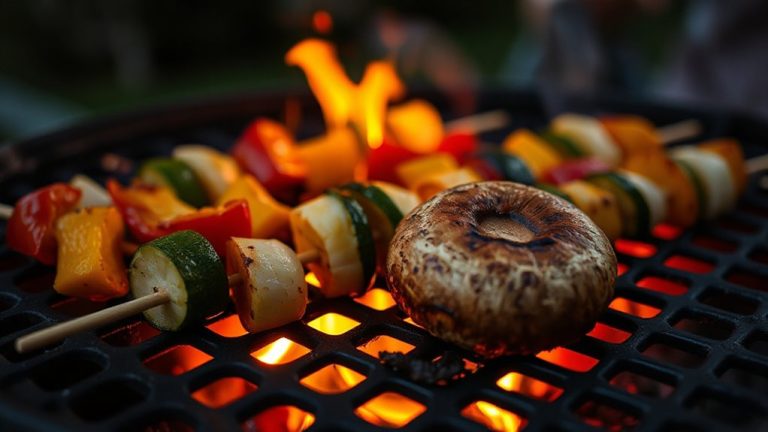
You can achieve deep char and clean flavor on a hibachi without oil by choosing firm veggies like bell peppers, zucchini, and portobellos. Cut them evenly, dry well, and use dry rubs with smoked paprika for depth. High heat with frequent flipping builds Maillard complexity and prevents sticking. Control coal zones to match each vegetable’s needs-medium for peppers, high for eggplant. Finish with a vinegar drizzle and fresh herbs. There’s more to mastering oil-free precision on the grill than meets the eye.
Notable Insights
- Choose sturdy vegetables like bell peppers, zucchini, and portobello mushrooms for even charring without oil.
- Cut veggies uniformly to ½ inch thick and pat dry to promote searing over steaming.
- Use a grill basket or skewers for small vegetables to prevent falling through grates.
- Flip vegetables every minute to achieve even char and prevent burning on high heat.
- Season with dry rubs before grilling and finish with citrus or vinegar for flavor without oil.
Choose the Best Vegetables to Grill on a Hibachi Without Oil
When grilling on a hibachi without oil, you’ll want to pick vegetables that hold up well to direct heat and won’t stick easily to the grates. Firm options like bell peppers, zucchini, and red onions work best-they maintain structure and manage grill time efficiently. Dense vegetables such as carrots or thick asparagus spears tolerate higher smoke intensity without charring too fast. Mushrooms, especially portobellos, deliver meaty texture and resist sticking, even over prolonged heat exposure. Smaller or thinner veggies, like cherry tomatoes or green beans, often need skewers or a griddle to prevent falling through. You’ll notice that moisture content plays a role-wetter vegetables release steam, which can limit surface browning and alter smoke intensity slightly. Root vegetables require longer grill time but develop deeper flavor when seared properly. Choosing the right type guarantees you get caramelization without the frustration. With smart selection, you’ll maximize char while minimizing flare-ups and sticking, even without oil.
Prep Veggies to Char, Not Burn
Your vegetables’ success on the hibachi hinges not just on heat control but on how thoroughly you prep them. To achieve char without burning, cut vegetables uniformly-about ½ inch thick-so they cook evenly and maintain ideal vegetable texture. Denser veggies like carrots or potatoes should be par-cooked to soften slightly, while softer ones like zucchini need no pre-treatment. Pat them dry; surface moisture steams instead of sears. Skewer smaller pieces or use a grill basket to simplify flipping and improve grill timing. Toss with a light vinegar-based marinade if desired-it enhances browning without oil. Remember, proper prep guarantees each piece develops smoky char marks while retaining a crisp-tender bite. Skipping these steps risks uneven texture and inconsistent results, no matter how skilled your technique. Good preparation isn’t just helpful; it’s essential for performance on the grill. For best results, choose a high-quality hibachi grill that offers precise heat control and even cooking distribution.
Control Hibachi Heat for Even Searing
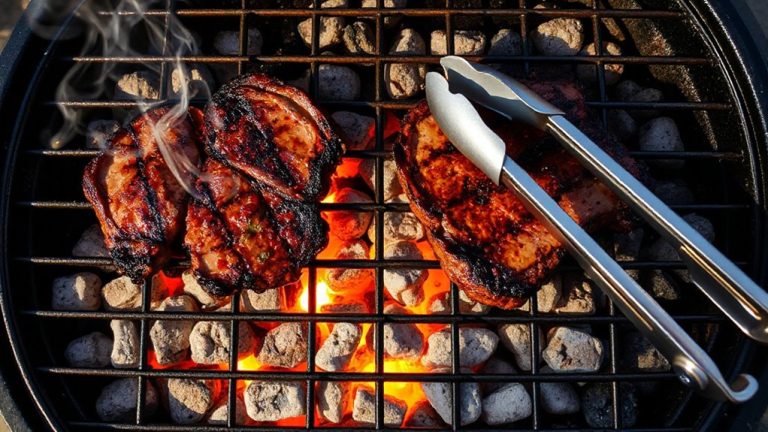
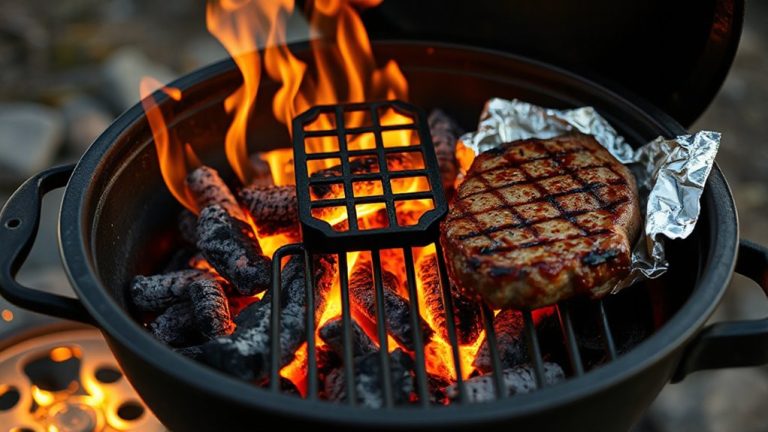
Getting the heat right on your hibachi means the difference between restaurant-quality sear marks and a messy, uneven cook. Proper heat distribution guarantees every vegetable gets evenly exposed to high temperatures, preventing hot spots that cause burning. You need consistent surface contact-press veggies flat against the grates without overcrowding. Adjust coal placement to regulate intensity: more coals under dense veggies, fewer under delicate ones.
| Vegetable Type | Coal Zone | Contact Time (min) |
|---|---|---|
| Zucchini | Medium | 3–4 |
| Bell Pepper | Medium | 4–5 |
| Mushroom | Low | 2–3 |
| Eggplant | High | 4 |
Monitor flame-ups and shift items as needed. A well-managed hibachi gives superior char through balanced heat distribution and steady surface contact. You’re in control-use it.
Flip Often Without Oil for Better Char
Regularly flipping vegetables on the hibachi-every minute or so-actually enhances char without relying on oil, which many assume is essential for browning. High heat sears the surface quickly, and constant turning guarantees even exposure, preventing burn while building complex flavor. You’ll get better caramelization this way, thanks to the Maillard reaction working efficiently under intense, direct heat. A quick cook time-typically 6 to 10 minutes-keeps veggies crisp-tender while maximizing char. Skipping oil doesn’t sacrifice texture; in fact, it reduces flare-ups and gives you more control. Dense vegetables like bell peppers, zucchini, and mushrooms respond exceptionally well. Frequent flipping promotes uniform browning and minimizes sticking, especially on a well-seasoned griddle. This technique leverages the hibachi’s strength: responsive, concentrated heat. You’re not just cooking-you’re actively managing the sear, which leads to superior results. It’s efficient, hands-on, and surprisingly precise.
Season for Smoky Flavor Without Oil
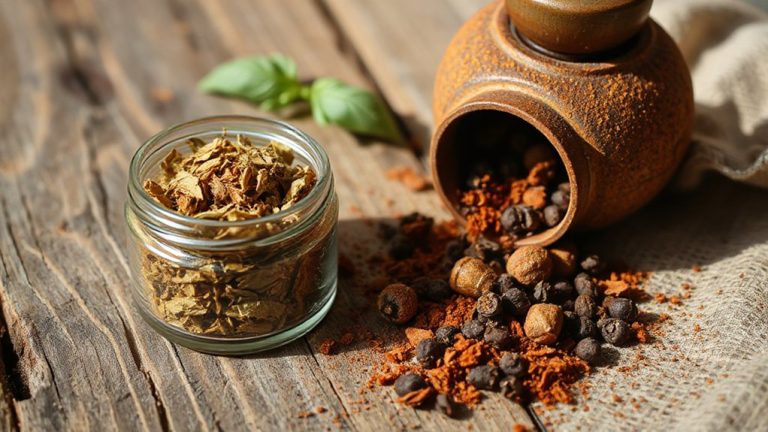
Though you might associate smokiness with oil-rich marinades or heavy grill marks, it’s entirely possible to build deep, smoky flavor on vegetables without using a drop of oil. You can achieve this by applying smoky seasoning before grilling-ingredients like smoked paprika, garlic powder, and cumin deliver complexity without needing fat to adhere. Dry rubs work especially well on vegetables with textured surfaces, such as portobello mushrooms or zucchini, helping the spices cling and caramelize. Unlike oil-based coatings, dry rubs don’t burn easily on the high heat of a hibachi grill, giving you consistent, char-kissed results. You’ll notice the flavors remain bold but cleaner, without greasiness masking the natural taste of the produce. Applied evenly and with a light hand, these seasonings enhance without overpowering. For best results, toss vegetables in the dry rubs just before grilling to preserve texture and maximize aroma. This method proves flavor doesn’t require fat-just smart seasoning choices.
Finish Right: Simple Serving Ideas for Hibachi Veggies
How do you turn perfectly grilled hibachi vegetables into a dish that satisfies and impresses? You finish right. Garnish creatively with toasted sesame seeds, chopped scallions, or a sprinkle of fresh herbs like cilantro or parsley-each adds texture and visual appeal without masking the smoky depth you’ve built. A final drizzle of citrus or rice vinegar brightens the dish, enhancing complexity. Pair wisely: serve alongside grilled tofu or seared steak for a balanced plate, or nestle over jasmine rice for a hearty vegetarian option. These pairings complement the char without overwhelming it. Presentation matters-use warm platters to keep veggies hot, and arrange with intention. A well-finished hibachi vegetable dish isn’t just food; it’s a reflection of thoughtful cooking, from grill to plate. Each component, from garnish to pairing, elevates flavor and experience.
Why Less Oil Works Better on a Hibachi
When grilling vegetables on a hibachi, you might think drenching them in oil guarantees even cooking and prevents sticking, but that’s not the case. Too much oil creates flare-ups, burning your veggies and leaving a greasy residue that complicates grill maintenance. A light coat is all you need-just enough to help seasonings adhere and conduct heat. The hibachi’s open design supports airflow optimization, ensuring consistent, high-temperature cooking ideal for charring without excess fat. You’ll get crisp edges and tender centers, with deeper flavor from direct radiant heat rather than smoke-soaked oil. Less grease also means fewer carbon deposits, keeping grates cleaner and reducing long-term corrosion. In practice, this method proves smarter and safer, especially during extended cookouts. Ultimately, trusting the hibachi’s efficient burn beats masking its performance with unnecessary oil.
On a final note
You’ve learned that grilling vegetables on a hibachi with minimal oil delivers superior char and texture. High, direct heat sears quickly, preserving moisture while creating complex smoky flavor. Dense veggies like bell peppers, zucchini, and mushrooms perform best. Proper prep and frequent flipping prevent burning without oil’s crutch. Seasoning after grilling enhances taste. Ultimately, less oil means more control, cleaner results, and authentic hibachi-style performance outdoors.