Why Certain Meats Absorb Smoke Flavor Only Until a Specific Outer Gel Point
You stop absorbing smoke flavor once the meat’s surface hits 165–170°F, when proteins coagulate and form a tight gel layer. This seal blocks further smoke penetration, no matter how long you smoke. Moisture and raw surface chemistry help bind smoke compounds early, but that reactivity fades fast. The real window for flavor is 140–160°F-hit it right, and you’ll get clean, rich smoke taste without bitterness. Keep going past the gel point, and you’re just risking soot, not flavor. There’s more to mastering that balance than most realize.
Notable Insights
- Smoke absorption stops at 165–170°F when surface proteins denature and form a barrier.
- The gel point seals the meat’s surface, preventing further smoke molecule penetration.
- Moisture and raw surface porosity are needed for smoke compounds to bind effectively.
- Fat rendering and bark formation during gelation reduce smoke adhesion and absorption.
- Beyond the gel point, extended smoking adds no flavor and may cause bitterness.
What Stops Meat From Absorbing Smoke?
Smoke absorption isn’t an endless process-there’s a point where your meat just stops taking it in, no matter how much wood you burn. Once the outer layer reaches its gel point, around 165–170°F, the proteins denature and seal the surface, halting further smoke penetration. At that stage, no amount of extra time or smoke density will add more flavor. You’ve hit the limit. The wood type matters early on-hickory gives a bolder punch, while fruitwoods like apple offer subtler notes-but once gelation occurs, even strong smoke bombs won’t help. Excessive smoke density past this point only risks bitterness or soot. So, monitoring internal temperature and understanding gel point dynamics trumps brute-force smoking. You’re not just chasing smoke rings; you’re managing a chemical shift. Stop adding wood when the crust sets. Smart timing beats volume every time.
How Smoke Binds to Raw Meat Surface
Surface chemistry is the quiet force behind every deep, smoky flavor clinging to your brisket or ribs. When you place raw meat on the grill, its surface porosity allows smoke particles to embed through molecular interactions. You’re not just cooking-you’re engineering flavor adhesion. The proteins and moisture on the meat’s exterior attract and trap phenols and carbonyls in smoke, creating strong smoke adhesion. The rougher or more porous the surface, the more contact points exist for smoke to bind. That’s why dry-brined or untrimmed cuts often develop richer bark-increased surface porosity boosts flavor retention. Even fat distribution affects how smoke clings. But this bond only forms effectively while the exterior remains raw and reactive. Once heat alters the surface structure, the window for absorption narrows. You’re counting on that brief phase where chemistry and patience meet. Smoke adhesion isn’t random; it’s a predictable outcome of surface state and compound interaction. Manage it, and you control flavor depth.
The Outer Gel Point: When Flavor Uptake Ends
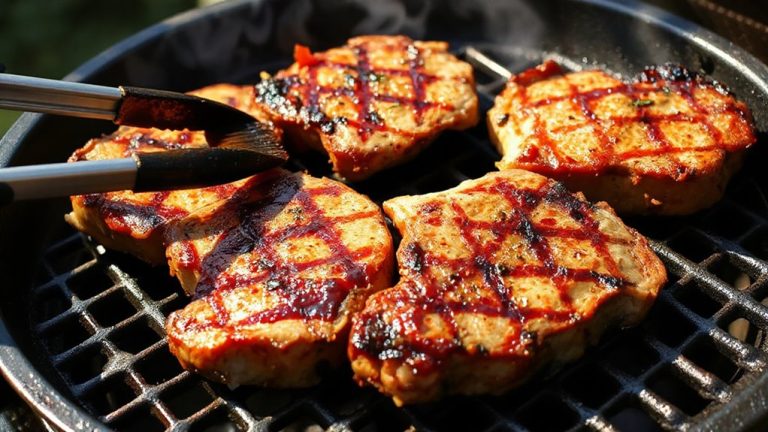
Why does your meat stop taking on smoke flavor just when you think it should be absorbing more? It’s because you’ve hit the outer gel point-the stage where the surface undergoes critical physical changes. As moisture evaporation slows and the exterior heats past 165°F, proteins coagulate and seal the outer layer, blocking further smoke absorption. At the same time, fat rendering begins in earnest, melting and basting the surface, which also limits smoke’s ability to adhere. You’ll notice the bark forming and color deepening, signaling this shift. While it might seem like more smoke equals more flavor, beyond this phase, it’s mostly cosmetic and can even turn bitter. That’s why experienced pitmasters monitor texture and surface development closely. The gel point isn’t a flaw-it’s a natural threshold. Respect it, and you’ll avoid over-smoking, ensuring clean, balanced barbecue flavor from edge to center.
Protein Changes That Block Smoke Penetration
As the exterior of your meat climbs past 165°F, the structural shift in proteins starts to build a barrier that keeps smoke from penetrating deeper. You’re seeing collagen denaturation take place-tight, fibrous networks unravel and shrink, tightening the meat’s texture and closing off pathways smoke molecules once used. This firms the outer layer, making it less porous and more resistant to flavor transfer. Simultaneously, enzymatic degradation slows and eventually stops, halting the breakdown of proteins that once made the surface receptive to smoke compounds. Without this activity, the meat loses its ability to bind with flavorful phenols and carbonyls in smoke. While some pitmasters believe extending smoke time adds depth, evidence shows little benefit beyond this thermal threshold. You’re better off focusing on temperature control and rest time than chasing smoke after the gel point’s passed.
The 140–160°F Window for Smoke Flavor
While the meat’s internal temperature climbs between 140°F and 160°F, you’re in the prime range for smoke absorption, where moisture, protein structure, and surface chemistry align to trap flavor. At this stage, the outer layers are still porous enough to pull in smoke, but beginning to set, creating a fleeting opportunity. Your success depends heavily on smoke density-too thick and you risk bitterness, too thin and the flavor won’t stick. You’ll want a steady, see-through haze, not billowing clouds. Fuel type also matters: hardwoods like hickory or oak deliver cleaner, more consistent smoke than softwoods or wet chips, which flare unpredictably. You’re not just cooking; you’re managing a precise chemical window. Once the surface nears gel point, absorption drops sharply-timing and control are everything.
How to Maximize Early Smoke Absorption
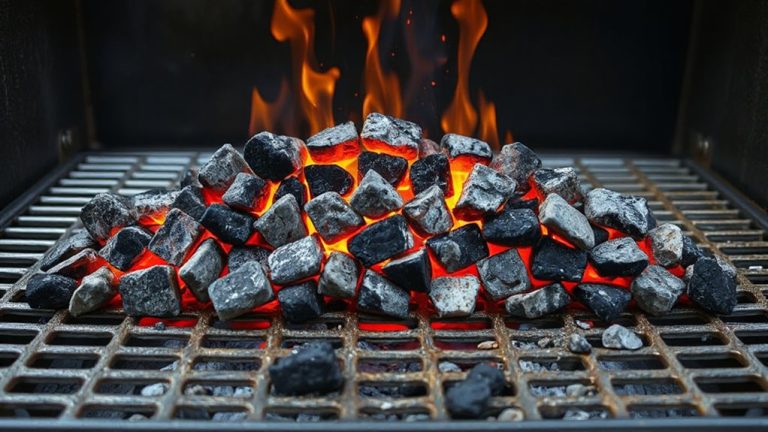
You’ve got a narrow window to lock in smoke flavor, and what you do in the first hour of the cook makes or breaks the result. Early smoke timing is critical-start clean, hot, and fast so smoke adheres before the surface begins to gel. Wait too long, and you’ll waste fuel and effort. Keep surface moisture in check; a light pat dry before smoking helps, but don’t overdo it-some dampness aids smoke particle adhesion. Aim for thin, blue smoke, not thick billows, and position meat close to the fire initially. Reputable pitmasters agree: maximum absorption occurs when meat enters the smoker below 100°F and stays exposed to consistent, flavorful smoke for the first 60 minutes. After that, diminishing returns kick in. Monitor temp closely, maintain airflow, and resist the urge to spritz too soon. Proper technique here builds depth, not disguise. For optimal heat and smoke consistency, use high-quality charcoal for smoking.
Debunking the Constant Smoke Flavor Myth
Isn’t it time we set the record straight about smoke flavor? You’ve probably heard that meat keeps absorbing smoke all through the cook, but that’s simply not true. Once the outer layer hits the gel point-around 160°F-the proteins denature and moisture evaporation slows, sealing the surface. After that, little new smoke flavor penetrates. That’s why early smoke exposure matters so much. The smoke ring forms early too, thanks to nitrogen dioxide dissolving into the moist meat surface before it dries. It’s a sign of proper timing, not endless smoke absorption. Pushing smoke the whole time just creates bitterness or soot, not depth. Manage your fuel and airflow to maximize clean smoke when it counts-during the first few hours. Once moisture evaporation drops and the crust forms, your smoke work is done. Smart smoking means knowing when to stop, not just when to start.
On a final note
You now know smoke absorption isn’t endless-meat stops taking in flavor once the outer gel point forms. Between 140–160°F, proteins denature and seal the surface, blocking further smoke penetration. That’s why early smoke matters most. Constant smoke after this phase adds negligible flavor, just color and aroma. Mastering this window improves your BBQ precision. Focus on clean smoke early, then maintain temperature. It’s not magic-it’s chemistry, and it delivers better results every time.