Cooking Breakfast on a Rocket Stove: Eggs, Hash Browns, and Sausage
You’ll get the best results cooking eggs, hash browns, and sausage on a rocket stove using a well-seasoned cast iron skillet. Start with dry tinder and small sticks to build a clean, hot fire, then throttle airflow for steady heat. Sear sausage first over high heat, move it to the side, and crisp hash browns in the center. Add eggs last, stirring gently. With proper oil and preheating, sticking and scorching stay minimal. A rocket stove’s precise flame control makes full breakfasts efficient and evenly cooked-every time. There’s more to optimizing each step for flavor and ease.
Notable Insights
- Use a well-seasoned cast iron skillet for even heat and superior browning of hash browns, eggs, and sausage.
- Preheat the rocket stove gradually with full airflow, then reduce air to stabilize temperature for consistent cooking.
- Shred potatoes finely, press them flat in hot oil, and avoid stirring to achieve crispy, golden hash browns.
- Cook sausage first over high heat, rotating with tongs for even searing without charring the casing.
- Add eggs last over medium-low heat, stirring gently to prevent sticking and ensure soft, fluffy scramble.
How to Light a Rocket Stove for Breakfast
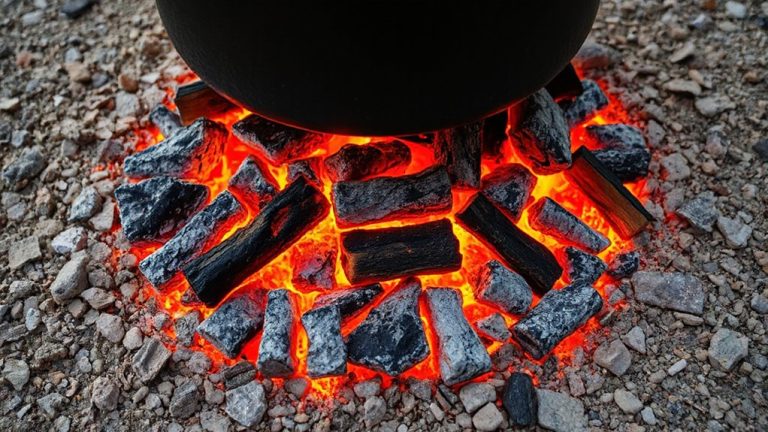
While getting breakfast going on a rocket stove might seem straightforward, doing it right guarantees both efficiency and control over your morning cooking. You’ll want to start with dry, fine tinder stuffed into the combustion chamber-this sets the stage for reliable fuel ignition. Once lit, gradually introduce small sticks, letting the fire build upward. The key is balancing airflow control: open the intake fully at first, then throttle it back once the flame stabilizes. Too much oxygen causes heat spikes and wasted fuel; too little leads to smoke and incomplete burn. A well-designed rocket stove excels here, directing air precisely where it’s needed. You’ll notice cleaner flames and consistent heat-critical when managing multiple breakfast components. Proper lighting isn’t just about starting fire-it’s about sustaining a controllable, hot burn from the first egg to the last sausage. Master these steps, and your morning routine becomes both effective and repeatable.
Best Cookware for Rocket Stove Morning Cooking
You’ll get the best results when using cookware that pairs well with the intense, focused heat of a rocket stove-think materials that heat quickly but spread that energy evenly. Cast iron is a top choice, offering excellent heat distribution and unmatched material durability, though it’s heavy and needs seasoning. Carbon steel is lighter, heats fast, and develops a strong nonstick surface over time-ideal for morning cooking with reliable performance. Stainless steel pans with aluminum cores work well too, balancing heat distribution and ease of cleaning, but they don’t retain heat as long. Avoid thin, non-reinforced cookware-it warps under high heat and struggles with consistent cooking. Look for flat-bottomed pots and pans that sit securely on the stove’s opening. Good handles and oven-safe ratings help versatility. Ultimately, your cookware should match the rocket stove’s efficiency, combining resilience, even cooking, and practicality for outdoor use. For grilling applications, consider best cast iron cookware designed to handle high, direct heat.
Cook Crispy Hash Browns on a Rocket Stove
Crispy hash browns sizzle to golden perfection when the intense, direct heat of a rocket stove meets a well-seasoned cast iron skillet. You need that even, high heat to guarantee the potatoes crisp without burning. Preheat your skillet slowly-rushing ruins cast iron seasoning and leads to uneven cooking. Once hot, add a high-smoke-point oil like canola or avocado and let it shimmer, not smoke; proper oil temperature is critical for texture. Too cool, and the hash browns soak up grease, turning soggy. Too hot, and they blacken before cooking through. Shred potatoes evenly, pat them dry, and press them into a thin, flat layer. Resist stirring too soon-let the bottom sear and release naturally. A well-maintained skillet prevents sticking and boosts browning. Rocket stoves deliver restaurant-level results when paired with the right technique and gear.
Scramble Eggs Without Sticking
I’ve found that scrambling eggs on a rocket stove works best when you treat the cookware like an extension of the fire itself-responsive, precise, and unforgiving of missteps. You’ve got to master heat control, because too much intensity too fast will scorch your eggs, no matter how good your pan’s non stick coating is. Start by preheating your skillet gradually; the rocket stove ramps up fast, so regulate the fuel to maintain a steady, medium-low flame. Once hot, add a small amount of oil and swirl to coat-this boosts the non stick coating’s effectiveness. Crack the eggs in, stir gently and constantly. Good heat control means even cooking without browning. A well-seasoned pan or one with a quality non stick coating makes all the difference. Clean it right after to preserve performance. With attention, scrambled eggs turn out soft, not glued to the pan.
Sear Sausage Over the Flame
Control is key when searing sausage over the exposed flame of a rocket stove, where temperature spikes can go from ideal to overkill in seconds. You’ve got to master flame control, adjusting airflow and fuel to maintain steady, high heat without scorching the casing. Hold the sausage with tongs and rotate it evenly, letting the direct flame coax out rich sausage flavor through caramelization, not charring. Too hot, and you’ll lose juiciness; too low, and you miss that savory depth. A well-regulated rocket stove delivers consistent, radiant heat-perfect for developing complexity on the surface while keeping the interior tender. Unlike gas grills, this method demands attention but rewards skill. Proper flame control doesn’t just prevent burning-it enhances taste, texture, and cooking precision. With practice, you’ll balance speed and sear, turning simple links into breakfast centerpieces through attention, timing, and a deep appreciation for live-fire craft. For best results, choose sausages with bold seasoning and a good meat-to-fat ratio, such as those found in top-rated hot sausage picks.
Cook Eggs, Hash Browns, and Sausage at Once
While managing multiple components of a breakfast spread over a rocket stove may seem challenging at first, with smart setup and timing, you can cook eggs, hash browns, and sausage simultaneously without sacrificing quality. Use a large cast-iron skillet and position it to leverage even heat distribution-sausage on the hotter edge, hash browns in the center, and eggs sliding in last where the heat is gentler. Proper cast iron care guarantees nonstick performance and longevity; preheat gradually to avoid thermal shock. These heat distribution tips maximize efficiency: let the stove stabilize before adding food, and adjust placement based on flare intensity. You’ll find that well-seasoned cookware responds evenly, crisping potatoes while gently setting eggs. With practice, you’ll coordinate each element confidently, turning a complex task into a seamless routine ideal for outdoor mornings. For even greater flexibility, consider using a portable griddle that provides a larger, flat cooking surface ideal for outdoor cooking setups.
Why Rocket Stoves Excel at Morning Meals
Because rocket stoves deliver concentrated, efficient heat from a small fuel source, they’re especially well-suited for morning meals when time and resources matter. You’ll appreciate the fuel efficiency-small sticks or scraps burn cleanly, minimizing waste while maximizing usable heat. This isn’t just eco-friendly; it’s practical when you’re off-grid or camping with limited supplies. The design forces secondary combustion, ensuring hotter flames with less smoke. You also get remarkable heat control: by adjusting the fuel stick’s depth or airflow, you can simmer eggs or sear sausage without scorching. That level of responsiveness is rare in portable stoves. Whether you’re frying hash browns or scrambling eggs, the consistent, focused flame mimics a kitchen range. Their compact size and low maintenance make them reliable for daily use. For outdoor breakfasts, rocket stoves strike a rare balance-efficient, controllable, and effective-without relying on propane or electricity.
On a final note
You’ve seen how a rocket stove delivers intense, focused heat ideal for breakfast cooking. Its efficient burn crisps hash browns, sears sausage evenly, and lets eggs scramble smoothly without sticking. Paired with the right cookware, it outperforms open fires and rivals stovetops. Lightweight and fuel-flexible, it’s perfect for campers and outdoor enthusiasts who value speed, control, and cleanup ease-all essential for reliable, repeatable outdoor meals.