How to Maintain 225°F on a Charcoal Grill for Smoking Brisket in Windy Conditions
Position your grill sideways to the wind and use a sturdy windbreak like a brick wall or portable shield, keeping it 12–18 inches away to avoid blocking airflow. Set up a 2-zone fire with quality lump charcoal on one side, leaving space for indirect heat. Adjust bottom and top vents slowly-start halfway open-to fine-tune oxygen and smoke flow. Monitor with a dual-probe thermometer to catch temperature swings early. This balance keeps 225°F stable, even when gusts hit, and guarantees your brisket cooks evenly from start to finish. You’ll find precision pays off as the hours go by.
Notable Insights
- Position the grill perpendicular to the wind and use a partial windbreak to shield from gusts without restricting airflow.
- Set up a 2-zone fire with quality charcoal on one side to stabilize heat and allow indirect cooking.
- Start with the bottom vent halfway open and adjust top and bottom vents in small increments to maintain 225°F.
- Build a loose windbreak 12–18 inches from the grill using cinder blocks or metal, ensuring exhaust vents remain unobstructed.
- Use a dual-probe thermometer to monitor ambient and brisket temperatures, ensuring accurate, consistent readings throughout the smoke.
Position Grill Out of the Wind
To get the most stable temperature from your charcoal grill while smoking brisket, start by paying close attention to where you place it. Wind direction plays a bigger role than many realize-gusts can blow through the vents, cooling coals unevenly and forcing you to adjust airflow constantly. You’ll want to position your grill perpendicular to the prevailing wind, not directly facing it or with the back exposed. A brick wall, vehicle, or even a portable windbreak can help buffer sudden shifts. Proper grill placement isn’t just about convenience-it directly affects combustion stability and, by extension, temperature control. In open areas, even a slight breeze can drop chamber temps by 15°F or more without you noticing. Sheltering the grill without restricting airflow is key. Smart positioning reduces wild swings, making it easier to maintain that ideal 225°F throughout the long smoke. For added convenience in unpredictable weather, consider a portable propane fire pit as an alternative heat source that offers consistent flame control and easy setup.
Set Up a 2-Zone Fire for Steady Heat
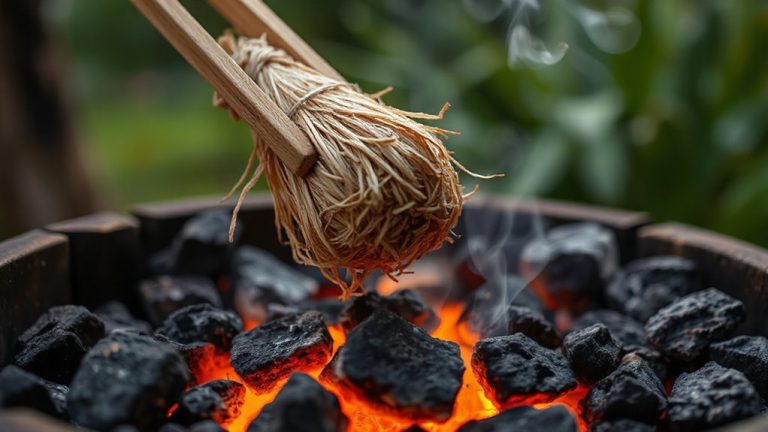
You’ve already taken steps to shield your grill from the wind, and now it’s time to focus on how you arrange the fuel inside. A 2-zone fire is essential for steady heat, especially in gusty conditions. You’ll pile lit coals on one side-this is your fire placement-leaving the other half empty for indirect cooking. This setup gives you control, letting the brisket cook low and slow without scorching. Your coal selection matters: go with high-quality lump charcoal or hardwood briquettes for longer, more consistent burns. Cheaper coals may ignite quickly but often burn hot and die fast, making temperature control harder. The 2-zone layout also makes adding fresh coals easier without disrupting airflow or cooking surface heat. For reliable performance, consider one of the top-rated models from the best charcoal grills list, as they’re designed to maintain consistent temperatures even in challenging conditions.
Adjust Vents to Stabilize Airflow
While heat starts with fuel, it’s the airflow that truly dictates how steady your grill’s temperature will be, and that’s where vent control comes in. Proper airflow control prevents wild temperature swings, especially in windy conditions. You’ll want to use both the top and bottom vents to manage combustion: the bottom vent supplies oxygen to the fire, while the top vent pulls smoke and heat through the chamber. Start with the bottom vent halfway open and adjust the top vent slightly to fine-tune. Small vent adjustment moves make a big difference-close them a bit if the temperature climbs, open them if it drops. Avoid drastic changes, as they overcorrect and destabilize the burn. Consistent airflow control guarantees clean-burning coals and even smoke production. Over time, you’ll learn how your grill responds, making it easier to hold 225°F steadily throughout the cook. For best results, consider using a charcoal grill smoker designed for temperature stability and smoke control.
Build a Windbreak Without Choking the Fire
A well-designed windbreak can make all the difference when holding a steady 225°F on a charcoal grill, especially in gusty conditions where airflow fluctuations challenge temperature control. You need protection from the wind, but not at the cost of suffocating your fire. Use DIY materials like cinder blocks, plywood, or metal sheets to create a partial barrier that deflects wind without enclosing the grill. Position it 12–18 inches away to maintain airflow while shielding from direct gusts. Guarantee structural stability so it won’t topple in strong winds-lean materials at a slight angle or anchor them with weights. Avoid sealing off the bottom or blocking exhaust vents, as restricted oxygen leads to incomplete combustion and temperature drops. A stable, well-spaced windbreak balances protection and airflow, giving you consistent, controllable smoke.
Track Temperatures With a Dual-Probe Thermometer
Keeping your fire stable with a proper windbreak sets the foundation for consistent smoking temperatures, but fine-tuning that heat means you’ve got to monitor it closely-this is where a dual-probe thermometer earns its place on the grill. One probe tracks the ambient temperature near the brisket, while the other pierces the meat, letting you follow its internal rise in real time. Accurate probe placement matters: position the air probe away from direct flame, and insert the meat probe into the thickest part, avoiding fat or bone. Over time, temperature calibration can drift, so check your thermometer against boiling water or an ice bath annually. A reliable model pays for itself by preventing undercooked or dried-out brisket. It’s not just convenience-it’s precision that transforms guesswork into repeatable results.
On a final note
You’ve got the tools to hold 225°F steady, even when wind threatens your smoke. Positioning the grill wisely, using a two-zone fire, and fine-tuning vents make a real difference in heat control. A well-built windbreak shields without suffocating airflow. With a reliable dual-probe thermometer, you monitor both pit and meat accurately. These steps aren’t just fixes-they’re best practices that elevate your brisket game in tough conditions.