Layer Charcoal & Wood for Steady 275°F on a Kamado Grill
Start with a two-tier fire: place a full chimney of lit lump charcoal on one side and stack unlit coals on top for gradual heat release. Use dense, high-carbon charcoal-it burns longer and stabilizes temperature better. Once the fire’s steady, add one or two seasoned wood chunks directly onto the coals with tongs. Avoid smothering the fire by adding wood too early or too often. Then, adjust the bottom and top vents in small increments, waiting 10–15 minutes between changes to account for the Kamado’s thermal lag. Resist overadjusting; minor swings of 10–15°F are normal and will balance out with consistent airflow. You’ll find even better control with a few refined techniques.
Notable Insights
- Use a two-tier fire setup by placing lit coals under unlit ones for gradual, sustained heat.
- Choose dense, high-carbon lump charcoal or premium briquettes for longer, more even burning.
- Wait 20–30 minutes after startup to add one or two seasoned wood chunks directly onto the coals.
- Regulate temperature with small vent adjustments, allowing 10–15 minutes between changes.
- Avoid overadjusting vents; minor fluctuations are normal and steady airflow ensures stability.
Build a Two-Tier Fire for 275°F on a Kamado
While getting your Kamado up to 275°F might sound straightforward, building a two-tier fire actually makes sustaining that sweet spot far more reliable. You’ll start by placing lit charcoal on one side of the firebox, then add unlit coals on top to form a layered fire structure. This setup creates gradual heat release, reducing the need for constant vent adjustments. The lit coals ignite the ones above, maintaining consistent temperature without spikes. This method improves heat distribution, ensuring the dome and cooking surface warm evenly. You’ll notice fewer cold spots and better airflow control, especially during long smokes. Unlike single-zone fires, the two-tier approach offers thermal inertia-buffering against outdoor temperature swings. It’s not just about starting hot; it’s about engineering stability. With this configuration, your Kamado holds steady, making it easier to focus on the meat, not the thermometer. For best results, use high-quality lump charcoal, as recommended in reviews of the top charcoal grill smokers.
Use Dense Charcoal for a Steady Burn
A good chunk of your success in maintaining a steady 275°F smoke comes down to the quality and density of your charcoal. You’ll want to choose dense, high-carbon lump or premium briquettes because they deliver superior charcoal density, meaning they burn longer and more evenly. Lightweight or inconsistent coals heat up fast but fizzle out quickly, making it tough to hold your target temp. Dense charcoal provides reliable burn consistency, which is essential when you’re aiming for hours of steady smoking. You’ll notice fewer temperature swings and less need to adjust vents constantly. Kamado grills hold heat well, but only if the fuel inside supports it. Stick with trusted hardwood lump or quality briquettes-they might cost a bit more, but the stability they bring to your cook makes them worth it. Your thermometer won’t lie: dense = dependable. For top-tier performance, consider trying Best Japanese Charcoal known for its exceptional density and clean burn.
Add Wood Chunks Without Disrupting 275°F
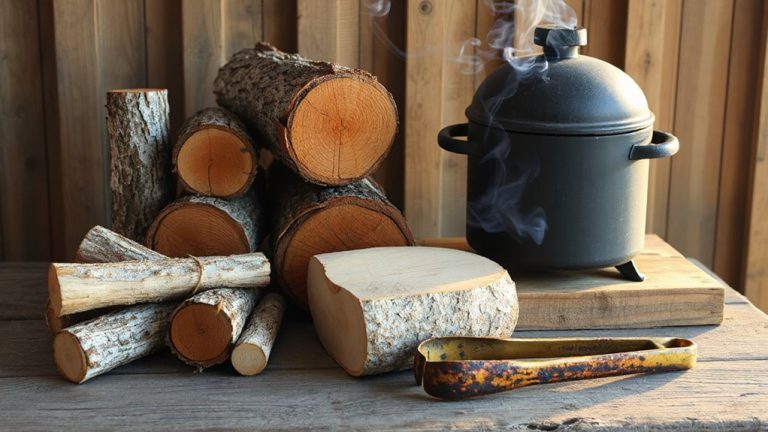
Since maintaining a stable 275°F is essential for clean smoke and even cooking, how you add wood chunks matters just as much as the type you choose. You should add them only when the fire is established and burning steadily, typically 20–30 minutes after startup. This guarantees minimal disruption to the temperature and maximizes smoke flavor infusion. Use tongs to place seasoned wood chunks directly onto the charcoal, avoiding large bursts of steam or smoke that can cool the chamber. Wood chunk seasoning-allowing wood to dry thoroughly-guarantees cleaner burns and reduces creosote buildup. Adding unseasoned wood risks harsh flavors and inconsistent temps. Limit each addition to one or two chunks at a time; overloading risks smothering the fire. Properly timed, these chunks enhance flavor without forcing you to adjust the vents too soon.
Fine-Tune Vents to Stabilize Kamado Temp
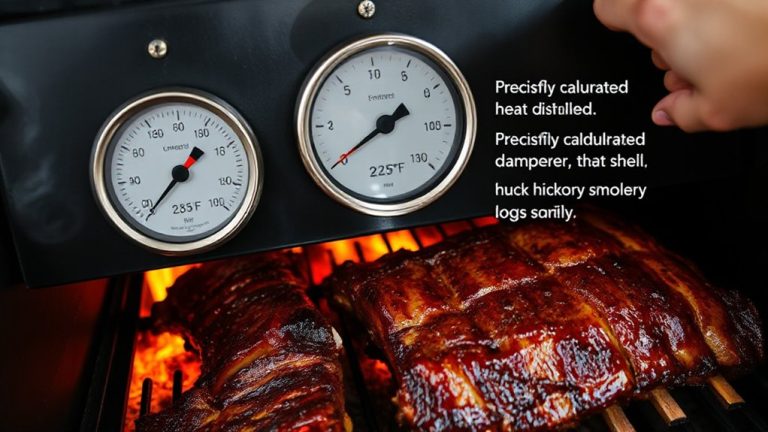
How do you keep that dial steady at 275°F once your fire’s roaring? It all comes down to airflow control. Your Kamado’s vents regulate oxygen, which directly affects combustion and heat. Start by adjusting the bottom inlet and top exhaust vents slightly-small changes make big differences. Because Kamados have excellent insulation, they respond slowly, so you’ll notice temperature lag after each adjustment. This delay means you should wait at least 10–15 minutes before tweaking further. Rushing leads to swings, not stability. A steady 275°F demands patience and observation. Track how each vent setting influences the thermometer over time. Once dialed in, the airflow maintains an even burn with minimal fuel use. Mastery of airflow control turns your Kamado into a precision smoker, not just a grill. It’s not about constant fiddling-it’s about smart, incremental tuning backed by understanding how the system reacts.
Don’t Overadjust When Holding 275°F
While it’s tempting to tweak the vents every time the thermometer nudges up or down, doing so only disrupts the balance you’ve worked to achieve. Maintaining temp stability at 275°F relies on patience, not constant adjustment. Your Kamado’s thick walls retain heat well, and minor fluctuations-say, 10–15 degrees-are normal and won’t harm your cook. Overadjusting the top or bottom vents interrupts airflow consistency, causing wider swings and longer recovery times. Instead, let the system settle for 10–15 minutes after any change. You’ll find that steady airflow and proper initial setup matter far more than micro-managing the dials. Trust the process: a well-lit charcoal base, correctly layered wood, and properly set vents create the foundation. Once that equilibrium is reached, leave it be. Constant fiddling does more harm than good.
On a final note
You’ve built a two-tier fire, chosen dense charcoal like lump or high-quality briquettes, and added wood chunks at the right moment-now your Kamado holds 275°F steadily. Proper vent tuning is key: the bottom vent controls airflow, while the top regulates exhaust. Once stabilized, avoid overadjusting; small fluctuations are normal. This method delivers consistent, low-and-slow performance ideal for ribs, pork shoulder, or smoked sausages, proving the Kamado’s precision when managed with informed, deliberate control.