How to Maintain Consistent Smoker Temperatures (275°F Method)
You’ll keep your smoker steady by controlling airflow-slightly open vents maintain balance, while too much or too little oxygen causes spikes or stalls. Skip the lid gauge; it’s often wrong. A dual-probe thermometer gives real temps so you adjust with confidence. Use dry, quality fuel like briquettes or seasoned wood for predictable burns. Preheat fully to stabilize the chamber, and choose a smoker with thick walls and tight seals-it handles swings better. Smart tweaks now prevent tough results later.
Notable Insights
- Adjust intake and exhaust vents slightly to maintain a steady draft and prevent overheating or fire starvation.
- Use a dual-probe thermometer to monitor actual air and meat temperatures for precise, reliable control.
- Burn quality fuel like seasoned hardwood or premium briquettes to ensure consistent heat output.
- Preheat the smoker to 275°F for at least one hour to achieve thermal stability and even heat distribution.
- Combat temperature swings by adding pre-heated coals, insulating the unit, or shielding it from wind.
Control Airflow to Stabilize Heat
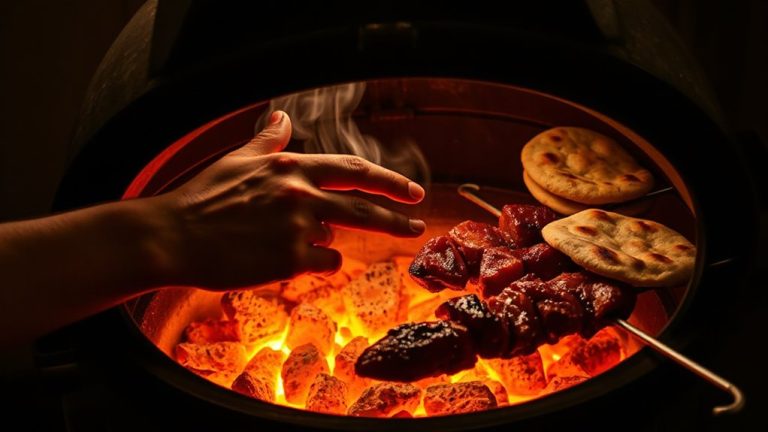
While airflow might seem like a minor detail, getting it right is essential if you want consistent smoker temperatures. You’re not just feeding flames-you’re managing airflow dynamics that directly impact heat stability and smoke quality. Proper vent positioning allows you to control oxygen intake and exhaust, creating a balanced burn. Open both intake and exhaust vents slightly to establish steady draft; too wide and you’ll overheat, too narrow and the fire starves. Most beginners overlook how small adjustments affect temperature over time. Experienced pitmasters tweak vent positioning incrementally, using it to fine-tune rather than overhaul. You’ll notice smoother performance when both vents work in harmony, maintaining airflow dynamics that support even combustion. This isn’t guesswork-it’s applied science. Once you master vent control, maintaining 225°F for hours becomes routine. It’s the foundation of reliable, low-and-slow cooking. For precise temperature management, consider using a smoker specifically designed for delicate proteins like fish, such as the best smokers for fish.
Trust a Dual-Probe Thermometer (Not the Lid Gauge)
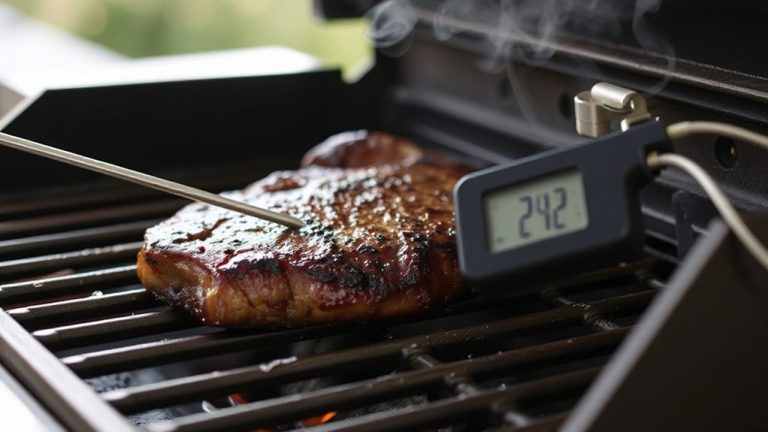
That dial on your smoker’s lid? It’s barely reliable. Most built-in gauges lack precision and often misread by 25°F or more, giving you false confidence. Instead, trust a dual-probe thermometer for real control. One probe monitors ambient temperature near the meat, while the other tracks internal doneness-critical for probe accuracy. These digital models offer far better temperature calibration than factory dials, which rarely account for hot spots or airflow shifts. You’ll see exactly what’s happening, not just a rough guess. A quality dual-probe also lets you adjust vents or fuel based on actual conditions, not assumptions. For consistent results, especially during long cooks, this tool isn’t optional-it’s essential. Invest in one with stainless probes, a clear display, and calibration checks. Your brisket, ribs, and pork shoulder will thank you with tender, evenly cooked results every time. A reliable option combines accuracy and durability, making best meat thermometers a smart investment for serious smokers.
Burn Consistent Fuel for Steady Heat
You’ve got your dual-probe thermometer in place, giving you an honest read on both the meat and the cooking environment-now it’s time to focus on what keeps that temperature stable: your fuel. Consistent heat starts with fuel quality-use well-seasoned hardwood or premium charcoal without fillers. Moisture-laden or green wood throws off the burn rate, causing wild swings. Maintain steady airflow, but don’t overlook how fuel size impacts performance. Choosing the right fuel includes considering best charcoal for smoking, which can greatly influence temperature control and smoke quality.
| Fuel Type | Burn Rate & Consistency |
|---|---|
| Lump Charcoal | Fast burn, variable quality |
| Briquettes | Even burn rate, reliable output |
| Hardwood Chunks | Slower burn, needs monitoring |
Briquettes often win for stability, though lump can work if sorted for uniformity. Hardwood chunks add flavor but demand careful portioning. Your smoker’s temperament hinges not just on design, but on how diligently you manage fuel quality and burn rate.
Preheat and Season Your Smoker Fully
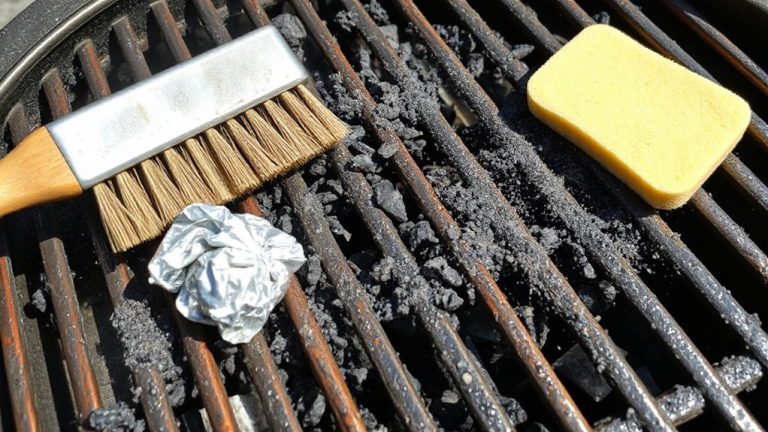
Since your smoker’s performance relies heavily on thermal stability, taking the time to preheat and season it properly isn’t just recommended-it’s essential. Before your first cook, conduct a thorough initial cleaning to remove manufacturing oils and protectants that could affect flavor and heat conduction. Once clean, preheat your smoker to around 275°F for at least one hour, allowing the metal to expand evenly and stabilize. Then, coat interior surfaces with a high-heat oil like flaxseed to build a protective layer. This process enhances smoker durability by preventing rust and improving heat retention over time. Seasoning isn’t a one-off task-it strengthens performance with each use. Skipping these steps risks uneven temperatures and premature wear. By investing in proper startup procedures, you’re not just preparing a meal-you’re maintaining a reliable cooking system built for consistency and longevity.
Fix Common Temperature Swings Fast
When temperature swings strike during a smoke, they don’t just disrupt cooking-they compromise flavor, texture, and overall control, turning what should be a steady process into a guessing game. Weather conditions like sudden cold or humidity shifts often trigger these spikes, and wind direction can exaggerate them by altering airflow into your smoker. To fix issues fast, always monitor your vents, fuel levels, and ambient environment. Adjust dampers slightly to stabilize oxygen flow, add pre-heated fuel to avoid sudden drops, and reposition the smoker if wind direction causes uneven drafts.
| Issue | Likely Cause | Quick Fix |
|---|---|---|
| Temp spike | Over-ventilation | Partially close top damper |
| Sudden drop | Fuel depletion | Add hot coals |
| Inconsistent heat | Wind direction shift | Relocate or block wind |
| Slow rise | Low ambient temp | Insulate smoker |
| Erratic fluctuations | Poor airflow control | Clean vents, adjust intake |
Pick a Smoker That Holds Heat Well
A smoker that holds heat well makes all the difference when you’re battling the kinds of temperature swings just covered. You need solid heat retention to maintain steady cooking conditions, especially in wind or cold. Thicker steel walls and tight-sealing doors reduce fluctuations, while quality smoker insulation traps warmth where it belongs. Offset smokers with double-walled chambers or ceramic builds like kamados excel here-they resist cooling between fuel additions. Even in ambient drops, these models recover faster and use less fuel. Poorly insulated units lose heat quickly, forcing you to adjust constantly. That undermines both cook time and tenderness. When shopping, check lid gaskets, weld quality, and material gauge-these affect performance more than size alone. A well-insulated smoker won’t guarantee perfection, but it gives you a stable base. You’ll spend less time correcting and more time mastering smoke balance and bark development. Choose wisely-it pays off every cook.
On a final note
You’ve got the tools to master your smoker’s temperature, and consistency is within reach. By managing airflow, using reliable thermometers, and choosing steady fuel, you’ll avoid frustrating swings. A well-seasoned, heat-retentive smoker makes all the difference in low-and-slow cooking. These steps aren’t just theory-they’re proven in practice, yielding tender, flavorful results every time you fire up.