How to Adjust Flame Control on a Portable Propane Stove for Delicate Tasks
Turn the knob slowly counterclockwise to lower the flame, aiming for a steady blue cone with little flicker. Avoid yellow tips-they mean wind or poor adjustment. Hold your hand just above the grate; if you can hold it there past three seconds, you’re at a safe low heat. Proper control prevents scorching and supports delicate tasks like simmering sauces. Consistent flame means better results and more control out in the open elements-there’s more to optimizing your setup where performance really counts.
Notable Insights
- Turn the control knob slowly counterclockwise to reduce flame size for precise temperature adjustments.
- Maintain a steady blue flame, as it indicates efficient combustion and optimal heat control.
- Use a windscreen or reposition the stove to shield the flame from wind interference.
- Choose high-grade propane and ensure the tank is stored upright at room temperature.
- Practice gradual flame adjustments to build sensitivity and control for delicate cooking tasks.
Why Precise Flame Control Matters
While you might think flame control is just about turning the knob, getting it right actually makes or breaks your cooking results, especially when you’re working outdoors where conditions are less predictable. Precise flame sensitivity allows you to respond quickly to temperature shifts, preventing scorching or undercooking. You’ll notice uneven heat distribution can create hot spots, leading to inconsistent searing or simmering. With fine-tuned control, you maintain steady temperatures ideal for delicate tasks like reducing sauces or melting chocolate. Outdoor cooking demands reliability, and a stove with responsive flame sensitivity guarantees you’re not fighting the equipment. Consistent heat distribution across the burner surface means food cooks evenly, which is vital when you can’t easily adjust pans or monitor every inch. Whether you’re camping or hosting a backyard BBQ, mastering flame control isn’t just convenient-it’s essential for achieving restaurant-quality results.
Lower the Flame in 3 Simple Steps
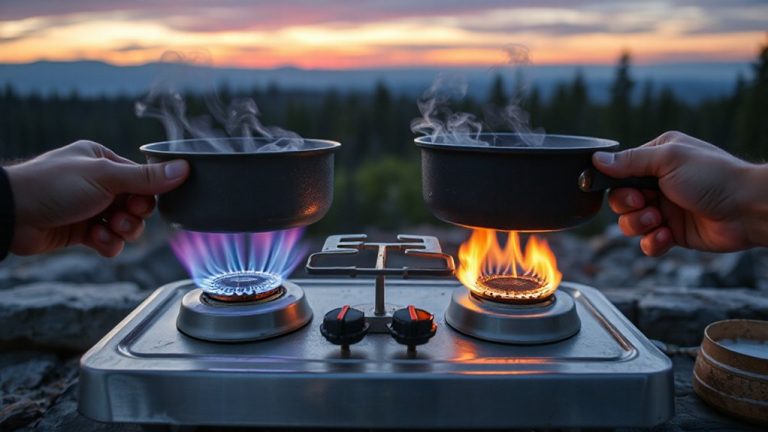
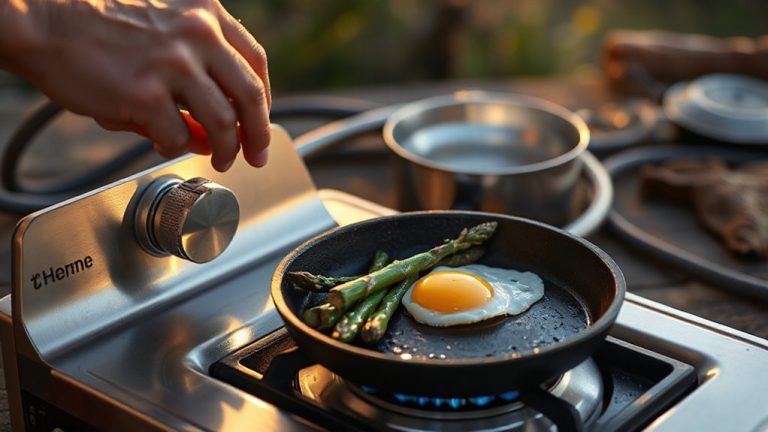
Since controlling heat output directly affects cooking precision, lowering the flame on your propane stove is a simple but essential action that can improve meal quality, especially in outdoor settings. First, turn the control knob slowly counterclockwise until you see the flame shrink-this allows fine flame calibration without sudden drops in temperature. Second, observe the flame’s color and shape; a steady blue cone with minimal flickering indicates ideal gas flow and strong heat sensitivity. Avoid yellow or wavering flames, as they suggest poor adjustment or wind interference. Third, test the heat by holding your hand a few inches above the grate; if it’s comfortable for more than three seconds, the flame’s likely low enough for delicate tasks. Proper heat control preserves flavors and prevents scorching, especially vital when simmering sauces or melting chocolate outdoors. This method guarantees reliable performance and enhances your overall cooking experience.
Choose the Right Burner for Your Stove
The burner you pick shapes how evenly and efficiently your food cooks, so matching it to your stove and meal type matters more than most realize. Burner compatibility isn’t just about fit-it affects heat distribution and control, especially when simmering sauces or searing proteins. A poorly matched burner can lead to hot spots or uneven flames, undermining your results. Look for models designed specifically for your stove brand to guarantee proper gas flow and stability. Ignition efficiency also varies between burners; some spark instantly, while others struggle in windy or damp conditions. Opt for one with reliable piezoelectric ignition or consistent push-button startup to save time and frustration. High-quality burners often feature corrosion-resistant materials and precise flame adjustment, supporting both powerful boils and gentle melts. Choosing wisely means better performance, longer lifespan, and fewer surprises mid-cook. Your stove’s potential starts with the right burner.
Stabilize Propane for Consistent Heat
Though propane offers convenience and port conceivability for outdoor cooking, you’ll want to make sure the fuel flow remains steady to maintain consistent heat. Propane’s performance hinges on fuel viscosity, which changes with temperature variance-cold weather thickens the fuel, slowing vaporization and weakening the flame. To counter this, store your tank upright and at room temperature before use, allowing more uniform vapor pressure. Pre-heating the tank slightly in cooler conditions can also help stabilize output, though never overheat it. Smaller 1-lb cylinders are more vulnerable to temperature shifts than larger, refillable tanks, which retain thermal stability longer. Position the stove out of wind, as drafts cool the tank and disrupt flow. Using a regulator designed for steady delivery minimizes fluctuations, especially during delicate tasks like simmering sauces. A high-quality propane regulator ensures optimal pressure control across varying conditions. By managing external conditions and selecting appropriate equipment, you guarantee reliable fuel delivery-critical for precision cooking where even slight heat variations affect results.
Keep Your Flame Steady and Blue
A clean, blue flame isn’t just pleasing to the eye-it’s your best indicator of efficient combustion and precise temperature control. When you’re handling delicate tasks like simmering sauces or melting chocolate, that steady blue flame means the propane is burning cleanly and evenly. Wind interference can disrupt this balance, causing flickering or lifting of the flame, so always use a windscreen or position your stove strategically. Fuel purity also plays a key role-a low-quality or contaminated propane mix can introduce yellow tips or irregular coloring, signaling incomplete combustion. These fluctuations compromise both safety and cooking accuracy. You’ll get the most reliable performance from fresh, high-grade propane stored properly and used in a clean burner. Consistent flame color reflects not just heat output, but your control over it-essential for outdoor cooking that demands finesse over force.
Fix a Sputtering or Uneven Flame
You know something’s off when your flame sputters or dances unevenly-instead of that smooth, steady blue cone, you’re seeing erratic bursts, lifting, or patches of yellow. This usually points to inconsistent fuel delivery or improper burner alignment. Propane’s fuel viscosity changes with temperature, so cold weather can cause sluggish flow and unstable combustion. Make sure your tank is upright and the hose is kink-free to maintain steady pressure. Check that the burner is properly seated and aligned with the gas outlet; even a slight misalignment disrupts the fuel-air mix. Debris in the venturi tube or clogged ports also creates uneven flames, so clean components regularly. While some stoves handle variable conditions better than others, most rely on precise mechanics rather than built-in regulation. Addressing fuel viscosity shifts and ensuring correct burner alignment restores reliable, controllable performance essential for precise outdoor cooking.
Master Low-Heat Cooking Techniques
How do you maintain precise control when simmering delicate sauces or slow-cooking tough cuts on a propane stove? You rely on effective simmer control, which portable stoves deliver when properly adjusted. Turn the knob gently until the flame settles just above the pilot light-this maintains a steady, low heat perfect for delicate tasks. True simmer control prevents scorching while allowing flavors to develop gradually. A gentle boiling is ideal for braises or reductions, where bubbles break slowly at the surface without agitation. Not all stoves achieve this evenly; cheaper models often lack fine-tuned valves, leading to heat spikes. Opt for stoves with precision burners and visible flame adjustment. You’ll notice better performance with wind shields, which stabilize temperature outdoors. Mastering low-heat cooking means understanding your stove’s response time and flame gradation. With practice, you’ll balance efficiency and control, making portable propane surprisingly versatile for nuanced dishes.
On a final note
You’ve got the tools to master delicate cooking on your portable propane stove. Precise flame control isn’t just convenient-it’s essential for simmering sauces or melting chocolate without scorching. By adjusting gas flow, stabilizing fuel temperature, and maintaining a blue flame, you guarantee consistent, reliable performance. These steps elevate outdoor cooking from basic to refined, proving propane can be as controlled as any indoor range when handled right.