Mastering the Balance of Flame Control on a Dual-Burner Camp Stove
You’re wasting fuel and ruining meals if you’re not balancing your dual-burner camp stove’s flames with precision. Clogged jets or poor airflow cause flickering, leading to scorched pans and uneven cooking. Match heavy pots to high-output burners, use smaller pans on low for simmering, and set distinct flame zones for better control. Shield the stove from wind without blocking vents, and pre-warm fuel in cold weather. Sync searing and simmering safely with proper heat isolation-there’s more to mastering this than you think.
Notable Insights
- Clean fuel lines and check regulators regularly to prevent uneven flame output between burners.
- Match high-output burners to large pots and low-output burners to skillets for optimal heat distribution.
- Establish distinct flame zones-high, medium, low-on each burner for precise cooking control.
- Use wind shields wisely, ensuring they don’t block ventilation to maintain consistent flame performance.
- Pre-warm fuel canisters and use isobutane-rich blends to sustain steady flames in cold conditions.
How Flame Imbalance Ruins Camp Meals
Why does one side of your dual-burner stove roar while the other barely flickers? That imbalance causes flame flickering and uneven heating, sabotaging your camp meals. You’re trying to sauté onions and simmer soup, but one burner overheats while the other struggles to maintain a steady flame. Flame flickering disrupts temperature control, making it nearly impossible to cook consistently. Uneven heating leads to scorched pans on one side and undercooked food on the other. It’s not just frustrating-it wastes fuel and time. This often stems from clogged fuel lines, regulator issues, or uneven venting in the burners. Even minor debris can throw off the air-to-fuel ratio, distorting the flame pattern. Left unchecked, you’ll never achieve reliable performance. Addressing these flaws guarantees both sides deliver balanced output, letting you cook efficiently in the backcountry. Precision matters when you’re miles from a kitchen.
Match Pots and Pans to Each Burner’s Power
A well-balanced flame is only half the battle-pairing the right cookware with each burner’s output is what truly transforms your camp cooking. High-output burners demand heavy-duty pots that can handle intense heat, while simmering on low-power burners works best with lighter, responsive pans. Proper burner alignment guarantees even heat distribution and prevents hot spots that ruin meals. Cookware stability matters, especially on uneven terrain-wobbly pots lead to spills and inconsistent cooking. For more insights on optimizing your outdoor kitchen, explore the top picks in best camping stoves.
| Burner Type | Recommended Cookware |
|---|---|
| High-power | Deep pots, Dutch ovens |
| Low-power | Skillets, saucepans |
| Dual-function | Medium-weight hybrids |
Choose wisely: a match of pot to burner boosts efficiency, safety, and results. Mismatched gear risks wasted fuel and undercooked food. Align your tools with purpose-stability and alignment aren’t optional.
Set High, Medium, and Low Flame Zones
Once you’ve matched your cookware to the right burner, fine-tuning the flame becomes the next critical step in mastering camp stove performance. You’ll want to establish clear high, medium, and low flame zones on each burner for ideal control. High flames are ideal for boiling water quickly, but they demand your attention to avoid hot spots and uneven heat distribution. Dial it back to medium for steady sautéing-this setting offers the best balance of flame precision and consistent cooking. Low settings are perfect for warming or reducing sauces without scorching. Most dual-burner stoves allow independent adjustment, so you can customize each side accurately. Proper flame zoning enhances not just flavor but also fuel efficiency. With practice, you’ll intuitively recognize how flame height affects pan temperature, giving you restaurant-level control even in the backcountry.
Sear on One Side, Simmer on the Other
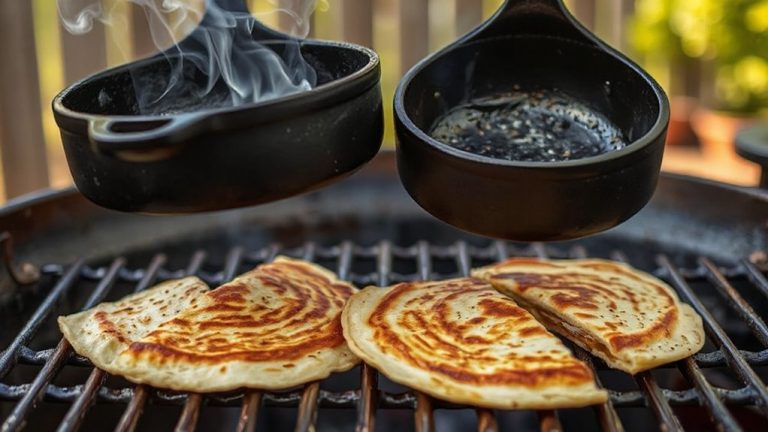
While one burner brings a cast-iron skillet to screaming heat for a perfect sear, the other can maintain a gentle simmer-this is where a dual-burner camp stove truly earns its keep. You’re not just cooking; you’re multitasking with precision, thanks to flame synchronization that lets you independently manage each side. Heat isolation between burners guarantees one doesn’t influence the other, so your simmering sauce won’t scorch while you sear steaks at 450°F. This kind of control mimics a high-end kitchen range, but in a portable setup designed for the trail. You’ll appreciate the engineering when handling delicate reductions next to aggressive searing. It’s not just convenience-it’s efficient cooking strategy. With proper burner adjustment, you maintain ideal temperatures without constant monitoring. Flame synchronization and heat isolation aren’t just specs-they’re essential features that elevate your outdoor meals from acceptable to exceptional.
Use Less Fuel With Precise Flame Control
Every ounce of fuel matters when you’re miles from the trailhead, and that’s where precise flame control on a dual-burner camp stove really pays off. With a simple turn, you make a precise adjustment to match your cooking task-no more blasting full flame to keep soup warm. This kind of control directly improves fuel efficiency, stretching every canister or bottle further. High heat’s great for boiling, but simmering requires restraint, and dual burners let you balance both. You’ll notice immediate savings during long trips where resupply isn’t an option. Stoves with fine-tuned valves offer smoother performance, letting you dial in just the right amount of heat. Poor control wastes gas and risks burning meals. In testing, models with ergonomic knobs and incremental feedback scored highest in both precision and fuel economy. When you cook outdoors, maximizing efficiency isn’t just smart-it’s essential for longer, lighter journeys.
Fix Common Flame Problems in Seconds
Why does your flame sputter when you need steady heat? Flame flickering often means uneven gas pressure or a blocked jet. If you notice your burner sputtering or the flame lifting off the ports, check the fuel line and regulator first. Inconsistent gas pressure usually stems from a nearly empty canister or poor connection. Tighten the valve and make sure the cartridge is seated right-loosen then re-secure it until snug. For dual-burner setups, mismatched flame output between sides typically signals uneven fuel distribution. Clean the ports with a needle, but gently-damaging them worsens performance. Never use a toothpick; metal tools designed for stoves work better. These quick checks fix most problems in seconds. A stable flame means better control, efficient fuel use, and more consistent cooking. Spot issues early, act fast, and your stove stays reliable through every outdoor meal.
Keep Both Burners Steady in Wind and Cold
Even in harsh conditions, your dual-burner camp stove can deliver consistent heat if you manage exposure and fuel flow wisely. Wind stabilization is critical-position your stove beside a natural windbreak or use a dedicated stove shield to prevent gusts from disrupting the flame. Make sure the shield doesn’t block ventilation, which could lead to incomplete combustion. For cold resistance, opt for fuel canisters with a higher proportion of isobutane, as they vaporize more efficiently in low temperatures. Pre-warming the canister slightly-by keeping it in your jacket-can also improve performance. Always regulate flame gradually; sudden adjustments in cold environments often lead to flickering or熄灭. You’ll notice that balanced fuel distribution between burners enhances control during simultaneous cooking tasks. With proper setup and quality gear, maintaining steady output isn’t just possible-it’s reliable, even when the weather isn’t.
On a final note
You’ve seen how flame control makes or breaks camp meals. Matching cookware to burner output, zoning heat levels, and using sear-simmer combos boost efficiency. Precise flames cut fuel use and prevent waste, while steady operation in wind or cold guarantees reliability. These techniques aren’t just convenient-they reflect smart, field-tested outdoor cooking. Master them, and your stove performs like a kitchen range, even in the backcountry.