Why Ash Buildup Reduces Heat Efficiency and How to Clean It Mid-Session
Too much ash insulates the burn chamber, blocking heat from rising and choking airflow so your fuel burns cooler and less efficiently. You’ll notice uneven temps or weak flames when it’s time to clean. Use a stainless ash tool or vacuum to remove only the excess-leave the hot coals intact. After clearing, tweak the vents slowly to avoid spiking the temperature. Proper airflow keeps your fire steady and your cook on track. There’s more to optimizing your setup than just this step.
Notable Insights
- Ash buildup insulates the burn zone, reducing heat transfer and disrupting airflow for efficient combustion.
- Thick ash layers restrict oxygen flow, leading to uneven cooking temperatures and longer prep times.
- Clean mid-session when ash exceeds half an inch, preserving the ember bed for continuous heat.
- Use a narrow ash tool to remove cold ash from edges without disturbing glowing coals.
- After cleaning, adjust vents gradually to control oxygen intake and maintain stable cooking temperatures.
Why Too Much Ash Cuts Your Heat
While your fire burns strong, excess ash left unmanaged can quietly undermine heat efficiency without you even noticing. That accumulating layer creates thermal resistance, trapping heat beneath instead of letting it radiate upward into your cooking space. You’re not just losing warmth-you’re also wasting fuel. As the ash thickens, it forms a dense fuel barrier that interferes with proper airflow, critical for sustained combustion. Without steady oxygen flow, your fire struggles to maintain high, even temperatures, leading to uneven cooking and longer prep times. Even with quality wood or charcoal, performance degrades when ash insulates the burn zone instead of supporting it. You might not see an immediate drop in flames, but the cooking surface tells the real story-cooler, inconsistent, less responsive. Managing ash isn’t just about cleanliness; it’s about maintaining thermal efficiency, ensuring your fire delivers the heat output you need when you need it. A well-designed charcoal grill smoker promotes better ash management and airflow control for consistent performance.
Spot When You Need Ash Removal
You’ve seen how excess ash hampers heat transfer and disrupts airflow, but knowing when to clean it out is just as important as understanding why. If your fire’s burn pattern looks uneven or struggles to maintain consistent heat, it’s likely time. A mottled or dark ash color often signals incomplete combustion, meaning airflow is restricted. Conversely, a light gray, powdery ash usually means cleaner burning and less urgency. Watch how new fuel behaves-slow ignition or weak flames hint at underlying ash buildup. You’ll also notice longer cook times or cold spots on the grates, both tied to poor heat distribution. Monitoring these cues mid-session helps maintain efficiency. Ignoring them leads to wasted fuel and inconsistent results. Regular observation of ash color and burn pattern isn’t just upkeep-it’s essential for precise control over your cooking environment. Stay alert, and you’ll keep performance high.
Use the Right Tools for Safe Cleaning
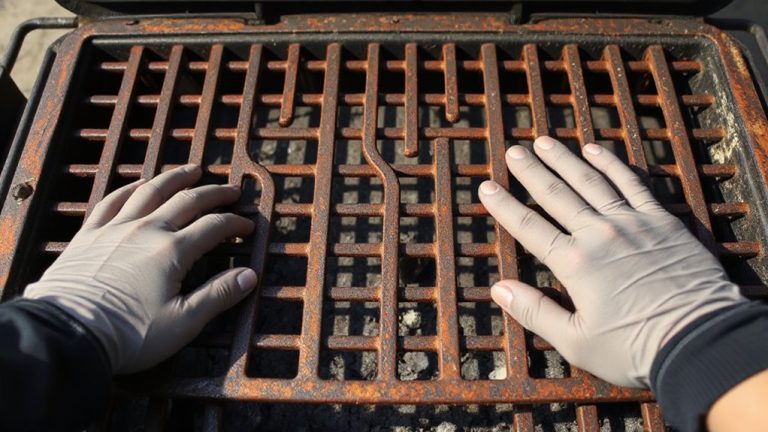
Since efficient heat management depends on consistent airflow and clean combustion surfaces, using properly designed tools for ash removal makes a noticeable difference in both safety and performance. You’ll want a stainless steel ash tool or a dedicated vacuum, as they handle varying ash texture without degrading or sparking. Flimsy scoops can bend or leave behind residue, risking cleaning safety and restricting airflow. A fine mesh brush helps dislodge compacted ash from grates, while heat-resistant gloves protect your hands-essential when surfaces are still warm. Tools with long handles keep you at a safe distance, minimizing exposure to residual heat and particulates. Considering how ash texture shifts from fluffy to clinkered, having the right tools guarantees thorough, controlled cleaning. Don’t improvise with household items; they’re not built for high-heat environments. Proper gear boosts cleaning safety and maintains your unit’s longevity, so every session starts efficiently and burns evenly. For grilling tasks that involve cleaning hot grates, a best grill brush can prevent residue buildup and ensure safer, more effective maintenance.
Remove Ash Without Killing the Fire
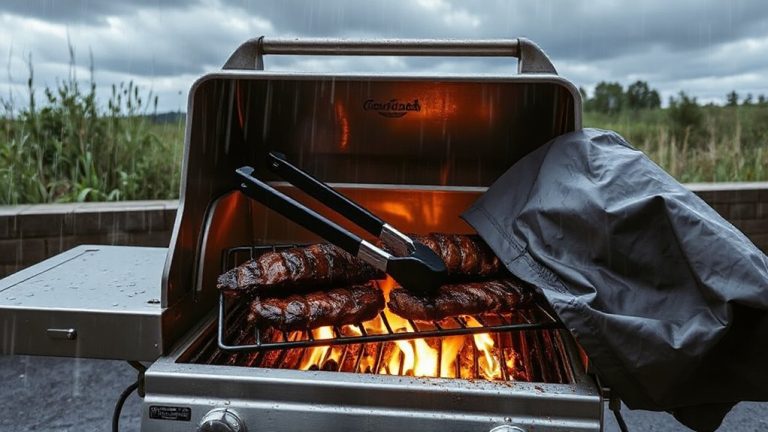
When removing ash from your grill or smoker, timing and technique matter-clearing too much too soon can disrupt the bed of embers that sustains your fire, while leaving it piled up restricts airflow and dampens heat. For maximum heat retention, only remove excess ash when it builds beyond a half-inch layer. Use a narrow ash tool to gently pull debris from the edges, preserving the glowing coals at the core. This method supports steady temperature and promotes fire safety by minimizing sudden oxygen surges. Never douse or over-stir the bed-doing so kills the fire and wastes fuel. Instead, work carefully, targeting cold ash while leaving warm embers intact. Proper technique guarantees your fire stays alive, efficient, and ready for extended cooks. Done right, mid-session cleaning balances cleanliness with continuity, keeping your heat output stable and your cooking experience predictable.
Keep Your Fire Hot: Airflow After Cleaning
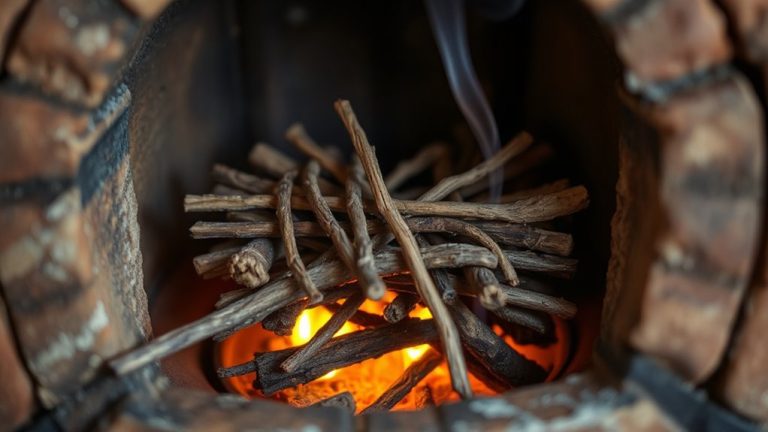
Clearing ash without snuffing the fire sets the stage for maintaining strong heat, but the real test comes right after cleaning-managing airflow to keep temperatures steady. You’ve just opened up the firebox, and oxygen rushes in, which can spike combustion if unchecked. Adjust the vents gradually; sudden surges disrupt fire dynamics and risk overheating the cooking surface. You want controlled intake, not a blast. Proper airflow sustains thermal retention by stabilizing the burn rate, allowing the coals to radiate heat evenly. Keep the bottom vents partially closed and monitor the top draft to balance exhaust. Too much air cools the mass by burning fuel too fast, undermining efficiency. Observations show that moderate, consistent airflow preserves both temperature and fuel life. It’s not just about cleaning ash-it’s about guiding the fire’s recovery. Smart airflow management means your cook stays on track, with steady heat and reliable results.
On a final note
You keep the fire going, but ash buildup chokes airflow and slashes heat efficiency. Cleaning mid-session isn’t just smart-it’s essential for consistent performance. Using the right tools, like a poker and ash shovel, lets you remove debris safely without smothering the coals. Restoring airflow reignites thermal momentum, ensuring even cooking. For outdoor cooking, especially with smokers or charcoal grills, maintenance during use directly impacts results, flavor, and fuel economy. Neglect it, and you sacrifice control, time, and taste.