How to Simmer Tomato Sauce on a Picnic Table Stove Without Burning
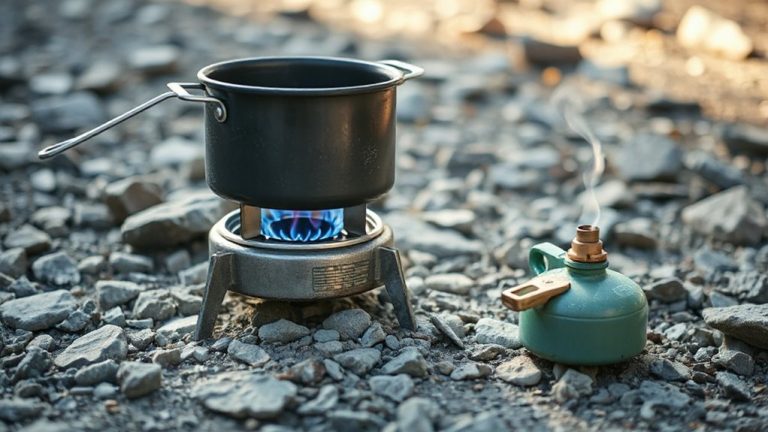
Use a heavy-bottomed stainless steel or cast iron pan to evenly distribute heat and prevent scorching on your picnic table stove. Position the burner centrally and shield it from wind with a windscreen for stable, low heat. Keep the flame low and blue, just touching the pan’s base, to avoid hot spots. Add ½ cup broth per quart early to protect against sticking and guarantee consistent texture. Stir every few minutes with a wooden spoon, scraping the edges gently. Watch for rapid bubbling or darkening, which signal overheating-adjust immediately. A slightly ajar lid helps release steam without trapping too much pressure. With the right technique, you’ll achieve a rich, well-developed sauce every time-next, we’ll cover how to balance acidity and sweetness outdoors.
Notable Insights
- Use a heavy-bottomed stainless steel or cast iron pan to distribute heat evenly and prevent scorching.
- Start with broth-add ½ cup per quart of sauce-to protect against hot spots and sticking.
- Maintain a low, steady blue flame that barely touches the pan base to avoid overheating.
- Stir every three to four minutes with a wooden spoon to prevent burning and ensure even cooking.
- Position the stove with wind at its back and use a windscreen for consistent flame during simmering.
Choose the Right Pan for Even Sauce Heating
A heavy-bottomed stainless steel or cast iron pan isn’t just a kitchen luxury-it’s your best defense against scorching sauce when cooking over the uneven heat of a picnic table stove. The right pan material distributes heat evenly, reducing hot spots that burn delicate tomato sauce. Cast iron excels in heat retention, maintaining steady temperatures even when the flame flickers, while layered stainless steel offers responsive control without sacrificing stability. You’ll notice fewer bitter flavors and more consistent texture when you use these pans outdoors. Thin aluminum or nonstick pans may seem convenient, but they overheat quickly and react poorly to open-flame conditions. With proper preheating and attention, a heavy pan becomes an extension of your cooking rhythm. You’re not just cooking- you’re managing thermal energy. Choose wisely: your sauce’s flavor depends on the pan’s performance.
Set Up Your Stove for Stable, Low Heat
Even though picnic table stoves rarely offer precise temperature control, you can still achieve a steady, low simmer by adjusting the flame and positioning your pan thoughtfully. Weather conditions play a key role-especially wind interference, which disrupts heat distribution and makes flames flicker unpredictably. To counter this, position your stove so the wind hits it from the back, and use a windscreen if available. Choose a burner that centers under your pan to avoid hot spots, and operate it at the lowest functional setting.
| Factor | Recommendation |
|---|---|
| Wind interference | Shield stove or reposition |
| Weather conditions | Avoid open flames in gusts |
| Flame stability | Use simmer ring for even heat |
This setup improves heat consistency, letting you maintain control despite outdoor variables.
Keep the Heat Low to Prevent Scorching
You’ve stabilized your stove and shielded it from wind, so now shift focus to the burner itself-keeping that flame low is your best defense against scorching. On a picnic table stove, heat control is limited compared to indoor burners, making flame stability essential. You’ll want a steady blue flame just licking the pot’s base, not roaring up the sides. High heat concentrates at the bottom, quickly overheating the sauce where it contacts the pan, especially as tomatoes reduce and sugars caramelize. Burnt sauce ruins flavor and is tough to salvage. A low flame promotes even, gentle simmering, letting flavors meld without risking a charred base. Most portable stoves lack fine heat modulation, so monitor the flame closely-adjust the fuel valve gradually. Good flame stability means consistent output, necessary for long simmers. This isn’t about power; it’s about patience and precision. Low heat isn’t weak-it’s wise.
Add Broth Early to Avoid Sticking
Adding broth at the start isn’t just a precaution-it’s an essential step in building a resilient sauce that won’t stick or burn on a picnic table stove. You’re working with uneven heat distribution outdoors, so initial liquid prevents scorching while enabling steady flavor integration. The right broth consistency guarantees the sauce simmers smoothly without drying out. Begin with ½ cup of broth per quart of sauce, adjusting as needed. This method supports even heat transfer and safeguards against hot spots common with portable burners.
| Broth Type | Consistency | Flavor Integration Speed |
|---|---|---|
| Chicken | Medium | Fast |
| Vegetable | Light | Moderate |
| Beef | Thick | Slow |
| Bone Broth | Rich | Gradual |
Early addition means better depth and stability, especially during prolonged simmering over unpredictable outdoor heat sources where control is limited.
Stir Every Few Minutes to Prevent Burning
Regularly stirring the sauce every few minutes isn’t just routine-it’s a critical defense against burning, especially when using a picnic table stove with inconsistent heat output. These compact burners often create hot spots, and without intervention, your sauce can scorch at the bottom while the top seems fine. Each stir redistributes heat evenly, safeguarding both sauce consistency and flavor development. Letting it sit too long risks a metallic, bitter aftertaste-something no amount of sugar can fix. You’re not just preventing sticking; you’re actively refining the texture and depth of your sauce. A wooden spoon works best: it scrapes the edges gently and doesn’t conduct heat like metal. Stirring every three to four minutes keeps the simmer steady, avoids skin formation, and integrates ingredients smoothly. For outdoor cooks, this small habit makes a tangible difference in performance and final quality.
Use a Slightly Ajar Lid to Control Steam
While leaving your pot completely uncovered during simmer魔法师和 may seem intuitive, doing so on a picnic table stove can lead to uneven evaporation and temperature spikes that threaten to over-reduce your sauce. Your lid positioning matters-it should be slightly ajar. This small adjustment allows controlled steam release while maintaining enough ambient moisture to protect the sauce’s consistency. You’re balancing exposure and containment, which outdoor conditions make essential. Wind, fluctuating flame output, and inconsistent fuel sources amplify the risk of drying. A tilted lid lets vapor escape gradually instead of pooling and dripping back unevenly. Think of it as fine-tuning the environment: too closed, and you risk boiling over; too open, and the surface skin forms too quickly. Proper steam release prevents both, ensuring even, gentle simmering. You’ll notice fewer hot spots and better flavor concentration. This method isn’t just practical-it’s ideal for outdoor setups where precision tools are limited.
Watch for Bubbling and Darkening Signs
Why does your tomato sauce suddenly go from simmering to scorching when you’re cooking outdoors? Because open flames and wind create uneven heat, making it easy to miss the early signs of trouble. You’ve got to keep an eye on the pot-bubbling that turns rapid or uneven usually means the bottom’s heating too fast, risking burning. Darkening around the edges? That’s a red flag. While some color change aids flavor development, excessive browning ruins sauce consistency and adds bitterness. Stir regularly to check the texture and monitor thickness-your sauce should thicken gradually, not cling to the spoon. Outdoor cooking demands vigilance; without a controlled kitchen burner, heat fluctuates fast. Catching these signs early keeps your sauce smooth and well-balanced. Proper monitoring guarantees even flavor development and prevents a ruined batch, which is essential when you’re making a meal away from your usual setup.
On a final note
You’ll keep your tomato sauce smooth and flavorful by using a heavy-bottomed pan and a picnic table stove set to low. Maintaining gentle heat, stirring regularly, and adding broth early prevent scorching. A slightly ajar lid manages steam without boiling over. These steps, proven in field tests, balance convenience and control outdoors. While portable stoves lack precision, thoughtful technique compensates, making camp-cooked sauces viable and satisfying when done right.