How to Deep Clean a Smoker’s Firebox After Wood Ash Accumulation
Let your firebox cool completely-wait at least two to three hours-since thick steel retains heat longer. Use a stainless steel shovel or brush to remove loose ash, then scrape stubborn, carbonized buildup with a brass brush to avoid scratching. Clear all vents so airflow stays ideal for combustion. Wipe down the interior with a damp cloth to stop corrosion, and inspect gaskets before reassembling. Keep up these steps every few uses, and you’ll find out how small habits make a big difference in performance and longevity.
Notable Insights
- Let the firebox cool completely for at least two to three hours before cleaning to ensure safety and prevent warping.
- Remove loose ash using a stainless steel shovel or brush, transferring it to a metal bucket for safe, pest-free disposal.
- Scrape stubborn, baked-on ash with a brass brush or putty knife to avoid damaging steel surfaces while targeting high-heat zones.
- Clear all vents of ash and creosote buildup to restore proper airflow and ensure accurate temperature control during smoking.
- Wipe the interior with a damp cloth, check gaskets for damage, and reassemble parts for optimal performance and longevity.
Cool the Firebox Safely Before Cleaning
Once the fire has burned out, you’ll want to let the firebox cool completely before attempting any cleaning-rushing this step risks burns or warping delicate components. You need to monitor the firebox temperature closely; even if the exterior feels cool, internal sections may retain dangerous heat. Most manufacturers recommend a minimum cooling time of two to three hours, though thicker steel models may take longer due to thermal mass. Skipping this wait compromises safety and structural integrity over time. Realistically, ambient conditions affect cooling time-on colder days, metal contracts faster, speeding up the process, whereas humid or insulated setups hold heat longer. Treating this stage with care guarantees longevity and consistent performance. Proper cooling isn’t just caution-it’s part of responsible smoker maintenance. You’re not only protecting yourself but also preserving the precision engineering built into quality smokers. Patience here sets the foundation for every deep clean afterward.
Remove Loose Ash With the Right Tools
While the firebox sits cold and safe to touch, you’ll want to tackle the loose ash promptly-letting it linger risks moisture retention and corrosion over time. Use a stainless steel ash shovel or a small hand brush to gather the powdery residue efficiently. These tools work best without scratching the firebox lining, preserving its integrity. Always pair your tools with a metal bucket for secure ash disposal, as paper or plastic containers can pose fire hazards even with cooled remnants. Proper ash disposal isn’t just about cleanliness-it prevents pest infestations and keeps your smoker in peak condition. Don’t overlook tool maintenance either; wiping down your shovel and brush after each use prevents rust and extends their lifespan. Well-maintained tools make subsequent cleanings faster and more effective. With loose ash cleared, you’re one step closer to a thoroughly restored firebox, ready for its next smoke session.
Scrape Baked-On Ash Without Damaging Metal
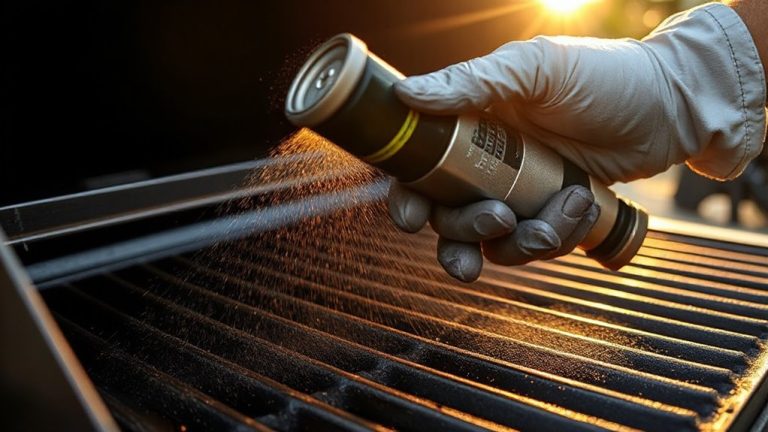
A stiff brass brush or putty knife works best when you’re dealing with stubborn, carbonized ash clinging to the firebox walls-it’s tough enough to break through the crust without gouging the steel. You’ll notice the ash texture changes from powdery to rock-hard in spots, especially near high-heat zones, making gentle scraping essential. Metal sensitivity matters here, since aggressive tools like steel scrapers can scratch or weaken the firebox over time, compromising heat retention and durability. Brass is ideal because it’s firm yet softer than steel, reducing the risk of damage. Apply steady pressure in short strokes, working top to bottom. Inspect the surface frequently to avoid over-scraping. Clean in sections, and brush away debris immediately. This method preserves the firebox’s integrity while ensuring a thorough clean-key for consistent, efficient burns and quality smoke flavor in your outdoor cooking.
Clear and Inspect Vents for Better Airflow
Why do some smokers struggle to maintain steady temperatures, even after a thorough firebox cleaning? Because airflow optimization often gets overlooked. You’ve cleared the ash, but if vents are clogged or misaligned, oxygen can’t feed the fire properly. Start by removing debris from both intake and exhaust vents-ash and creosote buildup restrict essential airflow. Then, check the vent alignment; they should open and close smoothly, with no warping or obstructions. Proper alignment guarantees precise control over combustion, directly impacting temperature stability and smoke output. Think of your smoker as a finely tuned system: when vents function correctly, heat circulates evenly, and fuel burns efficiently. Neglecting this step undermines all other cleaning efforts. Routine inspection not only supports consistent cooking conditions but extends your smoker’s lifespan. For serious outdoor cooking, airflow isn’t just detail work-it’s foundational.
Wipe Down Interior and Reassemble Properly
With the vents now clear and aligned for ideal airflow, it’s time to give the firebox interior a final wipe down before reassembly. Use a damp cloth to remove residual ash and soot, guaranteeing surfaces are clean and ready for proper metal preservation. This step isn’t just about appearance-trapped moisture or alkaline ash residue can accelerate corrosion, undermining durability. Performing basic ash analysis by noting color and texture can hint at inefficient burns or fuel choices, helping fine-tune future smoking sessions. Check all gaskets and joints for wear; a well-sealed firebox maintains temperature stability and efficiency. When reassembling, align components carefully-especially the door and baffles-to maintain structural integrity and consistent heat distribution. Proper reassembly isn’t just routine; it guarantees peak performance, extends equipment life, and supports long-term flavor development in your barbecue. Consider using essential meat smoking accessories to enhance both cleaning efficiency and smoking results.
Adopt Simple Habits to Prevent Ash Buildup
Though you can’t eliminate ash entirely when running your smoker, you’ll reduce buildup considerably by adjusting how and what you burn. Proper fuel storage keeps wood dry and burning hotter, which minimizes leftover residue. Damp fuel smolders, creating more ash and complicating ash disposal later. Burn seasoned hardwoods instead of softwoods or treated scraps-clean combustion means less maintenance. Choosing the right type of wood not only improves flavor but also affects burn efficiency, and understanding your options can guide better choices-see best smoking wood for a detailed breakdown of top picks and what to look for. Here’s how small habits improve performance:
| Habit | Benefit | Maintenance Impact |
|---|---|---|
| Use dry, seasoned wood | Efficient burn, less smoke | Reduces ash volume |
| Store fuel in covered area | Prevents moisture absorption | Extends fuel life |
| Dispose of ash promptly | Prevents clumping and corrosion | Simplifies future cleaning |
Consistent ash disposal and smart fuel storage aren’t flashy, but they preserve your smoker’s efficiency and longevity. You’ll notice cleaner burns and fewer deep cleans needed over time-proof that discipline at setup pays off.
Know When to Deep Clean Your Firebox
You’ll usually need to deep clean your firebox every few months, depending on how often you run the smoker and the type of fuel you use-frequent cooks with unseasoned wood or high-moisture charcoal will face heavier creosote and ash accumulation, demanding more regular attention. Use ash detection as a key indicator: if you notice airflow restriction or inconsistent temperatures, it’s likely time. Examine residue patterns along the firebox walls and grates; thick, black crusts or flaky buildup signal prolonged exposure and incomplete combustion. These patterns also reveal fuel inefficiency-cleaner burns leave lighter, powdery ash. Ignoring these signs risks flare-ups, poor heat distribution, and long-term damage. For peak performance, inspect after every few cooks and schedule deep cleans based on observed accumulation, not just time. Regular assessment keeps your smoker running efficiently and extends its lifespan, ensuring every barbecue session starts on solid footing.
On a final note
You’ve kept your smoker running efficiently by tackling ash buildup the right way. Clearing the firebox boosts airflow, improves heat control, and extends your unit’s life. Regular scraping and vent checks prevent costly issues down the line. While all smokers collect residue, consistent maintenance sets apart dependable performance from frustration. You’re not just cleaning-you’re fine-tuning a tool built for flavor. Stay on schedule, and your smoker will deliver clean burns and savory results every cook.