How to Prevent Sticking When Grilling Burgers on a Portable Grill
Preheat your portable grill for 10–15 minutes to reach 375°F–450°F, creating a clean, hot surface that sears burgers fast and prevents sticking. Oil the grates-not the patties-using high-smoke-point oil for better heat transfer and fewer flare-ups. Shape thick, cold patties and don’t press them; let them sear undisturbed until they release naturally. Keep the lid closed to maintain consistent heat, especially essential on portable units. You’ll find the full routine makes grilling far more reliable and tasty.
Notable Insights
- Preheat the portable grill for 10–15 minutes to 375°F–450°F to create a non-stick surface.
- Oil the grates directly using a high-smoke-point oil and a towel held with tongs.
- Form thick, cold patties to help them hold their shape and resist sticking during searing.
- Avoid pressing down on patties to preserve juices and maintain structural integrity.
- Let the patty sear undisturbed for 3–5 minutes until it releases naturally from the grates.
Stop Burgers From Sticking: Preheat the Grill First
While it might seem like a small step, preheating your grill is one of the most effective ways to keep burgers from sticking. You’ll need proper grill temperature-usually 375°F to 450°F-for good searing and release. A cold grill surface invites moisture and proteins to bond, increasing the chance of tearing when flipping. By heating the grill for 10–15 minutes, you burn off residue and create a more stable cooking surface. This step is essential for proper surface preparation, especially on portable grills, which often have smaller burners and less consistent heat distribution. You’ll notice better grill marks and smoother lifts when the metal is fully warmed. Think of it as priming a canvas: no paint sticks well to an unprepared surface. So don’t skip the warm-up-your burger’s integrity depends on it. Preheating isn’t just routine; it’s foundational. For best results, consider models with even heat distribution, such as those highlighted in our best portable grills guide.
Oil the Grates: Not the Patties
A single swipe of oil on the grates does far more than a drizzle on the patty ever could-targeted lubrication where it matters most prevents sticking without sacrificing sear or texture. You’re not just protecting your burgers; you’re supporting smart grill maintenance and cooking safety. Oiling the grates guarantees even heat transfer and reduces flare-ups caused by excess fat dripping onto flames-common when oil-coated patties hit the fire. Use a tongs and a folded paper towel dipped in high-smoke-point oil like canola or avocado, then wipe the hot grates just before placing patties. It’s quick, effective, and keeps control where it belongs: in your hands. Skipping this step risks tearing burgers apart and increases the chance of cross-contamination from scraping stuck remnants. Done right, this method improves reliability across cookouts, especially on portable grills where surface consistency varies. For consistent results, consider using a high-quality outdoor griddle designed for even heating and easy maintenance.
Make Thick, Cold Burgers That Hold Together
Thicker burger patties stay together better on the grill, and starting with cold meat makes all the difference. You want a patty thickness of at least three-quarters of an inch to prevent overcooking and crumbling during flipping. When the beef is cold, it holds its shape longer as the heat hits, reducing deformation and sticking risks. Handle the meat gently-overworking it or applying heavy pressure compacts the proteins, making burgers dense and prone to tearing. Lightly mix in your burger seasoning just before shaping; avoid blending it too early, which can affect texture. Cold patties sear faster, creating a protective crust that lifts cleanly from well-oiled grates. This combination-proper patty thickness and a chilled base-not only improves structural integrity but also enhances overall doneness control. For portable grills with uneven heat, these steps are essential for consistent, reliable results every time.
Avoid Pressing Down to Keep Juices In
You might think pressing down on your burger with a spatula helps speed up cooking or renders extra fat, but that little push actually works against you. When you squash the patty, you force out precious juices, undermining both juice retention and flavor preservation. Those drips aren’t just moisture-they carry seasoned beef essence essential to taste and tenderness. On a portable grill, where heat can be less consistent, losing this liquid also increases flare-ups, risking char without proper searing. A well-formed, cold patty, as previously discussed, resists sticking without interference. Trust the process: let the meat cook undisturbed. The Maillard reaction, responsible for that appetizing crust, occurs efficiently without flattening. Pressing also distorts the shape, leading to uneven thickness and dry spots. For best texture and taste, resist the urge. Effective grilling isn’t about manipulation-it’s about patience and understanding how heat, meat structure, and moisture interact for better results.
Let Burgers Release Naturally Before Flipping
Once the sizzle hits and the patty makes contact with the griddle or grill, resist the urge to nudge it-letting it sear undisturbed allows a fond to build, creating a natural barrier that prevents sticking. You’ll know it’s ready to flip when the edges are evenly browned and it lifts easily with a spatula. Premature flipping disrupts doneness control and increases sticking risk. Proper flip timing guarantees full sear development, locking in juices and enhancing texture. On a portable grill, where heat distribution can be uneven, patience pays off. Let each side sear fully before turning-usually 3 to 5 minutes depending on thickness and temperature. This method supports consistent cooking and better crust formation. Relying on visual and tactile cues rather than a timer improves doneness control, especially when grilling over variable flame. Letting burgers release naturally isn’t just technique-it’s key to reliable, high-quality results every cookout.
Close the Lid to Lock in Heat
While searing develops flavor, closing the lid during grilling traps heat and creates a more controlled cooking environment, especially essential when handling thicker patties or using less consistent heat sources. Proper heat retention ensures even cooking and reduces flare-ups, while promoting steady flavor infusion from smoke and sear. Keeping the lid closed minimizes temperature swings, a vital factor on portable grills with thinner metal. Frequent peeking disrupts the thermal balance and lengthens cook time. For best results, trust the process and let the grill do the work. A well-chosen portable griddle can significantly improve heat distribution and cooking consistency, making models like the Best Portable Griddles ideal for outdoor burger mastery.
Clean the Grates After Cooking to Prevent Buildup
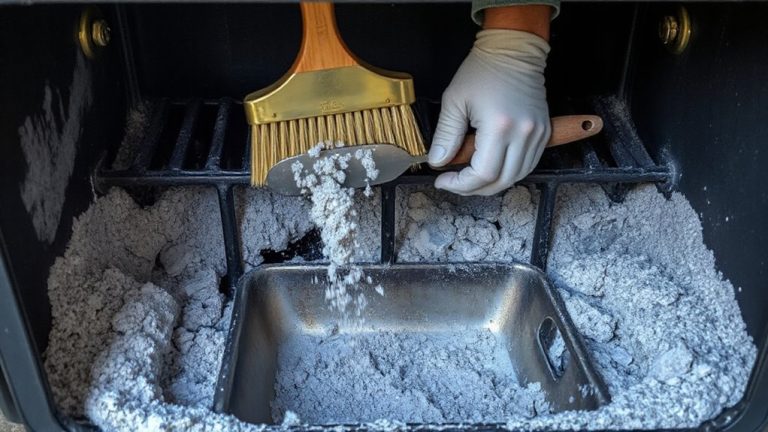
What happens if you skip cleaning your grates after grilling? Over time, grease and charred bits accumulate, making future residue removal harder and increasing the chance your burgers will stick. Performing basic grill maintenance isn’t just about appearance-it directly affects performance. When carbonized food builds up, it creates uneven hot spots and compromises heat distribution. A quick scrub with a brass-bristle brush while the grates are still warm guarantees most gunk lifts easily. For deeper cleaning, a damp cloth or mild degreaser helps remove stubborn residue. Consistent cleaning prevents long-term corrosion, especially on portable grills with thinner metal surfaces. You’ll notice burgers release more smoothly and grill marks turn out cleaner. Think of it as preventative care: a few minutes post-cookout saves time and frustration later. Real grill maintenance isn’t flashy, but it keeps your equipment reliable, efficient, and ready for the next cook.
On a final note
You’ve preheated, oiled the grates, and shaped cold, thick patties-now let them sear undisturbed. Pressing forces out juices, drying the burger, while patience guarantees a clean release and deep crust. Closing the lid maintains consistent heat, essential on a portable grill. After cooking, cleaning prevents residue buildup, guaranteeing better performance next time. These steps aren’t just habits-they’re proven methods for reliable, high-quality outdoor results every cookout.