Smoking Whole Poultry: Brining, Trussing, and Rotating for Even Cook
Brine your poultry for 8–12 hours in a 5–7% salt solution to lock in moisture and boost flavor. Use apple or cherry wood for a sweet, mild smoke that complements the meat without overpowering it. Truss the bird snugly to promote even heat exposure and prevent wing flare-ups. Rotate every 60 to 90 minutes for balanced smoke distribution, but avoid overhandling. Keep your smoker steady at 225–250°F, and you’ll find how small steps make a clear difference in every bite.
Notable Insights
- Brine poultry in a 5–7% salt solution for 8–12 hours to enhance moisture and flavor without causing sogginess.
- Use mild fruitwoods like apple or cherry for smoking to complement poultry with sweet, delicate smoke notes.
- Truss the bird securely by tying wings and legs to ensure even heat exposure and prevent burning.
- Rotate the poultry every 60–90 minutes to promote uniform smoke distribution and consistent cooking.
- Avoid overcooking by monitoring internal temperature; remove chicken at 165°F to prevent dryness.
How to Brine Whole Chicken for Juicy Smoked Results
A well-executed brine can make all the difference when you’re aiming for a moist, flavorful smoked chicken, and it’s not nearly as complicated as some might think. You’ll want to balance brine strength carefully-typically a 5–7% salt solution guarantees proper seasoning without making the meat overly salty. Too weak, and the chicken won’t retain enough moisture; too strong, and you risk a cured, ham-like texture. As for brining duration, 8 to 12 hours is ideal for a whole bird. Any shorter, and penetration is shallow; longer than 14 hours increases the risk of sogginess. Keep the brine refrigerated during the process to prevent bacterial growth. A well-balanced soak improves both juiciness and flavor depth, yielding superior results once the chicken hits the smoker. This step, while simple, greatly elevates your smoked poultry game-making it consistently tender and subtly seasoned throughout. For best results, use a food-safe container large enough to fully submerge the bird, such as a brining bag or cooler.
Choosing the Best Wood for Smoked Poultry
Now that your chicken’s been properly brined and is ready to absorb deep, smoky flavors, it’s time to think about which wood you’ll use-because the type of wood markedly shapes the final taste of your poultry. You’ll want to contemplate smoke intensity first; too strong, like mesquite, can overwhelm delicate meat, especially in long smokes. For poultry, opt for fruitwoods like apple or cherry-their mild smoke intensity adds sweetness without dominating. Hickory works well too, offering a balanced, slightly spicy note, but use it sparingly or blend it with milder woods. A thoughtful wood pairing enhances, not masks, the bird’s natural flavor. Alder is another solid choice, particularly with lighter fowl. Avoid softwoods-they burn unevenly and produce harsh smoke. Stick to hardwoods for clean, consistent smoke. Your wood choice isn’t just fuel; it’s a key ingredient. Match it wisely to your poultry for best results. For reliable results, consider using best wood chips for smoking chicken.
Trussing Smoked Chicken for Even Heat Exposure
While you’re prepping your bird for the smoker, don’t overlook trussing-it’s more than just a finishing touch, it’s a functional step that promotes even heat exposure and helps maintain a consistent shape during the long cook. Proper wing positioning prevents flare-ups and guarantees the tips don’t overcook or burn, sealing in juices where they belong. Tucking the wings close using reliable knot techniques keeps the bird compact, improving airflow and heat distribution around the thickest parts. You don’t need fancy skills-just a sturdy kitchen twine and a secure loop around the legs tied firmly to the neck flap. Avoid loose trussing; it defeats the purpose, leading to uneven cooking. While some argue skipping trussing saves time, tests show untrussed chickens develop irregular doneness, especially in the breast and thighs. A well-trussed bird holds its structure through hours of low heat, yielding balanced texture and better smoke penetration. Done right, trussing isn’t tradition-it’s practical barbecue science.
Rotate for Even Smoke: When and How
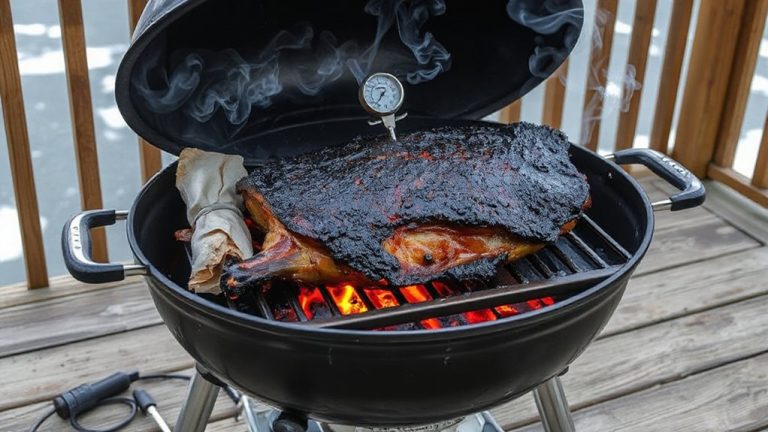
How often should you rotate your poultry in the smoker for best results? Every 60 to 90 minutes-enqualified to balance airflow dynamics without disrupting cook stability. Uneven heat and smoke flow are common in offset or barrel smokers, so rotating guarantees consistent exposure. That consistency doesn’t just improve color and texture; it supports even smoke ring development. Smoke rings form when nitrogen dioxide from burning wood dissolves into moist meat, but if one side faces the fire constantly, airflow dynamics can skew that reaction, leaving rings uneven or weak. By rotating steadily, you let all surfaces interact equally with smoke and heat. Don’t overdo it-too many turns risk temperature swings and moisture loss. Use tongs and a firm grip to minimize flare-ups. Ultimately, rotation isn’t about fixing poor prep; it’s a tactical move to refine great technique. Your bird deserves even flavor, not just on the surface-but all the way through. For beginners, starting with a reliable best beginner offset smoker can make mastering rotation and smoke control much more achievable.
Top Mistakes That Dry Out Smoked Chicken (And How to Avoid Them)
If you’ve ever pulled a chicken from the smoker only to find it dry and tough, chances are it wasn’t the heat level alone to blame-it was likely a chain of avoidable missteps that started long before the first wisp of smoke curled around the bird. Overcooking chicken is the top culprit; even 10 extra minutes can push meat past 165°F, evaporating moisture and leaving it stringy. You’ve got to trust your thermometer, not the clock. Ignoring ambient temperature also sabotages control-cold winds or summer heat shift your smoker’s internal climate, demanding constant airflow adjustments. Brining helps, but it can’t save poor timing or unstable conditions. Trussing promotes even cooking, and rotating guarantees consistent smoke exposure, but those steps mean little if you overlook core variables. Maintain a steady 225–250°F, shield your rig from wind, and probe early. Precision beats habit every time when coaxing tender, juicy results from smoked poultry.
On a final note
You’ve brined for moisture, chosen mild wood like apple or cherry for balanced flavor, trussed to promote even cooking, and rotated for consistent smoke exposure. These steps aren’t just routine-they’re essential for tender, evenly cooked poultry. Skipping any can lead to dryness or uneven doneness. Mastering them transforms smoked chicken from hit-or-miss to reliably excellent, elevating your outdoor cooking with precision and proven technique.