Building a Volcano-Style Charcoal Pile for Maximum Searing Heat on Demand
Stack your charcoal into a tall, cone-shaped volcano pile using lump charcoal for faster, hotter burns up to 900°F. Leave airflow gaps and ignite with a chimney starter for even, chemical-free lighting. The concentrated heat rises efficiently, delivering intense radiant searing ideal for steaks. Use a cast iron grate to hold surface heat. Break it down afterward to shift smoothly into smoking. You’ll see how small adjustments maximize control and performance every time.
Notable Insights
- Pile charcoal into a tall cone shape with airflow gaps to concentrate heat for maximum searing.
- Use high-carbon lump charcoal for faster, hotter burns ideal for achieving 900°F+ sear temperatures.
- Ignite with a chimney starter and add coals when partially ashed for uniform, efficient combustion.
- Employ multi-point lighting and balanced distribution to ensure even heat rise and no cold spots.
- Transition from sear to smoke by breaking down the volcano and spreading coals into an even layer.
How to Build a Charcoal Volcano in 5 Minutes
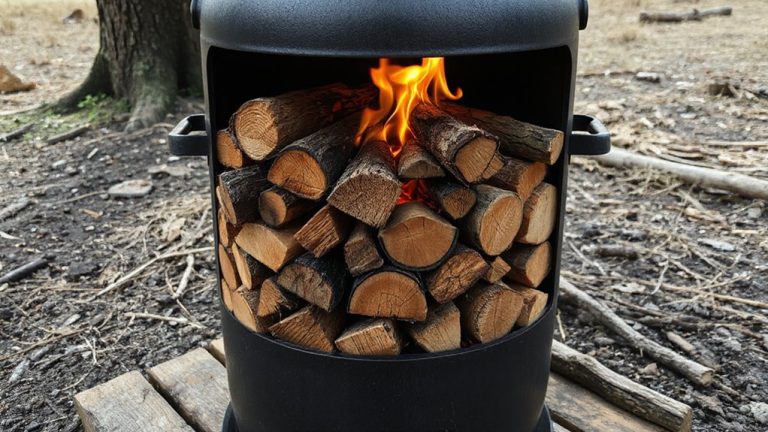
If you’re looking to get a hot, controlled fire up quickly for searing steaks or cooking over high heat, building a charcoal volcano might be your best bet-and yeah, you can have it ready in about five minutes flat. Start by piling lump charcoal or briquettes into a tall, cone-shaped mound, leaving airflow gaps throughout. Coal selection matters: lump charcoal heats faster and burns hotter, while briquettes offer longer, steadier burn times. Pack a chimney starter with coals, and pay close attention to ignition timing-dump the lit coals at the base when they’re just ashed over, not too early or late. This guarantees even propagation up the pile. As flames climb, the volcano structure concentrates heat upward, creating an intense radiant zone perfect for quick searing. It’s efficient, predictable, and ideal when you need high heat fast without guesswork or wasted fuel. For best results, consider using one of the best charcoal grills that support excellent airflow and heat retention.
Use These Coals and Tools for 900°F+ Searing
You’ve stacked the coals into a tight cone and seen how quickly the fire climbs, but reaching that 900°F sear-the kind that locks in juices and creates a crisp, caramelized crust-depends on more than just shape. You’ll need dense, high-carbon lump charcoal or premium briquettes designed for superior heat retention. These coals hold intense temps longer, ensuring even, sustained searing. Avoid soft, fast-burning brands-they flame hot but fade too fast. Pair them with a cast iron griddle or sear grate to amplify heat retention across the surface. For best flavor infusion, skip lighter fluid; instead, use a chimney starter to avoid chemical taint. Tongs and a reliable infrared thermometer help manage the volcano without disrupting airflow. The right tools and fuel don’t just deliver heat-they give control, consistency, and deeper flavor infusion, turning a simple grill session into precision outdoor cooking. For optimal results, choose top-rated smoking charcoal known for consistent burn and minimal ash.
Light the Volcano for Fast, Even Ignition
A well-built volcano pile won’t deliver its full potential without a lighting method that guarantees rapid, uniform ignition from base to peak. You need consistent charcoal distribution to guarantee airflow moves freely through the base and up the center chimney, which accelerates burn-up. Don’t just toss a lighter cube under one side-use a multi-point ignition strategy. Place fire starters evenly beneath the pile’s foundation, aligning with dense and open zones to balance heat rise. This approach improves ignition timing, letting coals catch within minutes of each other rather than in erratic waves. Even ignition prevents weak spots and hot zones that compromise searing ability. A tightly packed volcano with poor ignition timing can stall airflow or burn too fast at the crown while the base smolders. With proper fire placement and attention to how the flames spread, you’ll achieve a stable, full burn in 15–20 minutes, ready for high-heat cooking without adjusting charcoal distribution mid-heat. For best results, choose a high-quality Japanese charcoal that lights evenly and retains heat efficiently.
Why a Charcoal Volcano Sear Works Better
The volcano charcoal pile isn’t just a dramatic visual-it’s a functional design that elevates searing performance by concentrating heat efficiently and creating a radiant thermal core ideal for charring meats and vegetables quickly. You benefit from superior thermal dynamics, as the upward draft draws oxygen through the coals, sustaining intense, even temperatures at the center. This vertical stack maximizes radiant efficiency, directing heat upward where it reflects off the sides of the grill, enveloping food in consistent, high-temperature energy. Unlike flat layouts, the volcano’s shape reduces heat dispersion, letting you achieve a crisp sear without hot spots or wasted fuel. You’ll notice faster cook times and better crust development, especially with steaks or peppers. The focused burn also means less frequent adjustment, giving you more control with less effort. It’s not just about heat-it’s about how that heat behaves, and the volcano pile optimizes both intensity and distribution for results you can see and taste.
Perfect the Sear in 2 Minutes
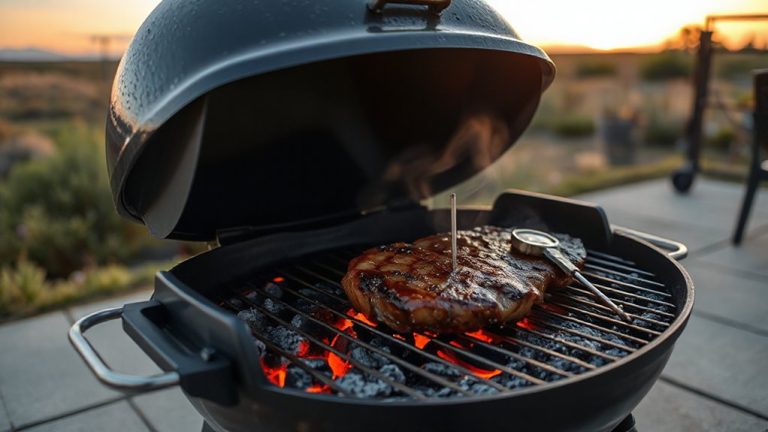
Although it sounds ambitious, locking in a flawless sear in just two minutes is entirely achievable with the right setup and timing-and the volcano charcoal pile makes it possible. You’ve built the pile high around the meat, trapping intense heat at the core, and that concentrated thermal energy delivers unmatched heat retention. When you place your steak directly in the center, the radiant heat from all sides jumpstarts your searing technique, creating a deep, caramelized crust without overcooking the interior. The tight cluster of coals minimizes oxygen flow until you spread it, sustaining peak temperatures longer than a flat bed of charcoal. You’ll notice the difference immediately: richer Maillard development, tighter juice retention, and consistent contact across the surface. This isn’t just about speed-it’s about control. With practice, you’ll rely on the volcano not only for its raw power but for how precisely it supports a high-stakes searing technique when every second counts.
Spread the Volcano to Shift From Sear to Smoke
Once that steak’s developed a deep, glossy crust in the heart of the volcano pile, you’re ready to shift gears-keep the meat where it is and use a stiff metal tool to break apart the base of the mound, fanning the coals into an even layer across the grill surface. This strategic coal distribution transforms intense direct heat into a broader, gentler field, ideal for controlled smoking. You’re not killing momentum-you’re repurposing it. Effective heat modulation is the key to versatility, and flattening the pile gives you consistent, low-to-medium temperatures without adding fuel. The shift preserves carryover heat while eliminating scorch zones, letting thicker cuts cook evenly. Done right, you maintain thermal inertia and avoid the lag of reloading charcoal. It’s efficient, precise, and maximizes flavor development beyond the initial sear. Your grill becomes a multi-phase oven, not just a branding iron. This method showcases the volcano pile’s real strength: adaptability baked into its design.
Fix Uneven Heat or Collapsing Piles
Even if you stack the coals just right at the start, you might still run into spots where the heat dips or flares unexpectedly-especially as the volcano burns down and structural integrity weakens over time. To fix collapsing piles, reinforce the structure early with a stable base, using larger charcoal pieces at the bottom to anchor the stack. Avoid over-packing, which restricts even airflow and creates hot or cold zones. If the pile starts leaning, carefully redistribute the coals with long-handled tongs while maintaining the central chimney effect. Monitor airflow through the gaps between coals-consistent draft guarantees balanced combustion. For lasting performance, use lump charcoal; it burns hotter and holds shape better than briquettes. Adjust venting underneath if your grill has dampers, and never pour accelerants. A well-maintained volcano delivers reliable searing heat as long as airflow and structure stay intact.
On a final note
You’ve built the volcano, achieved that 900°F sear, and controlled the burn by spreading coals. This method delivers intense, focused heat fast, ideal for steaks with a crisp crust and juicy interior. While it demands attention to prevent collapse, the payoff in searing power and fuel efficiency is clear. For outdoor cooks valuing precision and performance, the charcoal volcano isn’t just a trick-it’s a proven, repeatable technique worth mastering.