How to Use a Grill Dome With Adjustable Vents for Precision Charcoal Temperature Control
You control your grill’s temperature by adjusting both the bottom and top vents to manage airflow. Open the bottom vent to feed oxygen to the coals, boosting combustion and heat; restrict it to lower temperatures. Use the top vent to regulate smoke and create draft-the more open, the hotter and faster the burn. Start with all vents fully open for ignition, then fine-tune gradually. Clean vents guarantee consistent performance. Balancing them gives you precision smoking or searing, and mastering this system reveals true charcoal control.
Notable Insights
- Open both top and bottom vents fully when starting to ensure rapid, even charcoal ignition.
- Adjust bottom vents to control oxygen flow and directly regulate fire temperature.
- Use the top vent to manage smoke expulsion and fine-tune internal airflow for steady heat.
- Close vents partially to lower temperatures and retain heat for long, low-temperature cooks.
- Clean vents regularly to prevent ash buildup and maintain consistent airflow and temperature control.
Use Vents to Control Grill Temperature
Ever wonder why your charcoal grill’s temperature swings so wildly? It’s likely due to poor vent calibration. The vents-both top and bottom-directly influence heat distribution by managing airflow across the coals. When you open the bottom vent, you feed oxygen to the fire, increasing combustion and raising temperatures. Closing it restricts air, cooling things down. The top vent then exhausts smoke and hot air, creating a draft that pulls in fresh oxygen from below. Without proper adjustment, heat becomes uneven, causing hot spots or cold zones. You’ll get far better results-crisp searing, even cooking-when you fine-tune both vents in tandem. This balance allows you to maintain steady temps over long cooks. Proper vent calibration isn’t just about fire control; it’s the foundation of consistent heat distribution. Once mastered, you’re in command, not the charcoal.
How Airflow Fuels Charcoal and Heat
Because fire depends on oxygen to burn, controlling airflow isn’t just helpful-it’s essential to managing how hot your charcoal gets and how long it stays hot. You’re not just lighting fuel; you’re managing combustion, and airflow directly impacts that process. Charcoal composition affects how evenly and efficiently it burns-lump charcoal lights faster but burns hotter, while briquettes offer more consistent heat retention. More air means more oxygen, feeding the fire and raising temperatures quickly. But too much can overheat or waste fuel. Restrict airflow, and you slow the burn, preserving heat retention for longer cooks. Understanding this balance lets you maintain steady temps without constant vent adjustments. In practice, this means you can sear steaks or smoke ribs with precision, as long as you respect how oxygen fuels both flame and efficiency. Choosing the right type of charcoal, such as from the best charcoal for smoking, can significantly improve temperature control and overall cooking performance.
Find and Understand Your Grill’s Vents
Where exactly are your grill’s vents, and why do their placement and size matter? Proper vent placement directly influences airflow, which fuels combustion and determines heat distribution across the cooking surface. Most grills have bottom vents (intake) and top vents (exhaust). The bottom ones feed oxygen to the coals, while the top ones release smoke and hot air. Misaligned or poorly positioned vents can create hot spots or uneven heat distribution, making temperature control a guessing game.
| Vent Type | Function |
|---|---|
| Bottom | Controls oxygen flow to fire |
| Top | Releases heat and smoke |
| Adjustable | Allows fine-tuned airflow |
| Fixed | Limits control over heat |
Understanding your grill’s vent configuration helps you anticipate how heat builds and moves, giving you real command over precision cooking.
Start With the Right Vent Settings
When establishing a stable cooking temperature on your charcoal grill, the starting position of your vents plays a critical role in shaping both the fire’s intensity and its consistency. For ideal charcoal ignition, open the bottom and top vents fully to allow maximum airflow-this speeds up lighting and guarantees even burn. Once the coals are hot and ashed over, you’ll begin fine-tuning, but your starting point matters. Weather conditions like wind, humidity, and cold temperatures affect how oxygen feeds the fire, so account for these early. On windy days, slightly restrict the bottom vent to prevent overheating; in cold weather, keep vents more open to compensate for heat loss. A grill dome with adjustable vents gives you control, but only if you begin with smart defaults. Solid initial vent placement sets the foundation for precision cooking, letting you maintain target temps with minimal correction.
Adjust Vents for Steady Heat
While the initial vent settings get your fire going, it’s the fine adjustments you make afterward that truly lock in a steady cooking temperature. You’ll need to monitor the dome’s thermometer and tweak the top and bottom vents incrementally-this is where vent calibration becomes critical. Closing the vents slightly reduces airflow, lowering the heat, while opening them fosters combustion for a boost. Small changes make big differences, so adjust in quarter-inch increments and wait a few minutes to assess impact. Consistent heat stabilization hinges on this patience. For long cooks like brisket or ribs, maintaining a fluctuation within 25°F is ideal, and precise vent control makes that achievable. Unlike set-it-and-forget-it smokers, charcoal grills demand attentive balancing, but that same control offers superior responsiveness. Mastering this process elevates your precision, turning unpredictable burns into repeatable, reliable results.
Fix Common Vent Mistakes
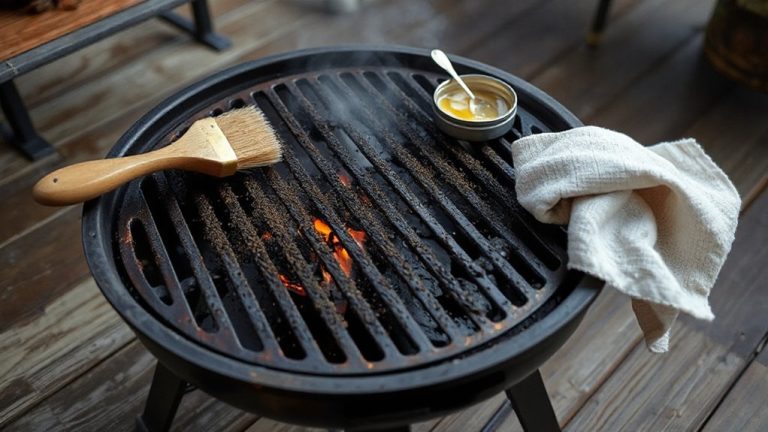
If you’re struggling to hold a steady temperature, chances are you’ve fallen into one of several common vent mistakes that disrupt airflow and sabotage heat control. Misaligned vent alignment is a frequent culprit-when the dome and base vents aren’t properly lined up, airflow becomes uneven, starving the fire of oxygen or flooding it uncontrollably. You’ll notice wild temperature swings or sluggish response to adjustments. Another issue is ignoring charcoal buildup around the air inlets; accumulated ash blocks incoming air, reducing efficiency and creating hot or cold spots. Regular cleaning prevents this and maintains smooth draft operation. Always inspect both vents before firing up-clear debris, confirm alignment, and guarantee smooth movement. These small checks make a measurable difference in thermal consistency. Proper airflow isn’t just about opening or closing vents-it’s about maintaining an unobstructed, intentional path for combustion. Fix these issues, and your grill’s performance improves markedly.
Control Smoke and Sear With Vent Adjustment
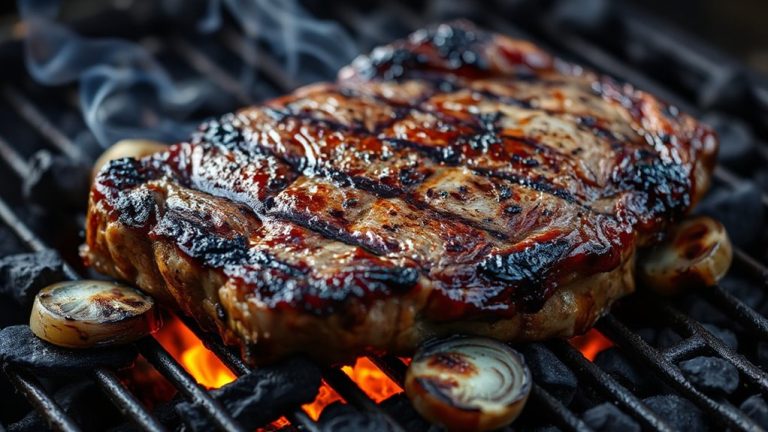
Though you might associate the grill dome’s vents primarily with temperature management, they’re equally essential in shaping smoke output and searing capability, giving you precise control over flavor and crust development. By adjusting the top and bottom vents, you directly influence smoke intensity-partially closing them restricts airflow, increasing smoke for a richer flavor, ideal for long, slow cooks. For high-heat searing, fully open both vents to maximize oxygen flow, fueling intense flames that deliver unmatched sear precision. You’ll notice a crisp, caramelized crust forms quickly, locking in juices. This dynamic control means you’re not just regulating temperature-you’re tuning the cooking environment. Observing how vents affect flame behavior reveals their dual role: managing combustion for both flavor and texture. Mastering this balance means you can shift seamlessly from smoky ribs to a perfectly seared steak, all with the same charcoal setup.
On a final note
You’ve seen how vent control directly impacts heat and smoke in your grill. By managing airflow, you maintain consistent temperatures ideal for searing or slow cooking. Proper vent use boosts fuel efficiency and flavor control, proving essential for precision BBQ. While learning curves exist, mastery yields better results than guesswork. With practice, your grill dome becomes a responsive tool, transforming raw ingredients into well-executed meals every time.