Grilling Stuffed Peppers on the Indirect Side While Searing Sausages Nearby
You’ll set up a two-zone grill to sear sausages over direct heat while letting stuffed peppers cook evenly on the indirect side. Keep the indirect zone at 325°F–375°F to soften peppers gradually without charring. Use sturdy grains like quinoa in the stuffing and choose firm sausages such as bratwurst or Italian. Sear sausages at 400°F–450°F, rotating every few minutes. Finish with fresh herbs and citrus to brighten the rich flavors-there’s more to mastering this balance than just heat placement.
Notable Insights
- Set up a two-zone grill with one side hot for searing sausages and the other off for indirect cooking of stuffed peppers.
- Grill sausages over direct heat at 400–450°F, rotating every 2–3 minutes for even browning and smoke development.
- Place stuffed peppers on the indirect side at 325°F–375°F to cook evenly without charring the exterior.
- Use sturdy stuffing with grains like quinoa and binders such as egg to prevent falling apart during grilling.
- Rotate peppers halfway through and check for tenderness after 20–25 minutes before finishing with fresh herbs or zest.
Set Up a Two-Zone Grill for Stuffed Peppers
If you want to get the most out of grilling stuffed peppers, setting up a two-zone grill is your best move-it gives you control, letting you sear the sausages over high heat and then let the peppers finish cooking gently without burning. You’ll gain precise grill temperature control by lighting one side of the grill and leaving the other off, creating distinct direct and indirect zones. This setup supports smart pepper placement strategy: position stuffed peppers on the cooler side, away from flare-ups, while sausages char over the flames. The even ambient heat prevents sogginess and undercooking, while avoiding carbonization. You’re not just cooking-you’re managing heat dynamics. This method consistently delivers better texture and flavor. Plus, it’s adaptable for various grill types, from gas to charcoal. With this approach, you maximize efficiency and results, making it a recommended standard for balanced grilling performance.
Use Indirect Heat for Evenly Cooked Peppers
You’ve already set up your two-zone grill to manage heat effectively, and now it’s time to put that configuration to full use by relying on indirect heat for your stuffed peppers. Their thick walls and high pepper density mean they cook unevenly over direct flame, often burning outside before the inside is ready. Indirect heat solves this by gently raising the internal temperature without charring. It also gives you control over cooking duration, guaranteeing the filling heats through while the pepper softens evenly. For best results, aim for a grill temperature of 325°F–375°F.
| Factor | Advantage |
|---|---|
| Indirect heat | Prevents scorching |
| Consistent temp | Balances pepper density |
| Controlled cooking duration | Guarantees thorough doneness |
Build a Sturdy, Flavorful Stuffing
A well-constructed stuffing anchors your grilled stuffed peppers, turning them from simple vessels into hearty, satisfying mains. You’ll want a base that holds up to heat without turning mushy, which is where rice alternatives like quinoa or farro shine-they’re sturdier and add a nutty depth. Skip plain white rice unless you tightly control moisture; even then, it’s riskier on the grill. Mix in sautéed onions, garlic, and tomatoes for flavor and structure. Don’t skimp on herb combinations-thyme, oregano, and parsley bring brightness and complexity that stand up to charring. A touch of Parmesan or goat cheese adds richness without making the filling soggy. Test for cohesion: if the stuffing spills when lifted with a spoon, it needs more binder, like egg or breadcrumbs. Balance texture, moisture, and flavor now, and your peppers will deliver every time.
Pick Sausages That Grill Well With Stuffed Peppers
When choosing sausages to grill alongside stuffed peppers, look for varieties with a firm casing and moderate fat content, since these traits guarantee they hold their shape and resist drying out over direct heat. Your sausage selection impacts both texture and flavor pairing, so opt for styles that complement, not overpower, the peppers’ sweetness. Smoked bratwurst and mild Italian sausage work particularly well, offering savory depth without excessive spice. Avoid overly greasy or soft-link types, as they can split or flare on the grill. For reliable options, consider trying some of the top barbecue sausages recommended by grilling experts.
| Sausage Type | Flavor Pairing with Peppers |
|---|---|
| Smoked Bratwurst | Earthy, slightly sweet |
| Mild Italian | Herbal, garlicky |
| Chicken Apple | Bright, subtly sweet |
These choices balance well with herb-seasoned rice or cheesy stuffings, enhancing the overall dish without dominating it.
Sear Sausages for Smoky Char
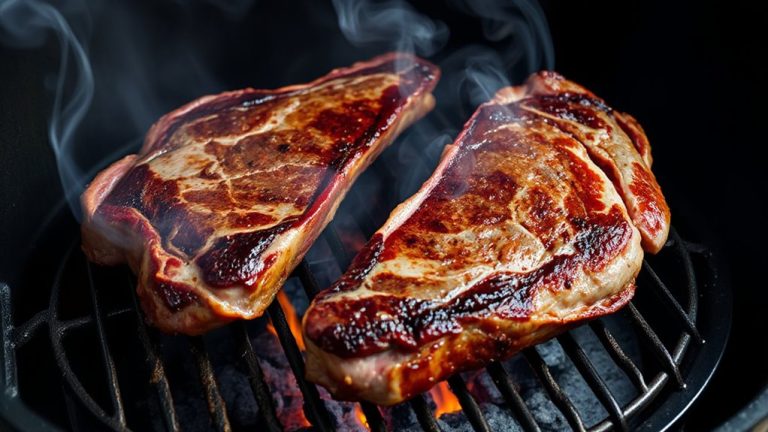
While achieving a perfect sear might seem straightforward, it’s the controlled application of high heat that develops the rich, smoky char essential for elevating both sausage and stuffed peppers on the grill. You’ll want to place sausages directly over the hot side of a two-zone fire, where surface temperatures hit 400–450°F. This setup supports effective char development techniques like quick searing and controlled browning without burning. Rotate them frequently for even color and texture. The intense heat also promotes smoke ring formation, especially if using hardwood or charcoal-look for that pink layer just beneath the crust, a sign of proper nitric oxide penetration from clean-burning smoke. Avoid constant flipping; give each side 2–3 minutes to caramelize. The Maillard reaction works best when moisture evaporates fast, so dry sausages yield better results. This step isn’t just about color-it’s about building complex flavor that complements the sweetness of roasted peppers.
Check Peppers Without Overcooking
Since maintaining pepper integrity matters just as much as flavor development, you’ll want to monitor their doneness carefully to avoid crossing the line from tender-crisp to mushy. Pepper texture is essential-underdone, and they’re rubbery; overdone, and they collapse too easily. You’re aiming for a slight give when pressed, with skin blistered but not burnt. Doneness timing varies by pepper size and grill heat, but generally, 20 to 25 minutes on the indirect side is enough. Rotate them halfway through to guarantee even cooking. Use tongs and a gentle touch to check-pierce only if necessary, as leaking juices can dry out the filling. Remember, carryover heat continues to cook them off-grill, so pull them slightly early. Proper monitoring means flavorful, intact peppers that hold their shape while offering that ideal balance of softness and structure.
Serve With Fresh Herbs and Citrus for Bright Contrast
How do you elevate a rich, savory dish like grilled stuffed peppers and sausages without overwhelming it? You add brightness. A final touch of citrus zest-lemon or orange-brings a sharp, aromatic lift that cuts through the fat and deep smokiness. That subtle pop of acidity balances the dish, making each bite feel lighter and more complex. Don’t skip the herb garnish, either. Fresh parsley, basil, or cilantro add color and a crisp, grassy note that contrasts beautifully with the charred exterior and tender fillings. When used together, citrus zest and herb garnish aren’t just decoration-they’re functional enhancements. They refine flavor without masking the grill’s work. In outdoor cooking, where boldness often dominates, these finishes provide necessary contrast. You’re not covering up smoke or sear; you’re complementing them. The result is a more layered, satisfying plate that feels intentional and well-balanced.
On a final note
You’ve balanced heat wisely, using indirect grilling to gently cook stuffed peppers while searing sausages over direct flame. The peppers emerge tender without splitting, their stuffing fully heated, while the sausages develop a crisp, smoky crust. This two-zone method maximizes control and efficiency. Pairing robust sausage with bright, fresh garnishes cuts richness and lifts the dish. It’s practical, flavorful outdoor cooking-thoughtful technique meeting real-world performance.