Seasoning Procedure for New Pellet Grill Chambers Before Initial Use
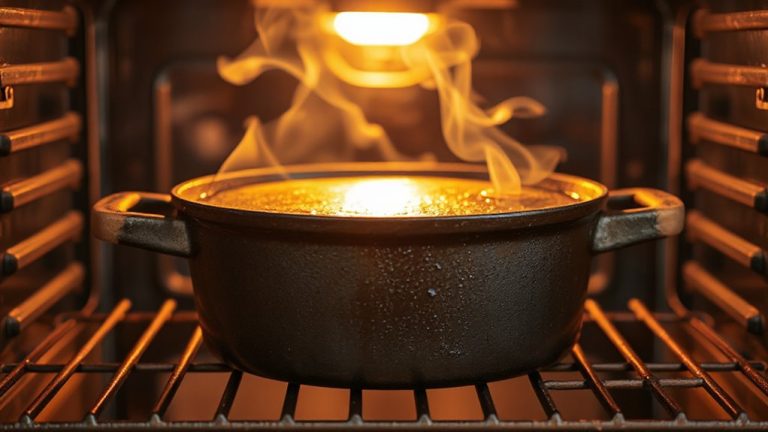
You should season your new pellet grill to burn off manufacturing oils and protect the chamber. Preheat it on high (450–500°F) for 30–45 minutes with dry pellets, using high-smoke-point oil like canola. Apply oil to interior surfaces early in the process to build a protective layer. Thick white smoke will thin to blue-gray as residues burn off. Stable heat and minimal smoke mean it’s ready-performance improves from this foundation. There’s more to get right for long-term results.
Notable Insights
- Burn off factory coatings by heating the grill to 450–500°F for 30–45 minutes with the chamber empty.
- Use high-smoke-point oil like canola or grapeseed to coat interior surfaces, avoiding low-heat oils.
- Ensure all parts, including the flame broiler and grease tray, are cleaned and oiled before heating.
- Run the grill until smoke changes from thick white to thin blue-gray, indicating residue burn-off completion.
- Confirm seasoning success when temperature stabilizes within ±15°F over 20 minutes with minimal smoke output.
Why You Must Season Your New Pellet Grill
Why bother seasoning your new pellet grill? Because skipping this step risks your first cook-and possibly your long-term results. Manufacturers apply protective coatings during assembly that can taint flavor or even release harmful fumes when heated. Seasoning burns these residues off, helping to *ensure safety* and protect your food. It also preps the metal for consistent heat retention and smoke distribution, reducing hot spots and flare-ups. For anyone serious about outdoor cooking, this process isn’t just cleanup-it’s essential maintenance. You’re not just heating metal; you’re beginning a relationship with your grill. A proper seasoning session helps *build trust* in your equipment’s performance. Over time, that seasoned surface contributes to better searing, juicier meats, and cleaner flavor profiles. Think of it as calibration: your grill’s first job is to prepare itself. So yes, it takes time-roughly 45 minutes to an hour-but skipping it compromises control, safety, and taste from the start.
What Happens When You Season a Pellet Grill
Heat transformation is the quiet magic behind a properly seasoned pellet grill. When you first fire it up, metal surfaces undergo thermal expansion, stabilizing the chamber and reducing hot spots over time. You’re not just burning off manufacturing oils-you’re building a light layer of cured oil and smoke residue that protects the interior and helps regulate heat retention. This initial burn also minimizes the risk of flavor contamination during your first cook, ensuring your food tastes like smoke and sear, not machine grease or coating chemicals. While seasoning won’t turn a budget grill into a premium one, it maximizes performance from day one. The process sets the foundation for consistent results, better temperature control, and longer component life. Skipping it means risking off-flavors and uneven cooking-unnecessary risks when a single high-heat cycle makes such a measurable difference. It’s maintenance that pays off in every bite.
Tools and Supplies You’ll Need
You’ll need just a few essential items to season your pellet grill effectively, and most are likely already in your kitchen or garage. Start with a high-heat cooking oil like canola or grapeseed-these have high smoke points and polymerize well on metal surfaces. You’ll also need clean cloths or paper towels for even application. A sturdy grill brush ensures the interior surfaces are free of debris before heating. Don’t forget heat-resistant gloves-safety matters when handling hot components. Proper grill placement is vital; position the unit on a level, non-flammable surface away from structures to guarantee safe, consistent airflow. Check that your fuel storage setup keeps pellets dry and uncontaminated, as damp pellets burn inefficiently and increase smoke irregularities. Finally, have a fire extinguisher nearby. These tools collectively support a successful seasoning process, enhancing flavor control and long-term grill performance. For monitoring internal temperatures accurately during the process, consider using a best thermometer to ensure optimal heat levels.
How to Season Your Pellet Grill (Step by Step)
Now that you’ve gathered your supplies and checked off safety and setup details, it’s time to get your pellet grill ready for its first real test. Begin by verifying your grill placement-set it on a level, non-flammable surface with at least 6 inches of clearance from walls or structures. Proper airflow and safety depend on it. Fill the hopper with quality hardwood pellets, ensuring your pellet storage is dry and sealed to prevent moisture absorption, which can cause jams or weak smoke output. Turn the grill on high (around 450–500°F) and let it run for 30–45 minutes. This burns off manufacturing oils and seals internal components. You’ll notice smoke thickening then clearing-a sign the chamber is seasoning properly. The process enhances flavor accuracy and temperature consistency over time, laying the foundation for reliable, clean burns on future cooks.
Common Mistakes to Avoid When Seasoning
A surprising number of new pellet grill owners make avoidable errors during the seasoning process, often undermining the performance they’re trying to enhance. One of the most common issues is improper temperature control-running the grill too hot or too low can prevent the oil from properly bonding to the metal. You’ll want to maintain a steady 350°F to 450°F for ideal polymerization. Another frequent mistake is using wrong oil type; avoid butter, olive oil, or any low smoke-point fats. These burn off quickly and can leave sticky residues or rancid buildup. Instead, use high smoke-point oils like canola, grapeseed, or peanut oil, which withstand heat without degrading. Also, skipping interior surfaces-especially near the flame broiler and grease tray-leads to uneven protection. You’re not just protecting metal; you’re building a non-stick barrier essential for clean operation and consistent results down the line.
How to Know When Seasoning Is Complete?
Signs that your pellet grill has finished seasoning appear gradually, but recognizing them guarantees you don’t under- or over-season, which could affect both performance and longevity. You’ll notice the smoke level drops markedly after the initial burn-in phase-thick, white smoke shifts to a thin, blue-gray haze, indicating excess oils and manufacturing residues have burned off. That’s your first cue. Next, check for temperature stability: a properly seasoned grill holds steady heat without wild fluctuations, even when ambient conditions shift. If your unit maintains the set temperature within ±15°F over 20 minutes, seasoning is likely complete. Trust this combo-reduced smoke output and consistent thermal performance-over timing alone. Relying solely on cook time may lead to under-seasoning or unnecessary wear. These indicators reflect functional readiness, not just protocol completion. When both criteria align, your chamber is protected, and flavor contamination risks drop. You’re set.
What to Do Before Your First Cook
Before firing up for your first real cook, take a moment to verify your pellet grill has fully cooled after the seasoning process-this isn’t just about safety, it’s about guaranteeing the chamber’s thermal envelope has stabilized and any residual combustion byproducts have fully dissipated. Once cooled, perform an initial inspection: check the firepot for leftover ash, confirm the auger runs freely, and examine the grease tray for blockages. Conduct a thorough safety check-inspect gas lines (if applicable), guarantee electrical connections are secure, and confirm the grill sits on a stable, non-flammable surface. Wipe down the grates lightly with a damp cloth if needed, but avoid soap. These steps aren’t just housekeeping-they’re essential for peak heat distribution, flavor integrity, and long-term durability. Skipping them risks uneven cooking and premature wear. Taking time now guarantees consistent performance and cleaner flavor when you finally sear that first steak. For optimal results, select a high-quality grill from the list of top-rated models in our best pellet grills guide.
On a final note
You’ve now properly seasoned your pellet grill, a vital step that burns off manufacturing residues and prepares the chamber for consistent performance. This process enhances flavor control and prevents sticking during future cooks. Skipping it risks off-flavors and uneven heating. Think of seasoning as foundational maintenance-like calibrating an oven. It’s a small effort that directly impacts your grill’s longevity and your results, especially with delicate meats or long smokes. Done right, it sets the stage for reliable, high-quality BBQ.