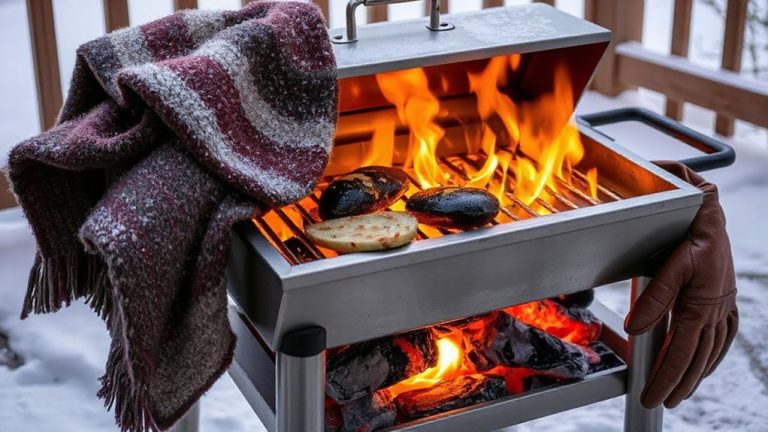
Using a Fireback Plate to Reflect Heat Forward in a Front-Loading Wood Grill
You can cut heat loss in your front-load wood grill by installing a fireback plate to reflect radiant heat forward. It boosts temperature stability and cooking consistency, especially during long smokes. A properly sized plate-covering most of the rear wall without blocking airflow-works best when made from cast iron or thick steel. Position it slightly angled and close to the firebox with a small air gap for ideal reflectivity. You’ll see better fuel efficiency and fewer hot spots, and there’s more to discover about mastering this setup.
Notable Insights
- A fireback plate reflects radiant heat forward, improving heat retention in front-loading wood grills with open designs.
- Properly sizing the plate ensures maximum coverage of the rear wall without obstructing airflow or combustion.
- Cast iron or thick steel plates offer superior heat reflection and durability for consistent thermal performance.
- Install the plate vertically with a slight forward angle to direct reflected heat toward the cooking chamber.
- A small air gap behind the plate reduces heat absorption and enhances radiant efficiency during long cooks.
Stop Heat Loss in Your Front-Load Wood Grill
While your front-load wood grill delivers bold, smoky flavor, it’s prone to losing heat through the open front, especially during long cooks or in cooler weather. This design flaw challenges both heat retention and airflow management, two critical factors for consistent performance. Without a barrier, warm air escapes easily, forcing you to add fuel more often and making temperature control a guessing game. You’ll notice fluctuations, especially when winds pick up or ambient temperatures drop. Poor heat retention doesn’t just waste wood-it undermines cooking precision. At the same time, unrestricted airflow can cause overly aggressive burns, making low-and-slow cooking difficult. You need balance. Managing airflow becomes nearly impossible when heat escapes forward instead of circulating through the chamber. Addressing these issues improves efficiency, reduces fuel consumption, and promotes even cooking. The solution starts with minimizing that open front’s impact.
Reflect Heat Forward With a Fireback Plate
Because heat naturally rises and radiates forward in a front-load wood grill, much of that energy escapes through the open cavity unless redirected, but a fireback plate changes that dynamic by reflecting thermal energy back into the cooking chamber. You’re using heat reflection to your advantage, turning lost warmth into usable cooking power. This simple insert leverages the principles of thermal dynamics, bouncing infrared energy toward your food and increasing ambient temperature behind the grates. You’ll notice more even cooking, especially when roasting or baking, since the fireback stabilizes airflow and reduces hot spots. It’s not just about saving fuel-though that’s a definite bonus-it’s about control. With the fireback in place, you’re shaping how heat moves, making the most of every burn cycle. Proper positioning guarantees peak performance, letting you cook efficiently without constant tending.
Choose the Right Fireback Size and Material
You’ve seen how a fireback plate reflects heat forward, boosting efficiency and smoothing out temperature swings in your wood grill, but getting those benefits starts with picking the right size and material. Choose a fireback that covers most of the rear wall without blocking airflow-that’s key to effective fireback design. If it’s too small, heat escapes; too large, and it disrupts combustion. Cast iron is popular for its heat retention and classic look, but it can rust over time, so maintenance matters. Steel offers better material durability in harsh conditions, especially when coated or high-grade. While lighter, it may warp under constant high heat. Consider your cooking frequency: frequent users benefit from thicker plates (at least 1/2 inch) that withstand thermal cycling. Matching size and material to your grill’s dimensions and your cooking habits guarantees steady performance, longer lifespan, and consistent radiant heat where you need it most.
Install It for Maximum Heat Efficiency
When installed correctly, a fireback plate doesn’t just protect your grill’s rear wall-it actively shapes how heat circulates, making proper placement essential for getting the most out of your setup. You’ll want precise fireback alignment so the plate sits flush and vertical, angled slightly forward to push warmth toward the cooking chamber. Misalignment can create hot spots or reduce reflectivity, undermining efficiency. For best results, secure the plate close to the firebox but not touching it, allowing a small air gap that enhances thermal insulation. This gap minimizes heat absorption by the grill’s structure while maximizing radiant output. Stainless steel or refractory ceramic plates work well here, balancing durability and reflectivity. Proper installation means less fuel waste and more consistent cooking performance-especially critical in front-loading models where airflow and heat direction are harder to manage.
Hold Steady Temperatures for Long Smokes
Even with ideal placement, a fireback plate’s true value emerges during extended cooks, where maintaining a stable temperature separates reliable setups from frustrating ones. You’re relying on consistent heat when you’re smoking brisket or pork shoulder for 12-plus hours, and that’s where the fireback plate proves its worth. By reflecting radiant heat forward into the cooking chamber, it reduces hot spots and evens out the temperature gradient. Your chosen fuel type-whether hardwood, charcoal, or a mix-burns more efficiently because the plate retains and redistributes heat. Paired with precise airflow control, this setup lets you fine-tune the fire without constant monitoring. Too much air cools the chamber; too little starves the fire. The plate stabilizes fluctuations, so minor adjustments have predictable results, helping you maintain that sweet spot between 225°F and 250°F for hours on end.
On a final note
You’ll keep more heat where it’s needed by using a fireback plate in your front-load wood grill. It reflects radiant heat forward, boosting efficiency and stabilizing temps during long smokes. Proper fit and thick steel guarantee durability and performance. Once installed, you’ll notice fewer fuel top-ups and more even cooking. It’s a simple upgrade that seriously improves control, making it a smart move for serious backyard BBQ.