Using Heat Deflectors to Create Multiple Temperature Zones on a Pellet Grill
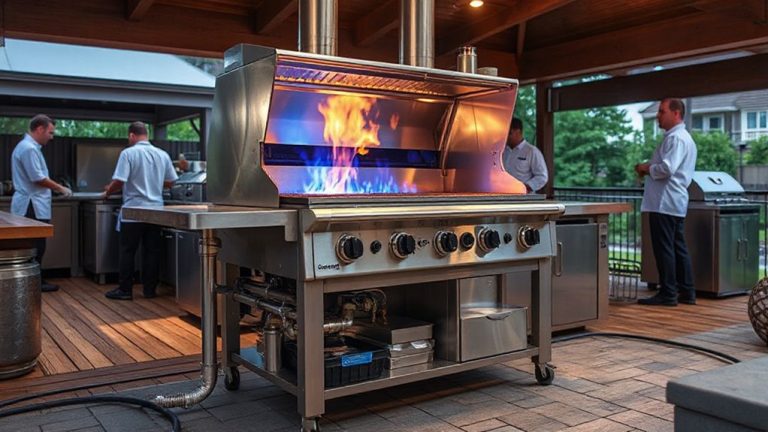
You use heat deflectors to shape thermal zones by shielding food from direct flames and spreading heat evenly across your pellet grill. Positioning them strategically creates distinct areas for searing, smoking, and holding, enhancing control over doneness and texture. Stainless steel or ceramic deflectors offer durability and consistent performance, while proper placement prevents hot spots and flare-ups. Fine-tuning their alignment improves airflow and smoke distribution-key for precision cooking. There’s more to mastering zone control than just placement.
Notable Insights
- Position the heat deflector to block direct flames, creating distinct hot and cooler zones for versatile cooking.
- Use a two-zone setup with the deflector shielding one side to enable searing and indirect cooking simultaneously.
- Configure a three-zone layout by adjusting deflector placement for high, medium, and low-heat areas across the grill.
- Shift the deflector to center or side positions to optimize smoke circulation for smoking or shield food during holding.
- Ensure proper airflow and clean deflectors to prevent hot spots, maintain even temperatures, and reduce flare-ups.
What Are Heat Deflectors and How Do They Work?
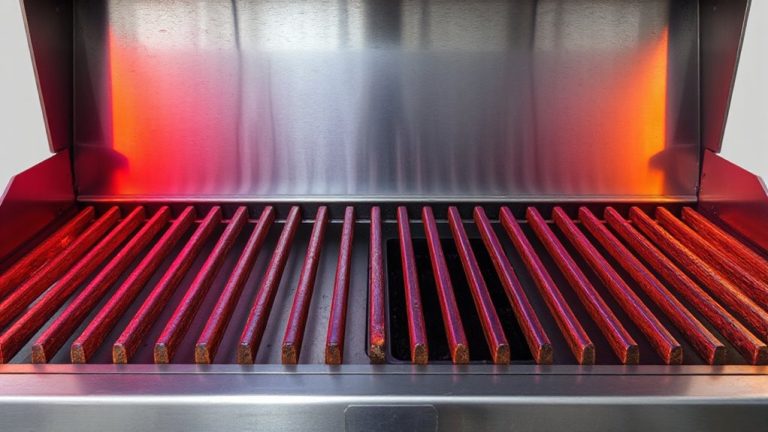
Heat deflection isn’t just an add-on-it’s a game-changer for pellet grill performance. You rely on consistent heat distribution to cook delicate fish or sear thick steaks, and that’s where deflectors shine. Positioned between the fire pot and cooking grates, they shield food from direct flames and spread thermal energy evenly. Without one, you risk hot spots and uneven cooking. These barriers also improve airflow management by guiding exhaust and convective currents in a more controlled pattern, enhancing temperature stability. Most deflectors are made of thick steel or ceramic, materials chosen for their ability to absorb, radiate, and modulate heat. Over time, they reduce flare-ups and help maintain clean burn efficiency. You’ll notice better searing on one side and gentler cooking on the other-precisely what dual-zone setups demand. In practice, they’re low-maintenance but critical for precision, especially in variable weather or long smokes.
Choose the Right Deflector for Your Pellet Grill
A well-chosen deflector can make or break your pellet grill’s performance, so picking the right one matters more than you might think. You’ll want to take into account both material compatibility and brand compatibility before making a decision. Most deflectors are made from stainless steel or ceramic-stainless resists corrosion and handles high heat well, while ceramic offers superior heat retention but is more fragile. Make certain the material won’t react with your grill’s interior or affect flavor. Brand compatibility is just as vital; generic deflectors might fit loosely, creating hot spots or blocking airflow. A model designed specifically for your grill guarantees proper fit and efficient heat distribution. You’re not just buying a piece of metal-you’re investing in consistent cooking results. Choose wisely, and your deflector will last for years with minimal upkeep.
Set Up a Two-Zone Cooking Configuration
You’ll get way more control over your cooking once you set up a two-zone configuration on your pellet grill. Simply position your heat deflector to block one side of the fire pot, creating a hot zone for searing and a cooler area for slower cooking. That way, you’ve got direct heat on one side-perfect for crisping chicken skin or searing steaks-and indirect heat on the other, ideal for finishing larger cuts without burning them. This setup gives you flexibility similar to a gas grill but with the smoky flavor pellet grills are known for. You can start foods over direct heat to develop a crust, then move them to indirect heat to finish gently. Most experienced pitmasters agree this method improves consistency, especially with mixed loads like ribs and sausages. It’s not just convenient-it’s essential for mastering temperatures and avoiding flare-ups. Once it’s set, cleanup stays simple, and the deflector holds up well over seasons.
Create a Three-Zone Layout for Maximum Control
Now that you’ve mastered the two-zone setup, taking control a step further with a three-zone layout reveals even greater precision on your pellet grill. You’ll split the cooking surface into hot, medium, and cool zones, letting you manage indirect heating more effectively. Place the deflector closest to the burn pot to block direct heat, creating a high-heat zone for searing, a mid-range area for steady cooking, and a safety zone for holding. This setup improves versatility-think finishing a thick ribeye with a perfect crust while keeping vegetables warm without overcooking. Indirect heating reduces flare-ups and promotes even doneness, while extended cook times enhance flavor infusion from wood pellets. You’ll notice better texture control and smokier depth across proteins and veggies. The three-zone system isn’t just smart-it’s a practical upgrade for serious cooks who want consistency, efficiency, and refined results every time.
Adjust Placement for Smoking, Searing, and Holding
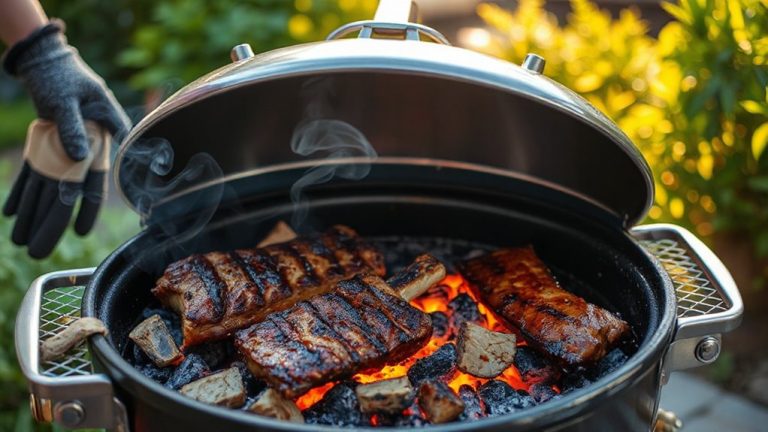
When you’re chasing the ideal balance between smoke depth, crisp searing, and safe food holding, fine-tuning your heat deflector’s position makes all the difference. Slide it partially over the burn pot to create a direct heat zone for searing, while leaving space for indirect cooking-perfect for delicate items that need gentle smoke. For low-and-slow sessions, center the deflector to distribute heat evenly, enhancing smoke circulation and improving temperature stability. When holding cooked food, shift the deflector to shield from radiant heat, keeping items warm without overcooking. Proper placement aids in flare up prevention by blocking concentrated flames from hitting drips. It also boosts grease management by channeling runoff away from the fire, reducing smoke spikes and maintenance hassles. Thoughtful adjustment isn’t just convenient-it’s essential for control, consistency, and cleaner runs over time.
Troubleshoot Common Heat Zone Issues
Why do some zones on your pellet grill run scorching hot while others barely kiss the food with warmth? Uneven heat distribution often stems from improper deflector placement or blocked airflow. You might’ve positioned the deflectors too close to the heat source, causing one zone to overheat while leaving another undercooked. Check the gaps between deflectors and walls-ideal spacing guarantees balanced convection. Also, accumulated grease can obstruct heat flow and hinder flare up prevention, especially when rendering fatty meats. Clean deflectors regularly and inspect for warping, which disrupts thermal symmetry. For best results, align deflectors to create clear direct and indirect zones, matching your cooking style. A well-maintained setup improves temperature consistency and reduces hot spots. Though no pellet grill achieves perfect uniformity, strategic adjustments greatly enhance control. Ultimately, managing heat zones isn’t just about placement-it’s about ongoing calibration tailored to your specific unit’s behavior and fuel efficiency.
On a final note
You’ve seen how heat deflectors reshape your pellet grill’s performance. They’re not just barriers-they’re precision tools that let you control cooking zones with purpose. Whether you’re searing, smoking, or holding, proper deflector placement improves temperature consistency and prevents hot spots. For backyard chefs wanting versatility, a well-configured deflector system boosts efficiency and results. It’s a smart upgrade, blending engineering and practicality to elevate your outdoor cooking game without unnecessary complexity.