Mastering Heat Control When Grilling at High Altitudes
You’ll need to adjust your grilling technique at high altitudes because thinner air means less oxygen, weakening combustion and lowering temperatures. Charcoal burns cooler, gas flames flicker weakly, and heat escapes faster due to low atmospheric pressure. Preheat 10–15 minutes longer and use tight vents to stabilize the cooking environment. Opt for hardwood briquettes and control airflow carefully to maintain steady heat. A tight lid and monitored fuel help sear better and prevent dry, uneven results-smart tweaks make all the difference. You’ll find even more effective strategies ahead.
Notable Insights
- Extend preheating time by 10–15 minutes to compensate for slower heat buildup at high altitudes.
- Partially close vents to balance airflow and improve heat retention without starving the fire.
- Use a tight-fitting lid to maintain stable temperatures and reduce oxygen loss in thin air.
- Choose charcoal briquettes or hardwood briquettes for more consistent heat and better fuel efficiency.
- Monitor cooking closely, as lower boiling points and cooler flames increase cooking times significantly.
Why Grilling at High Altitude Is Different
Grilling at high altitude isn’t just a matter of adjusting your cooking time-it’s a whole different ballgame. You’re dealing with thin air and reduced oxygen, both of which directly impact combustion. Your grill burns less efficiently because there’s simply less oxygen to sustain a strong flame. That means uneven heating, longer preheat times, and difficulty maintaining steady temperatures. You’ll notice your charcoal doesn’t glow as brightly, and gas burners may struggle to reach peak output. These aren’t quirks-they’re predictable effects of high-altitude physics. The thin air alters how fuel interacts with fire, demanding smarter airflow management and closer monitoring. While some dismiss it as minor, experienced grillers know ignoring these conditions leads to undercooked centers or dried-out meats. Mastery starts with acknowledging that altitude changes the rules. You can’t rely on sea-level techniques when the atmosphere itself works against consistent heat.
How Low Air Pressure Lowers Grill Temperatures
You’re already aware that high altitude affects how your grill burns, but the real culprit behind those disappointing temperature drops isn’t just thin air-it’s low atmospheric pressure. At higher elevations, reduced atmospheric pressure means oxygen escapes more easily, weakening combustion and lowering flame intensity. This directly impacts heat retention, as your grill struggles to maintain consistent temperatures even with constant fuel. You’ll notice flames flicker more and burn cooler, especially on gas models reliant on steady air-to-fuel ratios. Charcoal grills aren’t immune either-coals burn faster but hotter isn’t better when heat dissipates quickly. Without enough surrounding air pressure to stabilize thermal output, grills lose efficiency. That means longer preheat times and fluctuating cooking zones. To counter this, you’ll need tighter vents, better lid seals, and maybe even a grill designed for high-altitude performance. Effective heat retention starts with understanding how atmospheric pressure shapes your fire.
Boil Water Faster: And Adjust Cooking Times
Though water boils at a lower temperature in high-altitude environments, you can actually bring it to a simmer faster if you optimize your setup. Use a tight-fitting lid and a wide, shallow pot to boost boiling efficiency by reducing heat loss and increasing surface exposure. At elevation, lower atmospheric pressure means water boils below 212°F, so you’ll need to make precise cooking adjustments for anything that involves steaming or poaching. Foods like potatoes or pasta take longer to cook through, even if the water’s bubbling vigorously. Don’t rely on sea-level timers-instead, test frequently and expect extended durations. These adjustments aren’t just helpful; they’re essential for consistent results. Proper boiling efficiency helps manage fuel use and heat retention, especially when multitasking on the grill. Mastering this balance means you’re not just reacting to altitude-you’re working with it, ensuring meals are fully cooked, evenly prepared, and ready when they should be.
Preheat Your Grill Longer at High Altitude
At high altitudes, where oxygen levels drop and atmospheric pressure weakens, even a well-maintained grill needs extra time to reach ideal cooking temperatures. You’ll notice a slower heat buildup, so count on longer preheating-about 10 to 15 minutes more than at sea level. This extended warmup compensates for reduced oxygen, which hinders efficient fuel combustion, whether you’re using gas or charcoal. Without it, searing becomes inconsistent and cooking times stretch unpredictably. Thermometers may read lower than expected, not because your grill’s faulty, but due to how altitude affects thermal performance. Giving your grill this additional time stabilizes the cooking environment, ensuring better heat retention and control once food hits the grates. It’s a small adjustment, but one that greatly improves results. Plan ahead, let the grill run longer, and you’ll avoid underheated starts that ruin carefully planned meals.
Control Airflow for Steady Heat Up High
Since maintaining consistent heat becomes more challenging at high altitudes, controlling airflow is essential for stabilizing your grill’s performance. You’ll need to adjust your damper settings more carefully-thin air means less oxygen, which slows combustion and makes temperature regulation tricky. By partially closing the vents, you maintain better heat retention, preventing sudden drops that could disrupt cooking. Open them too wide, and heat escapes too quickly; keep them too tight, and your fire struggles to stay lit. Finding that balance is key. Most experienced grillers at elevation agree that steady, monitored airflow leads to more predictable results. Whether you’re using a charcoal or gas grill with adjustable vents, fine-tuning airflow gives you greater control. It’s not just about starting hot-it’s about sustaining a reliable cooking environment. Proper airflow management is a small adjustment with a big impact on overall heat consistency.
Pick the Best Fuel for High-Altitude Grilling
Why do some fuels perform better when you’re grilling above 5,000 feet? At high altitudes, thinner air reduces combustion, making fuel efficiency essential. You’ll want a fuel that ignites easily and maintains consistent heat despite lower oxygen levels. Charcoal briquettes are reliable-they offer strong heat retention and burn longer than lump charcoal, which can flare unpredictably up high. Propane works too, but you’ll need to adjust regulators since it vaporizes slower in cold, thin air. While propane gives precise control, its heat retention isn’t as steady as charcoal when winds pick up. For best results, many prefer hardwood briquettes-they combine clean burn with solid fuel efficiency and hold heat well. Avoid softwood-based fuels; they burn too fast and waste energy. Ultimately, your fuel choice impacts temperature stability, cooking time, and flavor. Pick one that balances performance, availability, and your grill type for high-altitude success. Grillers at elevation often find that best charcoal grills are designed to maximize airflow and heat control, making them ideal for challenging conditions.
Sear Steaks and Stop Drying Out Food Up High
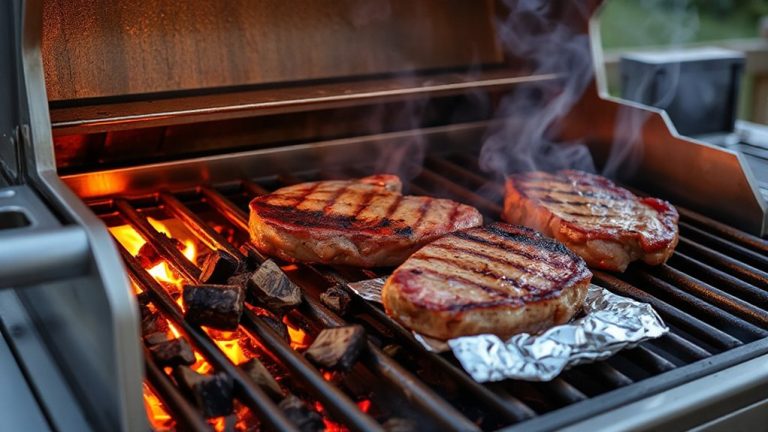
You’ve picked your fuel-maybe charcoal briquettes for their steady output or hardwood variants for better heat retention-and now it’s time to put that fire to work searing steaks without sacrificing moisture. At high altitudes, thinner air reduces heat transfer efficiency, making direct searing trickier; you’ll need a hotter, more focused fire to develop that crisp exterior fast. Get your grill grates scorching-450°F or higher-so the meat caramelizes quickly, locking in juices. That rapid crust formation is key for moisture retention. Avoid over-flipping; trust one solid sear per side. Thinner cuts especially benefit from this hands-off method. Consider finishing thicker steaks with indirect heat after searing to balance doneness without drying out. Even at elevation, proper timing and zone control make direct searing effective. You’re not fighting the altitude-you’re adapting to it, using technique to preserve what matters: flavor, texture, and juiciness in every bite.
On a final note
You’ll need sharper heat control when grilling at high altitudes due to lower air pressure and reduced oxygen. Preheating longer, adjusting airflow, and choosing efficient fuels like lump charcoal help maintain stable temperatures. Faster water evaporation means food dries out quicker, so monitor cooking times closely. With mindful adjustments, high-altitude grilling delivers solid results-just expect slightly longer searing and more frequent lid checks to balance performance and flavor.