How to Grill Shrimp Skewers Without Overcooking or Drying Out
Choose medium to large shrimp (26/30 or 31/35 count per pound) and peel them-keeping tails on for presentation but removing most of the shell for even cooking. Marinate briefly, no more than 30 minutes, with acid added last to avoid mushiness. Use two soaked wooden skewers to prevent spinning and guarantee stability on a preheated, oiled grill at 400°F–450°F. Cook just 2–3 minutes per side until opaque and pink. Serve right away, while the texture is firm yet tender, and discover how small details make all the difference in outdoor grilling.
Notable Insights
- Choose medium to large shrimp (26/30 or 31/35 count) for even cooking and moisture retention.
- Leave shells on to enhance flavor and protect against drying during grilling.
- Marinate with acid for 30 minutes or less to avoid mushiness and over-tenderizing.
- Use double skewers to stabilize shrimp and ensure even heat exposure without spinning.
- Grill over high heat (400°F–450°F) for 2–3 minutes per side until pink and opaque.
Choose the Best Shrimp Size for Skewers
When it comes to grilling shrimp skewers, timing and texture hinge largely on selecting the right shrimp size-too small, and they dry out before you can blink; too large, and they cook unevenly or overstay their welcome on the grill. You’re aiming for medium to large shrimp-think 26/30 or 31/35 count per pound-because they strike the ideal balance. These sizes hold up well over high heat, giving you a juicy bite without the guesswork. Watch the shrimp color closely; they’re done when they turn opaque and pink, not gray or rubbery. The shell texture should firm up but still yield slightly when pressed. Leaving shells on boosts flavor and protects against drying, enhancing both appearance and taste. You’ll notice better searing and grill marks, plus retained moisture throughout cooking. With the right size, you’re not just avoiding overcooking-you’re setting up every skewer for success.
Peel Shrimp for Better Texture (Tail On or Off?)
One key decision you’ll face after selecting the right shrimp size is whether to peel them entirely or leave the tails on-each choice affects texture, appearance, and eating experience. Peeling completely lets the shrimp absorb marinade more evenly, boosting flavor absorption and yielding a more tender bite. Without shells, heat penetrates faster, reducing cooking time and helping prevent overcooking. Yet leaving the tail on offers visual appeal-its prominent tail presentation makes skewers look restaurant-quality and gives a convenient grip for casual eating. However, the shell insulates the end of the shrimp, sometimes leading to uneven cooking. While tails don’t add meaningful flavor, they can slightly hinder marinade penetration near the tip. For grilling, where quick, even cooking matters most, peeling fully usually delivers superior texture and consistent results. Tail-on works best when presentation trumps precision-ideal for serving at parties where looks matter.
Marinate Shrimp Without Making Them Mushy
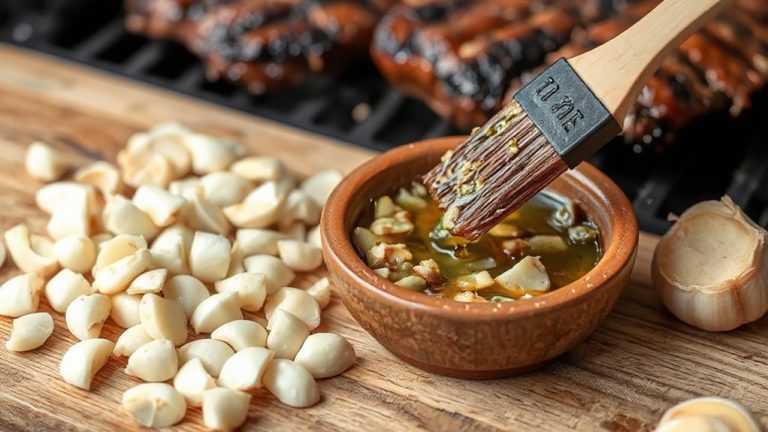
A few minutes too long in an acidic marinade can turn even the freshest shrimp into a mushy disappointment, so timing and ingredient balance are critical for preserving texture without sacrificing flavor. You should limit acid exposure-like lemon juice or vinegar-to no more than 30 minutes, as prolonged contact literally begins to cook the delicate flesh, weakening its structure. For best results, maintain proper acid balance by pairing citrus or vinegar with oil, which coats the shrimp and slows acid penetration. Ingredient timing matters: add garlic, herbs, and spices early, but introduce acidic components only in the final 15–30 minutes before grilling. Buttermilk or dairy-based marinades are gentler alternatives, tenderizing without degrading texture. Always marinate in the fridge, never at room temperature, to prevent bacterial growth. With smart acid balance and precise ingredient timing, you’ll achieve flavorful, firm shrimp every time-perfect for quick grilling without risk of mush.
Use Double Skewers for Even Cooking
If you’re aiming for shrimp that cook evenly and rotate easily on the grill, threading them onto two parallel skewers instead of one makes a noticeable difference in both control and results. Using double skewers-whether wooden skewers or metal skewers-keeps the shrimp from spinning when you flip them, ensuring consistent contact with the grates. Wooden skewers need soaking beforehand to prevent burning, but they’re disposable and work well for one-time use. Metal skewers don’t require prep and conduct heat slightly better, but they can be trickier to clean. With two skewers, each shrimp is stabilized, reducing overhandling and minimizing the risk of overcooking. You’ll find the shrimp sear more evenly and stay juicy inside. Though it takes a bit more time to thread, the improvement in cooking performance is worth the effort, especially when serving guests. Double skewers simply perform better across different grilling setups. For best results, consider choosing from the top picks for skewers based on material and design.
Grill on High Heat for a Perfect Sear
Getting the right sear on shrimp skewers means firing up your grill to high heat-think 400°F to 450°F-so the shrimp hit the grates with enough intensity to caramelize quickly without overcooking. High heat is essential; it locks in juices while creating those distinct sear marks that signal flavor and proper technique. You’ll notice the shrimp develop a light crust almost immediately, enhancing texture without drying out the interior. For best results, preheat the grill for at least 10 minutes and oil the grates well to prevent sticking and guarantee clean sear marks. Avoid moving the skewers too soon-let them sit 2 to 3 minutes per side to achieve that desirable grill imprint. This method delivers restaurant-quality results at home, turning simple seafood into a visually appealing, savory dish with depth and subtle smokiness.
How to Tell When Shrimp Are Done?
You’ve nailed the high-heat sear, and now it’s time to judge doneness-this is where timing and observation make all the difference. Shrimp cook fast, usually in 2 to 3 minutes per side, so keep a close eye. The clearest sign they’re done is when they develop a consistent pink opacity from tail to head. Avoid undercooked spots, which stay translucent and rubbery. At the same time, don’t wait until they’re bright red or curled tightly into O-shapes-that’s overdone. You also want a firm texture; gently press a shrimp with your tongs. It should spring back slightly, not feel mushy or stiff. Overcooked shrimp turn tough and dry fast, losing their sweetness. With practice, recognizing pink opacity and firm texture becomes second nature, ensuring juicy, flavorful results every time. Master this, and you’ll dominate the grill with confidence.
Serve Immediately for the Best Results
Once the shrimp come off the grill at their peak-pink, firm, and slightly charred-they begin to lose moisture and texture fast, so serving them right away makes a noticeable difference in quality. You’ll get the best results when you maintain proper serving temperature, ideally just warm to the touch, not scalding. Letting them sit causes heat to draw out juices, leading to a drier bite. Immediate serving guarantees ideal flavor preservation, locking in smoky notes from the grill and preventing off-notes from oxidation. Unlike heartier proteins, shrimp don’t benefit from resting. Delayed service dulls brightness in marinades, especially citrus- or herb-based ones. For entertaining, prep sides in advance so the shrimp can come off the grill and go straight to the plate. Timing is part of the technique-serve immediately, and you’ll taste the precision behind the cook.
On a final note
You’ve got the tools to grill shrimp skewers perfectly: pick large shrimp, peel but leave tails if you like, and marinate briefly in oil and acid to avoid mushiness. Double skewers prevent spinning, while high heat delivers a quick sear without drying. Shrimp are done when opaque and firm-overcooking ruins texture fast. Serve immediately for peak flavor. Grilling excels here, balancing smokiness and tenderness better than most methods.