Remove Carbon Deposits From a Cast Iron Griddle (No Steel Wool)
You can remove carbon deposits from your cast iron griddle by first heating it to around 500°F to loosen the buildup-this controlled burn-off breaks down stubborn residue without warping the surface. Once cooled slightly, use a metal scraper or chainmail scrubber to gently lift carbon while preserving the seasoning. Avoid steel wool or harsh chemicals that strip the polymerized layer. Wipe clean, then re-season with a thin coat of high-smoke-point oil. Proper technique keeps your griddle performing like new, and there’s a smarter way to maintain it long-term.
Notable Insights
- Use high heat (around 500°F) to burn off carbon deposits, turning them into ash for easy removal.
- Clean with a griddle stone or chainmail scrubber while warm to lift residue without damaging seasoning.
- Avoid steel wool and harsh chemicals that can strip the protective polymerized oil layer.
- Wipe the surface with hot water and a soft brush, then dry immediately to prevent rust.
- Re-season with a thin coat of high smoke point oil, heating at 400°F for one hour.
Why Carbon Buildup Forms on Outdoor Griddles
While you’re searing burgers or stir-frying veggies on your outdoor griddle, carbon buildup is quietly forming from high-heat cooking and oil breakdown. This residue collects because repeated heating causes cooking oils to polymerize and char, especially when temperatures exceed the smoke point. Your fuel type plays a key role-propane delivers consistent, intense heat that accelerates carbonization, while charcoal introduces more particulates that bond with grease. Weather exposure adds to the problem; moisture from rain or humidity interacts with residual oils and metal, promoting uneven layering and stubborn deposits. Even with regular use, outdoor griddles face harsher conditions than indoor ones, increasing the rate of buildup. These factors combine silently, degrading performance over time if not monitored. Understanding how fuel type and weather exposure contribute helps you anticipate maintenance needs and preserve your griddle’s efficiency and longevity through informed, proactive care.
How to Remove Carbon Without Harming the Seasoning
You’ve already seen how fuel type and weather contribute to carbon buildup on your outdoor griddle, but knowing how to clean it effectively without stripping away your hard-earned seasoning is just as important. Avoid harsh chemical cleaners and abrasive pads-they might lift carbon, but they’ll also damage your polymerized oil layer, leaving your surface vulnerable. Instead, stick to gentle methods like using hot water and a griddle stone or soft brass brush. These tools remove buildup through mild friction without harming the seasoning. High heat can also help loosen carbon; after heating, a quick wipe-down often suffices. While some opt for vinegar solutions, even those carry risks if overused. Your best bet? Regular maintenance. Clean promptly after use, and re-season as needed. This preserves performance and longevity. With care, your griddle stays nonstick, rust-free, and ready for every cookout.
Best Tools for Cleaning Burnt-On Griddle Residue
A well-chosen cleaning tool can make all the difference when tackling stubborn, burnt-on residue on your cast iron griddle. Stiff-bristled metal scrapers and chainmail scrubbies work best because they lift grime without gouging the seasoning. Avoid steel wool-it’s too harsh and can damage the surface over time. For effective scrubbing techniques, apply gentle, circular motions with a small amount of warm water or mild cleaning agents like vinegar or dish soap-contrary to old myths, a minimal amount won’t destroy your seasoning if rinsed promptly. Nylon brushes are safer but less effective on heavy buildup. A flat-edged scraper helps loosen carbonized bits after cooking while the griddle is still warm. Pair the right tool with smart scrubbing techniques and mild cleaning agents, and maintenance becomes quicker, safer, and more efficient, especially after long outdoor cooking sessions where grease and smoke residue accumulate heavily. Best grill brushes can also be effective for removing stubborn debris without damaging the griddle’s surface.
Burn off Carbon Buildup Safely With High Heat
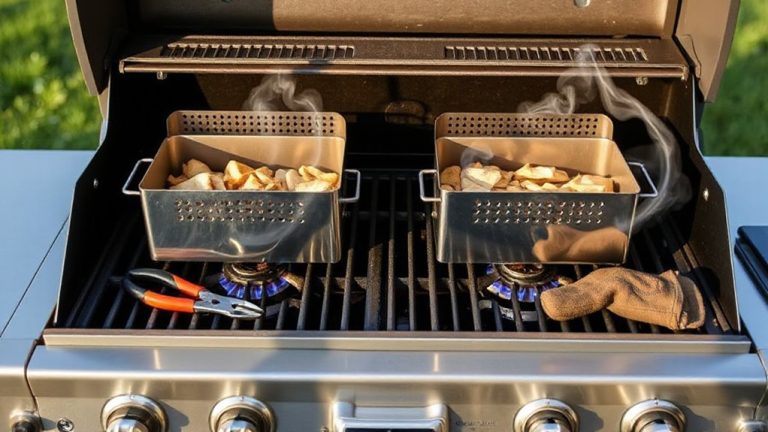
If done correctly, burning off carbon buildup on your cast iron griddle can be an effective way to restore its surface without compromising the seasoning layer. You’ll need proper heat control-gradually raise the temperature to around 500°F to avoid thermal shock. This high heat breaks down stubborn carbon deposits, turning them into ash you can easily wipe away. Always perform this outdoors, preferably on a gas grill or open flame, where ventilation disperses smoke. Safety precautions are essential: wear heat-resistant gloves, use long-handled tools, and keep a fire extinguisher nearby. Never use water to cool the griddle rapidly-it can warp the metal. While the method’s efficiency is well-documented, improper execution risks damaging your griddle. With steady heat control and strict safety precautions, this technique offers a reliable, low-tool solution ideal for outdoor cooking setups where heavy use demands resilient maintenance. A well-maintained griddle performs better and lasts longer, especially when using high-quality outdoor griddles designed for durability and even heat distribution.
How to Re-Season Your Griddle After Cleaning
Restoration isn’t complete until the griddle’s protective layer is rebuilt, and re-seasoning is where performance meets longevity. After cleaning, dry the surface thoroughly-any moisture compromises the bond. Apply a thin, even layer of oil with a high smoke point, like flaxseed, grapeseed, or vegetable oil; these oil types polymerize well under heat, forming a slick, durable finish. Avoid olive oil or butter-it burns and leaves residue. Place the griddle upside down in a 400°F oven for an hour, trays below to catch drips. Let it cool, then repeat two to three times. This process is essential griddle maintenance, sealing pores and preventing rust. For outdoor cooking enthusiasts, a well-seasoned surface guarantees superior heat retention and non-stick performance. Over time, consistent re-seasoning builds a natural patina that enhances flavor and cooking control. Skip it, and you’ll battle sticking and corrosion every cookout.
How to Prevent Carbon Buildup After Every Use
Regularly maintaining your cast iron griddle after each use really does make the difference between effortless cooking and stubborn cleanup later. After cooking outdoors, let the surface cool slightly, then scrub with a stiff brush and hot water-avoid soap to preserve the seasoning. Wipe it dry immediately to prevent oxidation, which dulls the metal and invites rust. While the griddle’s still warm, apply a thin coat of high-smoke-point oil like flaxseed or vegetable oil; this helps maintain luster and strengthens the nonstick layer. Properly stored in a dry place, your griddle resists carbon buildup because residual oils and food particles won’t polymerize into tough deposits. Cooking over consistent heat also reduces charring. Over time, this routine proves far more effective than aggressive scrubbing after neglect. For outdoor cooks, disciplined post-use care isn’t just about cleanliness-it’s the key to performance, longevity, and that smooth, slick finish you want. A well-maintained griddle also enhances the performance of the best cast iron cookware for grilling, ensuring even heat distribution and superior searing results.
On a final note
You’ve cleaned your griddle, burned off carbon safely, and re-seasoned it properly-now it performs like new. Regular maintenance prevents excessive buildup while preserving the polymerized layer essential for non-stick performance. Using the right tools and techniques guarantees longevity and consistent cooking results. Outdoor griddles endure harsh conditions, so post-use care matters. A well-kept cast iron surface lasts decades, delivering superior heat retention and flavor development that rivals any high-end grill.