Why Natural Gas Is Preferred for Commercial Patio Cooking Despite Lower Portability
You save money with natural gas since it’s cheaper per BTU than propane and has no delivery fees. It provides uninterrupted fuel during busy shifts, so you never run out mid-service. The cleaner burn means less soot, fewer flare-ups, and easier maintenance. Fixed grills stay reliably hot and integrate smoothly into your kitchen workflow. Though less portable, their efficiency and long-term performance make them ideal for high-volume patio cooking-especially when reliability matters most. There’s more to contemplate about optimizing your outdoor setup.
Notable Insights
- Natural gas eliminates propane handling risks with fixed underground lines for safer patio operations.
- Lower fuel costs ($10–$15 per million BTU) and no delivery fees enhance long-term operational savings.
- Continuous supply from utility mains prevents service disruptions during peak cooking periods.
- Cleaner combustion reduces soot buildup, lowering maintenance needs and improving grill performance.
- Permanent installations support efficient kitchen workflows and consistent heat for high-volume cooking.
Natural Gas Vs. Propane for Commercial Patios
Why choose natural gas over propane for your commercial patio cooking setup? It boils down to gas safety and installation flexibility. Natural gas lines are fixed, eliminating the risk of leaks from portable tanks or improper handling-common with propane. That’s a win for gas safety, reducing hazards in busy outdoor dining areas. Plus, since natural gas runs through underground pipelines, you never run out mid-service. Installation flexibility matters, too-lines can be routed to multiple stations, allowing kitchen layouts to adapt as your needs grow. While propane units are portable, they demand storage space and regular refills, complicating workflow. Natural gas, once connected, operates continuously with minimal maintenance. Sure, initial setup needs professional work, but long-term operational reliability and reduced on-site fuel storage make it a smarter, safer fit for permanent outdoor kitchens where performance and safety can’t be compromised.
Save Money With Permanent Gas Hookups
You’re already seeing the safety and layout advantages of natural gas over propane, but the real payoff shows up when you look at the bottom line. Permanent gas hookups deliver meaningful cost savings over time, especially with stable utility rates compared to fluctuating propane prices. What starts as a modest upfront expense turns into a smart long term investment, reducing fuel and delivery costs markedly. Here’s how:
| Factor | Propane | Natural Gas |
|---|---|---|
| Fuel Cost (per million BTU) | $25–$35 | $10–$15 |
| Delivery Fees | Yes | No |
| Infrastructure Maintenance | Moderate | Low |
You’ll notice lower operational overhead within months, particularly during peak seasons. Plus, with fewer moving parts and no tank swaps, maintenance demands drop. Unlike portable systems, fixed lines integrate directly into your building’s supply, making usage more efficient. When you factor in durability and performance consistency, natural gas isn’t just cheaper-it’s a financially sound decision that keeps paying off.
No More Fuel Interruptions During Rush Hour
Ever had your grill sputter out mid-rush because a propane tank ran dry? With natural gas, that’s a problem you won’t face. You get fuel reliability straight from the mains, so there’s no waiting for deliveries or swapping tanks when orders pile up. A consistent supply means your burners stay lit, even during the busiest lunch or dinner service. Unlike propane, which depends on finite tank volumes, natural gas keeps flowing as long as the line’s active-ideal for high-volume patio cooking. You won’t have to monitor fuel levels or adjust service pace unexpectedly. Operators consistently report smoother workflow and fewer service hiccups after switching. The infrastructure requires installation, yes, but the payoff comes in uninterrupted performance. For restaurants where timing is everything, that dependable connection translates directly into customer satisfaction and kitchen efficiency. With natural gas, you’re not just cooking-you’re operating with confidence.
Cleaner Burning Means Less Grill Maintenance
Natural gas doesn’t just keep your grill running during peak service-it also burns cleaner than propane, which adds up to noticeable savings in time and effort over the long haul. You’ll see less soot and grease buildup on grates and burners, meaning fewer breakdowns and shorter cleanups between services. That clean burn directly supports better flame consistency, giving you reliable, even heat that holds steady throughout service. No more hot spots or sudden flare-ups that ruin your sear. Plus, emission control is stronger with natural gas, reducing harmful byproducts and smoke-good for the environment and your kitchen’s air quality. You’re not just cutting maintenance time; you’re protecting your equipment from corrosion and clogs over months of heavy use. While natural gas lines aren’t movable, the trade-off in reduced labor and longer grill life is hard to ignore. You’ll spend less on repairs and replacements, keeping operations smoother and more cost-effective overall.
Fixed Grill Setups That Work for Busy Restaurants
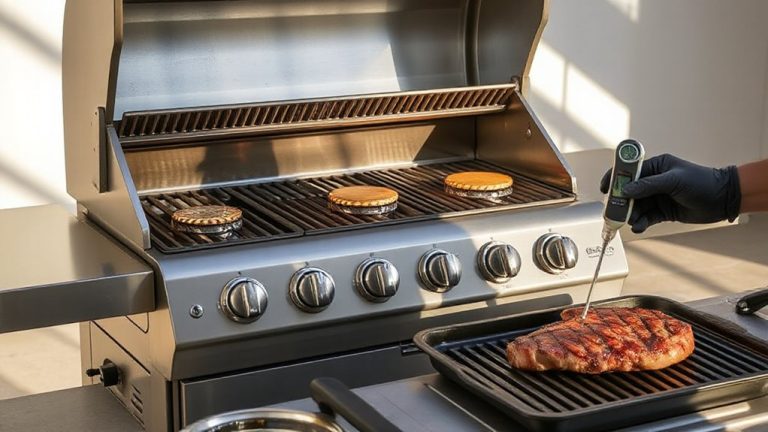
Although permanent grills limit layout flexibility, they’re designed to handle the relentless pace of high-volume service, and once installed, they become the backbone of an efficient outdoor cooking station. You benefit from seamless integration with your kitchen’s workflow when you plan grill placement carefully-positioning it near prep areas and service windows reduces movement and boosts speed during rushes. Natural gas-powered units offer unmatched heat consistency, maintaining steady temperatures even during extended use, which means fewer flare-ups and better sear control. Unlike portable models, fixed setups are built to last, often featuring heavy-duty burners and stainless steel construction that withstand daily wear. You’ll also find cleaning and maintenance easier since components are tailored to your space. Though you can’t relocate them, the long-term performance and operational efficiency make fixed grills a smart investment for busy patios prioritizing speed, safety, and consistent results.
On a final note
You’ll save on fuel costs with natural gas, even if it means less portability. It burns cleaner than propane, reducing grease buildup and cutting down grill maintenance. A permanent line guarantees uninterrupted service during peak hours-no last-minute tank swaps. For fixed outdoor setups, especially in busy restaurants, reliability and efficiency outweigh mobility. With proper installation, natural gas delivers consistent heat and long-term savings, making it a smart, practical choice for commercial patio cooking.