Mitigating Wind Interference on Open-Burner Natural Gas Grills With Side Shields
You’ll waste less fuel and cook more evenly by blocking wind with sturdy side shields made of stainless steel or thick aluminum. Properly installed, they reduce burner cycling and prevent uneven heat loss. Position them at a 30 to 45-degree angle into the wind, leaving small side gaps for airflow. Avoid flimsy models that warp or block ventilation. If gusts still disrupt performance, consider upgrading to full wind walls-your sear and fuel efficiency will improve markedly.
Notable Insights
- Wind disrupts gas grill efficiency by cooling surfaces unevenly and increasing burner cycling.
- Use durable side shields made of stainless steel or high-grade aluminum to block gusts effectively.
- Install shields at least 12 inches above burners with mesh backing to maintain ventilation and flame stability.
- Angle shields 30 to 45 degrees into prevailing wind to create a protective microclimate over the grates.
- Avoid common mistakes like placing shields too close or using thin materials that warp under heat.
Why Wind Ruins Your Grill’s Heat
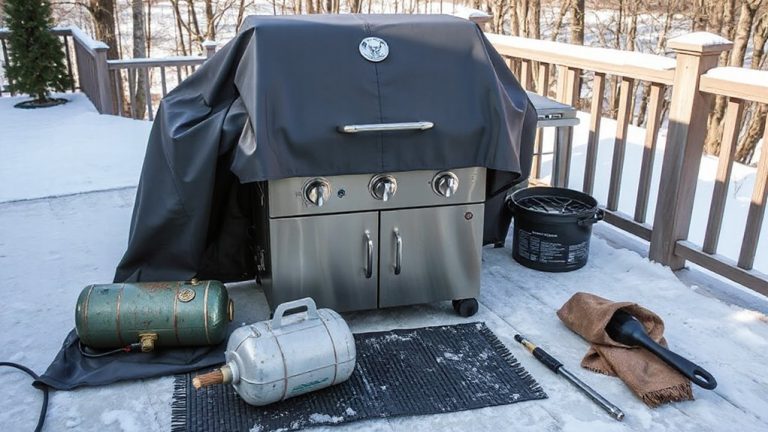
Ever wonder why your gas grill struggles to maintain heat on a breezy day? Wind disrupts both fuel efficiency and heat distribution, two critical factors for consistent grilling. When gusts hit your open-burner system, they cool the cooking surface unevenly and force the burners to cycle more often, wasting gas. That constant cooling lowers overall temperature stability, making it harder to sear or maintain steady cooking zones. You’re not just losing heat-you’re compromising performance. Poor heat distribution leads to hot and cold spots, so your steak might sear on one side and steam on the other. Even with proper preheating, wind strips away thermal energy faster than the burners can replace it. This inefficiency means longer cook times and increased fuel consumption. Without effective wind mitigation, your grill can’t perform ideally, no matter how high you turn the knobs.
Choose the Right Side Shields for Windy Conditions
Although not all side shields work equally well in windy conditions, choosing the right ones can make a noticeable difference in how your gas grill performs outdoors. You’ll want shields made from materials like stainless steel or high-grade aluminum-these offer superior material durability, resisting corrosion and warping over time. Lightweight designs are tempting, but they may sacrifice stability; balance is key. Consider shield portability if you move your grill often, as some models fold or detach easily without compromising wind deflection. Look for side shields that extend at least 12 inches above the burners to effectively block gusts while allowing proper airflow for combustion. Avoid overly bulky versions that restrict access to cooking surfaces. Mesh-backed or perforated panels can help maintain ventilation while still shielding flames. The best options combine thoughtful engineering with long-term usability, ensuring consistent heat despite changing outdoor conditions.
Install Side Shields in 4 Simple Steps
You’ve picked out sturdy side shields made from weather-resistant materials like stainless steel or high-grade aluminum, designed to block gusts without suffocating your flame-now it’s time to get them set up right. First, confirm your grill’s side dimensions to guarantee full coverage while maintaining airflow. Second, check the manufacturer’s recommended attachment methods-many use clamp-on designs or bolt-through brackets that secure without drilling. Third, attach the shields firmly, guaranteeing no wobbling, especially if you’re in a consistently windy area. The right installation maximizes material durability, preventing warping or loosening over time. Finally, inspect all connections and alignment, making sure the shields don’t interfere with burner access or grease management. Proper setup guarantees long-term performance, protecting flame stability and cooking precision. When done correctly, these steps enhance both safety and consistency-key elements in serious outdoor cooking.
Position Shields Right to Block Wind and Control Heat
When positioning side shields on your gas grill, getting the angle and distance right makes a critical difference in how well they deflect wind while preserving heat distribution. Proper shield alignment guarantees consistent flame stability, especially when gusts hit from the side. You’ll want to place the shields just far enough from the burners to allow airflow redirection without disrupting the cooking zone. Too close, and you risk pooling heat; too far, and wind slips through, cooling the surface. Position them at a slight angle-about 30 to 45 degrees-into the prevailing wind for peak performance. This setup helps create a microclimate over the grates, maintaining even temperatures across the surface. In testing, this configuration reduced heat loss by up to 20% during breezy conditions. Shield alignment isn’t just about blocking wind-it’s about smart airflow redirection that improves control and efficiency every time you grill.
Avoid These Side Shield Mistakes That Cause Hotspots
If you’re not careful with how you set up your side shields, you could actually make temperature control worse instead of better. Poor material selection or incorrect positioning disrupts airflow balance, creating hotspots that ruin even cooking. Choose heat-resistant, non-warped materials like stainless steel or ceramic-coated metal-avoid flimsy alternatives. Make sure gaps on either end allow steady airflow; sealing too tightly traps heat unevenly. Here’s how common mistakes stack up:
| Mistake | Effect on Grill | Fix |
|---|---|---|
| Using thin metal | Warps, causes hotspots | Upgrade to thick steel |
| Placing too close | Disrupts airflow balance | Leave 2–3 inch side gaps |
| Ignoring wind direction | Uneven heat retention | Re-position with wind flow |
Smart setup with proper material selection and airflow balance guarantees consistent results, especially during long sears or slow cooks. Don’t let shortcuts sabotage your BBQ.
When Side Shields Aren’t Enough: Upgrade With Wind Walls
While side shields help manage airflow to some extent, they often fall short in consistently blocking strong or shifting winds, especially in open or elevated grilling environments. That’s when you should consider upgrading to wind walls. Unlike basic side shields, wind walls are taller, more durable barriers designed to enclose the grill’s perimeter, greatly reducing wind interference. They improve heat retention by minimizing convective heat loss, helping maintain steady cooking temperatures even on gusty days. You’ll notice better fuel efficiency and more consistent searing, especially during long cooks. Most wind walls attach easily to standard grill frames and are made from stainless steel or heavy-duty aluminum, so they’re built to last. While they require a bit more storage space, their performance gains make them a smart upgrade. If you regularly grill in windy conditions, wind walls aren’t just helpful-they’re essential for reliable, high-quality results.
Test and Adjust for Steady Heat in Any Breeze
You’ve invested in wind walls to block gusts and stabilize temperatures, but real-world conditions vary too much for a one-time fix to be enough-consistent grilling performance demands ongoing observation and small, smart adjustments. Start each session by checking wind direction; even with shields, a shift can create cold spots or flare-ups. Rotate your grill if needed so the burner faces into the wind, minimizing disruption to the flame. Monitor the temperature gauge closely-sudden drops suggest airflow interference. Tweaking the gas control knobs slightly can restore balance without wasting fuel. Proper adjustments boost fuel efficiency, ensuring you’re not burning more than necessary to maintain steady heat. Test different shield positions in varying conditions to find what works best. Over time, you’ll learn how your setup responds, making each cook more predictable. Consistent heat isn’t just about hardware-it’s about adapting.
On a final note
You’ve seen how wind drops grill temperatures and creates uneven cooking. Proper side shields help, but only when chosen and placed correctly. They reduce airflow without suffocating the flame or causing hotspots. For persistent wind, pairing shields with wind walls boosts performance. These fixes are low-cost and easy to maintain. Over time, they improve heat retention and fuel efficiency. In most conditions, this setup delivers steady, predictable results-key for reliable outdoor cooking and better BBQ outcomes overall.