Mastering Mesquite Smoke Intensity for Perfectly Charred Cowboy Steaks
You’ll want to control your mesquite smoke carefully-thick white plumes mean bitterness, while thin blue wisps deliver clean, bold flavor. Use dry chunks or logs for steady, even smoke, and keep airflow regulated with your grill vents to manage heat. Limit exposure to 30–45 minutes so the beef stays rich, not harsh. Once done, rest the steak to lock in juices and smoke balance-there’s more to mastering the fire than just flame and time.
Notable Insights
- Use thin, blue smoke wisps to achieve balanced mesquite flavor without bitterness.
- Opt for seasoned mesquite chunks or logs to ensure steady, clean-burning smoke.
- Control smoke intensity by adjusting grill vents for proper airflow and heat regulation.
- Limit smoke exposure to 30–45 minutes to prevent harsh, acrid flavors in cowboy steaks.
- Rest steaks for 10–15 minutes after cooking to lock in juices and stabilize smoke flavor.
Control Mesquite Smoke to Avoid Bitter Steak
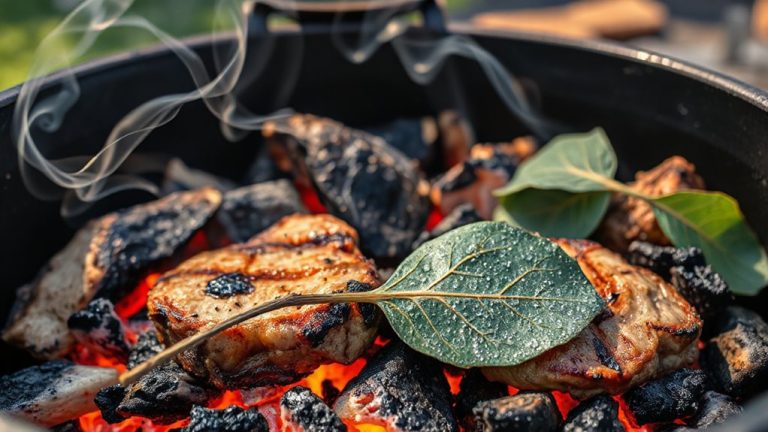
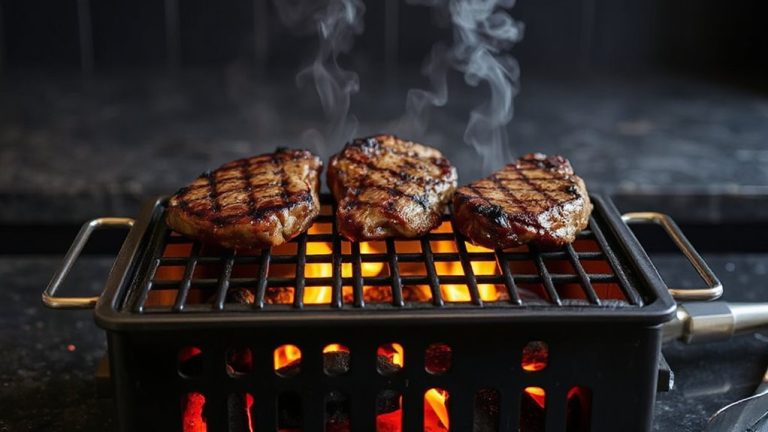
While mesquite smoke delivers a robust, earthy flavor that can elevate a steak’s profile, using too much too quickly often leads to a bitter, acrid finish that overwhelms the meat. You cross the flavor threshold fast with mesquite, so controlling smoke density is critical. Unlike milder woods, mesquite burns hot and fast, producing thick smoke that saturates the meat almost instantly. If you’re not careful, that boldness turns harsh, leaving your steak unpleasantly medicinal. To avoid this, start with a small amount of wood and let the fire stabilize. Watch the smoke-thin, blue wisps mean you’re in the sweet spot; thick, white plumes signal excessive smoke density. You want flavor, not assault. Maintaining control guarantees the smoke enhances, not masks, the beef’s natural richness. Precision beats power here-moderation gives you depth without bitterness. For best results, pair your mesquite with quality wood chips that are properly dried and free of additives.
Use Mesquite Chunks or Logs for Steady Flavor
You’ll get the most consistent, long-lasting smoke by opting for mesquite chunks or logs instead of chips-the denser form burns slower and maintains a steadier flavor profile throughout the cook. Chunks and logs deliver greater smoke density, which enhances flavor without overwhelming the meat, especially vital for thick cuts like cowboy steaks. Proper wood seasoning is essential-dry, well-seasoned mesquite burns cleaner and produces a more stable smoke, reducing the risk of bitter notes. Avoid green or freshly cut wood, as excess moisture creates erratic smoke and uneven heat. You’ll find that seasoned mesquite logs, in particular, sustain a robust but balanced smoke flow over extended grilling sessions. While chips burn too fast for reliable control, chunks and logs offer predictability and depth. For steady, rich results, size and dryness matter-choose kiln- or air-dried mesquite with a moisture content below 20% to guarantee peak performance and clean combustion. Pairing your wood choice with a well-formulated best meat rubs for smoking can elevate the depth and complexity of flavor in your smoked dishes.
Manage Grill Airflow to Tame the Heat
A well-balanced airflow can make or break your mesquite-smoked results, so managing your grill’s vents is key to controlling heat and smoke intensity. Proper grill placement affects airflow dynamics-position it in an open area, away from walls or windbreaks that disrupt draft. Your grill’s vents regulate oxygen, which directly influences heat zones and combustion efficiency. Open vents increase temperature and thinner smoke, while partially closed ones restrict oxygen, cooling the fire and boosting smoke density. Mastering this balance lets you maintain a steady char without scorching.
| Vent Position | Airflow | Effect on Heat Zones |
|---|---|---|
| Fully Open | High | Broad, intense heat |
| Half Open | Moderate | Balanced cooking zones |
| Nearly Closed | Low | Mild, retained smoke |
Adjust gradually, monitor changes, and match airflow to your steak’s sear needs.
Limit Smoke Time for Rich, Not Harsh, Flavor
Often, the difference between a perfectly smoked steak and an overpowering, bitter bite comes down to one overlooked factor: timing. You see, mesquite burns hot and fast, and its smoke packs a strong punch-great in moderation, but harsh if overused. That’s why managing smoke duration is essential. For cowboy steaks, aim for 30 to 45 minutes of smoke exposure before finishing with direct heat. Longer than that, and the flavor intensity turns acrid, masking the beef’s natural richness instead of enhancing it. Think of smoke as a seasoning, not a soak. You want layers, not domination. In tests, steaks with shorter smoke durations consistently delivered cleaner, more balanced profiles, letting the char and meat quality shine. So keep a close eye on the clock. With mesquite, less really is more. Control the smoke duration, and you’ll nail rich, not harsh, flavor every time. Choosing the right cut, such as a thick ribeye or best steak for smoking, ensures better moisture retention and flavor development during the smoking process.
Rest Your Steak to Lock in Perfect Smoke Balance
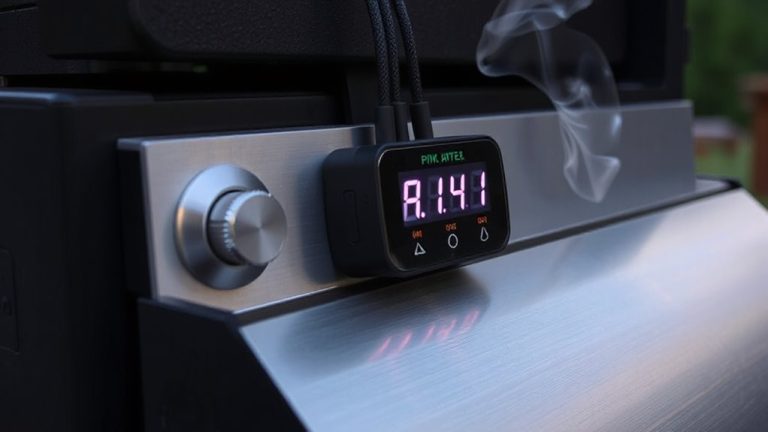
Pulling your steak off the smoker after just 30 to 45 minutes keeps the mesquite flavor sharp but balanced, yet that’s only part of the story. You’ve got to let it rest-ten to fifteen minutes-so the internal temperature evens out and the juices redistribute. Skipping this step means losing precious moisture the second you slice, sacrificing both juicy tenderness and flavor retention. Tent it loosely with foil to hold warmth without trapping steam, which can soften that perfect crust. This pause isn’t idle time; it’s when fibers relax, reabsorbing juices cooked out during smoking. That deep, smoky essence stays locked in rather than bleeding onto the cutting board. For best results, use a digital thermometer to confirm doneness before resting. Done right, your cowboy steak isn’t just charred and bold-it’s cohesive, rich, and perfectly balanced from edge to center.
On a final note
You’ve got the tools to master mesquite smoke intensity now. Using chunks instead of chips guarantees steady, rich flavor without the bitterness. Control airflow to manage heat, since too much oxygen leads to harsh, acrid smoke. Limit smoke time to the first half of cooking for depth, not assault. Letting the steak rest locks in that balanced, smoky essence. Done right, cowboy steaks emerge charred, juicy, and authentically smoky-mesquite’s true signature.