The Influence of South Carolina Mustard-Based Sauce on Regional Rub Formulations
You’re using mustard sauce as the star when you barbecue in South Carolina, and that changes everything about how you build flavor. Dry rubs take a backseat, kept simple with sweet paprika and black pepper to avoid clashing with the tangy, piquant sauce. Regional rubs shift from smoky and spicy in the Upstate to subtly sweet or creole-seasoned near the coast, always designed to support, not overpower. Your rub sets the stage, but the sauce delivers the final performance-let the full story unfold.
Notable Insights
- South Carolina’s mustard-based sauce diminishes the role of dry rubs, prioritizing saucy finishes over complex rubs.
- The sauce’s tangy profile shifts rub functions to support crust formation rather than dominate flavor.
- Sweet paprika and black pepper are key spices that balance the sauce’s acidity in regional rubs.
- Midlands rubs include vinegar elements to align with German-influenced mustard sauce traditions.
- Regional rub variations across South Carolina adapt to complement local interpretations of mustard-based sauces.
The Uniqueness of South Carolina’s Mustard Sauce
While most barbecue regions lean on tomato or vinegar for their signature sauces, South Carolina stands apart with its bold choice of yellow mustard as the base. You’ll find this tangy, smooth sauce clinging to smoked pork, its sharpness cutting through rich fat. Its historical origins trace back to German immigrants who brought mustard-loving palates to the Lowcountry in the 18th century. Over time, it evolved into a regional staple, now a point of pride. The cultural significance runs deep-this isn’t just sauce, it’s identity. It reflects a blend of European influence and Southern adaptation, balancing sweetness, acidity, and spice in a way few others do. You won’t see it everywhere, but where it thrives, it defines the pit. It’s not a novelty; it’s a deliberate, enduring choice in the broader barbecue landscape.
How Mustard Sauce Influences Barbecue Traditions
Because it carves out a distinct flavor profile, South Carolina’s mustard-based sauce reshapes how pork is seasoned and served across the region, pushing pitmasters to align their techniques with its bold character. You’ll find that this tangy, slightly sweet condiment isn’t just a topping-it’s central to the area’s barbecue identity, born from a cultural fusion of German settlers’ mustard traditions and Southern smoking practices. Over time, this blend sparked a historical evolution in outdoor cooking, shifting emphasis from dry rubs to saucy finishes. You adapt your methods accordingly, applying the sauce late in the cook to caramelize without burning. Smoke profiles now complement, not dominate, the sauce’s sharpness. It’s not just about taste-it’s about tradition redefined. Pitmasters across the state lean into this style, making mustard-based barbecue a benchmark of regional pride and culinary continuity.
Why Rubs Take a Backseat to Mustard Sauce?
Even though dry rubs play a foundational role in many barbecue traditions, they often step aside in South Carolina’s mustard-centric style, where the sauce doesn’t just complement the meat-it defines it. You’ll notice the flavor dominance of the tangy, golden sauce quickly overshadows the rub, making it more of a subtle base than a standout element. That’s because the mustard-based sauce bonds deeply with the meat during slow cooking, creating a glossy glaze that penetrates and seasons throughout. This sauce synergy reduces the need for aggressive rubs, as the sauce itself carries salt, sweetness, and spice. You’re not losing complexity; you’re redistributing it. The rub still helps form a crust and adds depth, but it plays support. In this tradition, the sauce isn’t an afterthought-it’s the lead. That shift in hierarchy reflects a unique, region-specific balance where liquid seasoning triumphs over dry.
Spices That Balance Tangy Mustard Sauce
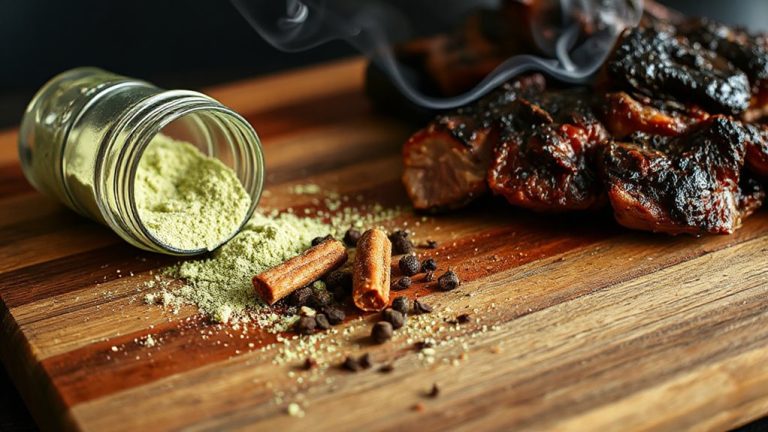
When you’re balancing the sharp tang of a traditional South Carolina mustard sauce, the right spices don’t just mute the acidity-they elevate it. Sweet paprika brings a mild, earthy sweetness that softens the sauce’s bite without overwhelming the palate, letting the mustard’s warmth stay front and center. You’ll find it adds depth and a hint of color, enhancing both flavor and appearance. Black pepper, meanwhile, cuts through the richness with a subtle heat and slight bitterness, sharpening the overall profile. Used together, these spices create harmony-sweet paprika rounds out the edges while black pepper keeps the sauce from becoming cloying. You’re not masking the mustard; you’re refining it. In practice, pitmasters often layer these early in the rub or sauce blend to guarantee even distribution. The best results come from freshly ground black pepper and high-quality sweet paprika, which maintain their potency through slow cooking.
Regional Rub Variations Across South Carolina
While the foundation of a good South Carolina rub often hinges on mustard seed and coarse black pepper, the regional twists you’ll encounter across the state reveal how local traditions shape flavor. In the Midlands, you’ll find rubs leaning into vinegar tang, echoing the area’s love for mustard-based sauce-likely rooted in German settlers’ influence through historical migration. Down in the Lowcountry, creole spices and a touch of sweetness creep in, evidence of coastal cultural exchange with Caribbean and West African techniques. Upstate, near the North Carolina border, you’ll notice smokier paprika and cayenne blends, aligning more with Piedmont styles but still honoring local sauce pairings. These variations aren’t arbitrary; they reflect generations of outdoor cooking refinement. You can taste how necessity and adaptation guided spice choices, making each region’s rub a practical response to both palate and history, tested over countless slow-cooked hours.
Building a Balanced Rub for Mustard-Based Barbecue
You’ve seen how regional styles shape the rubs across South Carolina, each area refining its mix to complement the local take on mustard-based barbecue. Now, it’s time to build your own balanced rub. Start with brown sugar for sweetness and body-it caramelizes well and enhances the sauce’s natural sweetness. Add smoked paprika to introduce a smoky tang that cuts through the richness of the mustard base. A blend of coarse black pepper and cayenne delivers that signature sweet heat, offering a gentle kick without overwhelming. Mustard seeds, lightly toasted and ground, reinforce the sauce’s tangy backbone while adding depth. Salt remains essential but use it judiciously-over-seasoning dulls the harmony. When applied evenly and allowed to rest, this rub forms a flavorful crust that locks in moisture. Paired with slow, low cooking, it elevates pork shoulder or ribs, delivering complexity with every bite. Test it, tweak it, but keep that balance in sight. For inspiration, consider exploring some of the top-rated blends featured in expert roundups of the best BBQ rubs.
On a final note
You’ll find that South Carolina’s mustard-based sauce doesn’t just add flavor-it reshapes the entire barbecue approach. Since the sauce dominates the taste profile with its tangy punch, rubs play a supporting role, leaning toward subtlety. You need balanced spices-paprika, black pepper, garlic-to complement, not compete. Across regions, rubs adjust accordingly, proving adaptability matters. For best results, tailor your rub to enhance the sauce’s richness, ensuring harmony between seasoning and smoke in every bite.