Creating a Convection Effect on a Gas Grill by Positioning Food Strategically
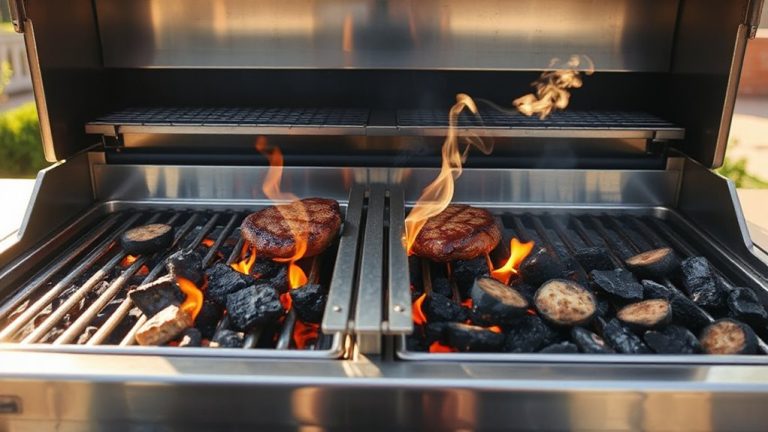
You can create a convection effect on your gas grill by setting up a two-zone heat system and spacing food properly. Keep space between items-1 to 2 inches-so hot air circulates like a convection oven. Place thicker cuts over direct heat, leaner meats and fish in cooler zones. Rotate food 180 degrees mid-cook to counter hot spots. Keep the lid closed to maintain airflow and even temperatures, and soon you’ll see how precision grilling transforms your results.
Notable Insights
- Use a two-zone heat setup to create convection-like airflow for even cooking and better temperature control.
- Space burgers and sausages at least 1 inch apart to allow hot air to circulate and prevent steaming.
- Position chicken thighs 1.5 inches apart to maximize airflow and ensure consistent browning and doneness.
- Place thicker cuts like ribeye over direct heat for searing, then move to indirect heat to finish evenly.
- Rotate food 180 degrees halfway through cooking to counteract hot spots and promote uniform results.
Use Two-Zone Heat for Even Cooking
While most people fire up their gas grill with all burners on high, setting up a two-zone heat configuration gives you far more control and delivers better results across a range of foods. You’ve got direct heat on one side, where flames hit the food-perfect for searing steaks or grilled vegetables that need a quick char. The other side uses indirect heat, with no burners lit underneath, ideal for gently cooking thicker items like chicken breasts or roasts without burning the outside. This setup mimics an oven’s convection effect, letting you manage temperature more effectively. You can start meat over direct heat to develop crust, then move it to indirect heat to finish cooking through evenly. It’s practical, reduces flare-ups, and gives consistent results-especially important when grilling delicate or unevenly shaped pieces. Proper zone management means fewer mistakes and better flavor.
Space Food to Let Heat Circulate
You already set up two zones to control cooking temperature, but how you arrange food on the grate matters just as much. Proper food spacing guarantees consistent heat flow, mimicking convection currents for even cooking. Crowding traps steam and blocks radiant heat, leading to uneven results and poor searing. Leave at least an inch between items to let hot air circulate freely.
| Food Type | Spacing Recommendation |
|---|---|
| Burgers | 1 inch apart |
| Chicken thighs | 1.5 inches apart |
| Veggie skewers | 1 inch apart |
| Steaks | 2 inches apart |
| Sausages | 1 inch apart |
Strategic placement enhances heat flow, reducing flare-ups and improving texture. You’ll see better browning and more predictable doneness. Effective food spacing isn’t just about room-it’s about airflow management. Treat the grill like an oven: open space helps, crowding hurts. Master this, and you’ll elevate every cook.
Put Each Cut Where It Cooks Best
Since different cuts of meat respond uniquely to heat, placing each one over the right zone on your grill makes a noticeable difference in how evenly it cooks and how well it retains juiciness. Thicker cuts like ribeye or chicken thighs benefit from direct placement over high heat, where intense flames deliver ideal searing, locking in juices and building flavorful crusts. But leaner steaks or delicate fish need caution-too much direct heat leads to overcooked edges and dry centers. Position them near the edges of the hot zone or use controlled indirect heat for more forgiving results. You’ll find that thicker, marbled cuts handle aggressive treatment better than thinner ones. By matching each piece to its ideal cooking spot, you maximize both texture and taste. Smart positioning isn’t just about space-it’s about understanding how heat interacts with different meats. This approach elevates your grilling from random to refined.
Rotate for Uniform Doneness
A well-executed rotation strategy keeps food cooking evenly across the surface, especially on a gas grill where hot spots can cause uneven browning or underdone patches. When you place food over direct heat, flipping or rotating it 180 degrees halfway through guarantees both sides get equal exposure to intense flames. For thicker cuts, start over direct heat to sear, then shift to indirect heat and rotate occasionally to let convection circulate warmth without scorching. You’ll notice juicier results with consistent texture-especially with chicken, burgers, or vegetables. Skipping rotation risks overcooking one side while the other lags. Think of it as balancing performance: direct heat builds flavor fast, while indirect heat sustains steady doneness. Rotating isn’t just moving food-it’s fine-tuning how heat works across your grill’s zones. Do it right, and you’re leveraging convection more effectively, even without a lid fan.
Fix Common Heat Problems
While gas grills offer precise temperature control, they’re not immune to inconsistent heating that can undermine even the most careful cooking strategy. You’ll often face hot spots or sudden temperature dips, especially with poor lid management. Keeping the lid closed maintains stable heat and encourages even cooking, mimicking convection-like conditions. Frequent peeking disrupts airflow and heat distribution, leading to uneven results. Flare ups prevention is also key-fat dripping onto burners causes sudden flames that char food and create smoke. Positioning fatty meats away from direct flame zones reduces this risk. Regularly cleaning the grease tray and checking for clogged burners helps sustain consistent heat. Proper setup and monitoring mean fewer surprises and better control. With smart lid management and flare ups prevention, you’re far more likely to achieve reliable, restaurant-quality results every time.
How Airflow Mimics a Convection Oven
You’ve already tackled uneven heat and flare ups by managing the lid and setting up your grill properly, but there’s another layer to mastering control-how airflow shapes cooking performance. When you close the lid, air circulates like in a convection oven, especially if burners create consistent heat. Hot spots often form near active burners, but smart food placement helps balance this. By leaving space between items, you turn the grill into a network of subtle wind tunnels that promote even cooking. These airflow channels reduce stagnation and help replicate the steady heat distribution seen in indoor convection ovens. While not as precise as kitchen appliances, gas grills with tight seals and adjustable vents come surprisingly close. You’re not just grilling-you’re engineering a micro-climate. Proper airflow doesn’t eliminate hot spots, but it moderates them, making results more predictable and textures more consistent across different proteins and vegetables.
On a final note
You’ve leveraged two-zone heat and strategic placement to mimic convection airflow, boosting control and consistency. This method improves browning and prevents hot spots, especially with thicker cuts or mixed食材. Rotating food guarantees even exposure, while proper spacing enhances circulation. Though not identical to an oven, the effect is surprisingly effective. With practice, your grill performs more efficiently, delivering restaurant-quality results through smart heat management and airflow optimization.