Perfecting Grilled Fish on a Portable Grill With Cedar Planks
Choose firm, fatty fish like salmon or halibut-they hold up well and absorb smoky flavor beautifully. Soak your cedar plank for at least an hour to prevent flare-ups and guarantee steady smoke. Set up your portable grill for indirect heat, keeping the plank away from direct flame. Sear the plank first, then let the fish steam and smoke gently with the lid closed. Season simply but deliberately-the right spices enhance without overpowering. Keep the lid shut to maintain consistent heat and juicy results, and you’ll discover even more ways to elevate your next outdoor meal.
Notable Insights
- Choose firm, fatty fish like salmon or halibut for better structure and smoke absorption on a portable grill.
- Soak cedar planks in clean water for at least one hour to prevent burning and ensure steady smoke release.
- Set up indirect heat by lighting one burner side, placing the plank on the cooler side for even cooking.
- Char the plank briefly over high heat before moving it to the cooler zone with fish to enhance flavor.
- Season fish with balanced spices and herbs, letting marinades sit 30 minutes for optimal flavor penetration.
Pick the Best Fish for Cedar Plank Grilling
When it comes to cedar plank grilling, the type of fish you choose makes all the difference-some hold up beautifully, while others fall apart or get overpowered by the smoky aroma. You’ll want a firm-fleshed option like salmon, halibut, or arctic char, as they maintain structure and absorb the wood’s essence without drying out. Your marine selection should prioritize sustainability and oil content; fattier fish respond better to slow, indirect heat, delivering richer flavor and moisture retention. Always conduct a freshness check: look for clear eyes, bright gills, and flesh that springs back when pressed. Avoid delicate fillets like sole-they’re too thin and can disintegrate during cooking. With the right cut, you’re not just grilling; you’re enhancing texture and taste through controlled wood-infused heat, making your portable setup surprisingly versatile. For optimal results, consider using pre-soaked cedar planks, which help prevent burning and ensure a steady release of aromatic smoke.
Soak Your Cedar Plank for Portable Grills
At least a full hour-though ideally closer to two-should be dedicated to soaking your cedar plank before using it on a portable grill, and skipping this step risks flare-ups or bitter smoke. You’re not just preventing combustion; you’re accessing cedar benefits like aromatic steam that infuses your fish with subtle, woodsy flavor. Submerging the plank guarantees it chars slowly, enhancing presentation and taste without burning through. This simple step is central to plank safety, reducing the chance of flames that could ruin your meal or damage your compact grill setup. Use clean, cold water-avoid additives, which can alter flavor or create hazardous fumes. Some swear by wine or beer, but water reliably delivers consistent results without compromising the natural profile of the fish. Always weigh the plank down to keep it fully submerged. Proper soaking balances performance and safety, making it a non-negotiable step for quality cedar-planked grilling on the go.
Set Up Your Portable Grill for Indirect Heat
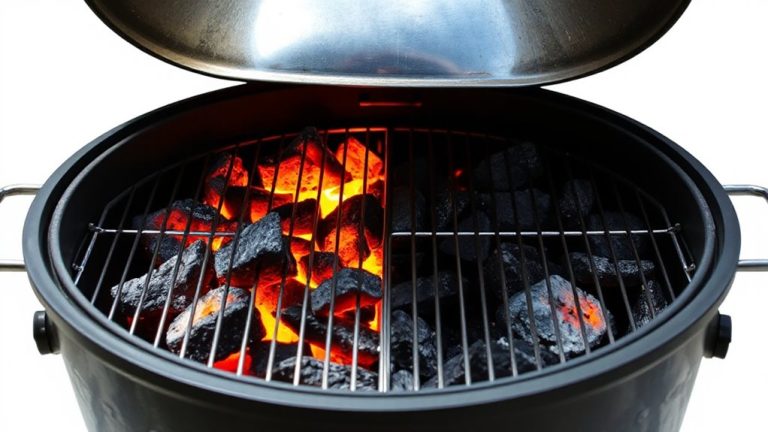
Though portable grills are compact by design, you can still achieve professional-style results by setting up for indirect heat, which lets you cook delicate fish evenly without scorching. To do this, position your burners on one side only-this creates a hot zone and a cooler zone, essential for proper temperature control. Place the cedar plank with fish on the cooler side so it cooks gently, surrounded by warm, circulated air rather than direct flame. Good grill placement matters too: set your unit on a stable, level surface away from wind, which can disrupt heat consistency. Most portable grills struggle with even heat distribution, but using this setup mimics the performance of larger models. Monitor the lid temperature closely-ideally keeping it between 300°F and 350°F-and resist the urge to lift the lid too often, as it disrupts steady cooking. This method prioritizes precision, turning limitations into advantages. For best results, choose a high-quality portable grill that offers reliable heat control and durable construction.
Grill Cedar-Planked Fish Step by Step
Now that your portable grill’s set up for indirect heat, you’re ready to put that configuration to work by grilling cedar-planked fish step by step. Soak your cedar plank for at least an hour, then place it on the grill’s hot side to char slightly before flipping to the cooler zone. Position your fish on the plank, close the lid, and let steam and smoke do the work. This method delivers excellent flavor while promoting fuel efficiency-less flare-up means more consistent heat and less fuel burn. It also reduces residue buildup, easing grill maintenance over time. The indirect setup protects delicate fish from scorching, ensuring even doneness and moisture retention. You’ll notice cleaner flavor development and better temperature control compared to direct grilling. With steady airflow and proper plank placement, your portable unit performs like a larger rig-efficient, reliable, and ideal for on-the-go outdoor cooking that doesn’t sacrifice quality. For enhanced smoky flavor, consider using a dedicated smoker for fish that complements plank-grilling techniques.
Season Your Fish for Maximum Flavor
A well-seasoned fillet makes all the difference when you’re grilling fish on a portable setup, where heat control and flavor retention are more challenging than on full-size grills. You’ll want to achieve proper marinade depth-letting the fish soak for at least 30 minutes guarantees flavors penetrate beyond the surface, enhancing moisture and taste during the shorter, less stable cook. Aim for a balanced spice balance: too much heat overpowers delicate flesh, while too little leaves it bland. A mix of smoked paprika, garlic, citrus zest, and a touch of brown sugar builds complexity without overwhelming. Salt is essential but apply it just before grilling to avoid drawing out moisture prematurely. Herbs like dill or thyme add aromatic notes that complement the cedar’s smokiness. Seasoning isn’t just about flavor-it’s about creating a resilient surface that seals in juices despite the grill’s fluctuating temps.
Pair With Sides That Complement Smoky Wood
Since smoke from wood like cedar or alder infuses your fish with a delicate, resinous aroma, choosing sides that mirror or contrast that profile without competing is key to a balanced meal. Grilled vegetables-zucchini, bell peppers, and asparagus-caramelize beautifully over direct heat, enhancing their natural sweetness while absorbing subtle smokiness from the planks. They’re not just practical; they complement the wood-toned depth of the fish without overwhelming it. Pair them with a bright citrus sauce-think lemon-dill or orange-ginger-and you introduce a revitalizing tang that cuts through the richness. These sauces don’t mask the smokiness; they lift it. Heavier starches like mashed potatoes work, but they dilute the experience. Opt instead for grilled corn or wild rice pilaf, ingredients that maintain the dish’s aromatic cohesion. Together, grilled vegetables and citrus sauces create a harmony of texture and flavor, making each bite cohesive, refined, and distinctly suited to outdoor cooking.
On a final note
You’ve now mastered grilling fish on a portable grill with cedar planks. Choosing the right fish, like salmon or trout, guarantees firm texture and rich flavor absorption. Soaking the plank prevents flare-ups while enhancing smoke infusion. Setting up for indirect heat maintains even cooking, avoiding hot spots. Proper seasoning boosts taste without overpowering the subtle wood notes. Paired with fresh sides, this method delivers restaurant-quality results outdoors. It’s efficient, flavorful, and ideal for backyard sessions or camping trips.