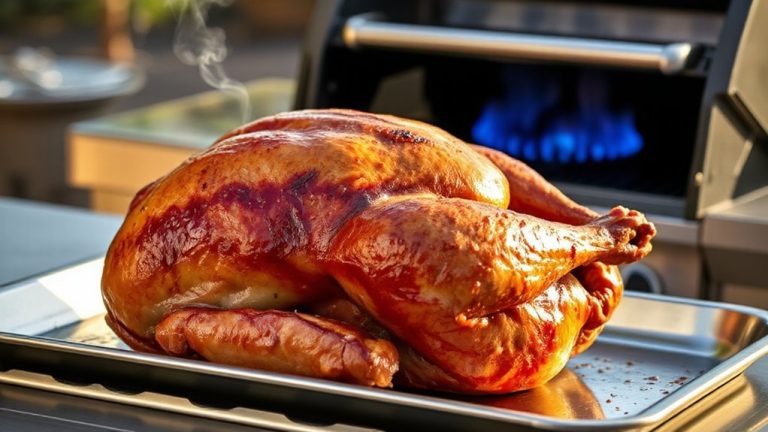
Using a Charcoal Divider to Maintain Two Independent Heat Zones in One Grill
You can use a charcoal divider to create two independent heat zones by loading coals on one side while leaving the other mostly bare, giving you direct and indirect cooking areas in one grill. A well-built divider-made from stainless steel or cast iron-keeps temperatures stable and prevents flare-ups from interfering. This setup lets you sear steaks while smoking pork shoulder, maximizing efficiency. Position it too close to the edge or use flimsy metal, though, and you’ll risk uneven airflow and warping. Choose wisely, and you’ll access smoker-like results with seamless control-there’s more to mastering this technique than just placement.
Notable Insights
- Position the charcoal divider to split the grill, concentrating coals on one side for distinct direct and indirect heat zones.
- Use high-quality stainless steel or cast iron dividers to withstand heat and prevent warping during long cooks.
- Load charcoal only on one side of the divider, leaving the other side open for indirect cooking without flames.
- Ensure the divider fits snugly and doesn’t block airflow or vents to maintain consistent combustion and temperature control.
- Cook delicate foods like fish over indirect heat while searing meats directly, enabling versatile cooking in one grill.
How a Charcoal Divider Works
While you might think splitting your charcoal evenly across the grill is the way to go, using a charcoal divider actually creates a more efficient and versatile cooking setup. The divider physically separates the fuel, allowing precise charcoal distribution on either side. You can pile more coals on one side for high-heat searing while leaving the other sparser for indirect cooking. This design enables consistent temperature separation, so flare-ups on the hot side won’t compromise delicate items nearby. Most dividers are made from stainless steel or cast iron, materials that withstand intense heat and last for seasons. They fit snugly inside most kettle grills without modification. Unlike makeshift solutions, a purpose-built divider stays in place and doesn’t interfere with airflow. It gives you greater control, turning a single grill into two distinct cooking environments-ideal for managing different food types simultaneously with reliability and ease.
Set up Two Heat Zones With a Divider
You’ll want to create two distinct heat zones by loading charcoal on one side of the divider, leaving the other side nearly bare-this gives you both direct and indirect cooking areas in the same grill. This setup grants superior heat control, letting you sear meats over high heat on one side while gently cooking delicate items on the other. Effective grill balance means you can manage flare-ups and avoid burning food without moving it between grills. The divider stabilizes temperature gradients, maintaining consistency across long cooks. You’ll appreciate the flexibility when roasting a chicken or smoking ribs while keeping vegetables warm. This method mimics the performance of multi-chamber smokers but within a single unit. With proper airflow and monitoring, you achieve restaurant-quality results at home. It’s not just convenience-it’s strategic heat control that transforms amateur BBQ into something precise and repeatable.
Pick the Right Charcoal Divider for Your Grill
A well-chosen charcoal divider can make or break your two-zone setup, so picking the right one matters. You need to take into account material compatibility-stainless steel works best with high heat and resists corrosion, while cast iron holds heat well but is heavier and prone to rust if not maintained. Avoid lightweight metals that warp over time. Divider stability is just as essential; a wobbly or ill-fitting divider shifts during cooking, disrupting airflow and temperature control. Look for models with reinforced edges or feet that grip the grill’s interior. Some universal dividers adapt to various kettle grills, but custom fits offer better performance. Always check how easy it is to clean and store. A solid divider should last years without bending or degrading, maintaining consistent separation between coals. Ultimately, investing in a durable, stable divider with proper material compatibility pays off in control, efficiency, and long-term BBQ success.
Cook Different Foods on Each Side
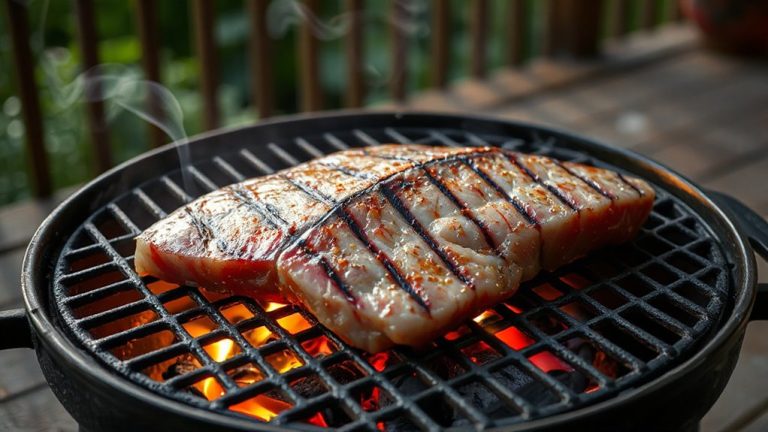
Because your charcoal divider creates distinct cooking zones, you can sear delicate fillets over direct heat on one side while letting tougher cuts like pork shoulders smoke gently on the indirect side, maximizing efficiency without sacrificing flavor or texture. This setup enhances food pairing by allowing complementary dishes to cook simultaneously, each benefiting from tailored heat levels. Flavor infusion improves too, as aromatic smoke circulates without scorching more sensitive items. You get better control, more consistent results, and the ability to serve a balanced, flavorful meal straight off the grill.
| Food Type | Heat Zone | Result |
|---|---|---|
| Fish fillets | Direct | Crisp sear, moist interior |
| Pork shoulder | Indirect | Tender, smoky pull-apart |
| Bell peppers | Indirect | Soft, charred edges |
Don’t Make These Charcoal Divider Mistakes
Ever wonder why your grilled fish sticks to the grates while your pork shoulder dries out, despite using a charcoal divider? Chances are, you’re making common mistakes. Placing the divider too close to one side restricts proper heat distribution, causing uneven airflow that sabotages temperature control. You need balanced oxygen flow on both sides to maintain distinct zones-otherwise, one side overheats while the other stalls. Also, using flimsy or non-heat-resistant materials leads to rapid material degradation. Thin steel warps, and cheap alloys may crack or corrode after just a few uses. Invest in a thick, stainless steel or cast iron divider designed for sustained high heat. Make certain it fits snugly but doesn’t block vents, allowing you to regulate combustion effectively. A poorly installed or low-quality divider doesn’t just reduce efficiency-it compromises the entire two-zone setup, leaving you with inconsistent results no matter how carefully you arrange your coals.
Maximize Your Grill With Two-Zone Cooking
When set up correctly, two-zone cooking transforms your grill into a versatile outdoor kitchen capable of handling everything from delicate fish to thick cuts of meat. You get direct heat for searing and indirect heat for gentler, even cooking-ideal for larger cuts like brisket or whole chickens. By using a charcoal divider, you maintain consistent separation, ensuring each zone performs reliably. This setup enhances smoke infusion, especially when adding wood chunks to the hot side, allowing richer flavor development without risking flare-ups. You also gain better control over flavor pairing, matching smoke profiles to specific foods without cross-contamination. Plus, the ability to move food between zones lets you manage doneness precisely, reducing overcooking. It’s not just about convenience-it’s about elevating your technique. With practice, you’ll find two-zone cooking maximizes efficiency, flavor, and consistency, making your grill more than just a heat source-it becomes a precision tool.
On a final note
You’ll get more versatility from your grill by using a charcoal divider to create two distinct heat zones. It lets you sear over direct heat on one side while gently cooking or warming on the other. Quality dividers fit snugly, block airflow between coals, and are made from durable, heat-resistant materials. When used correctly, they enhance control, reduce flare-ups, and improve meal consistency-making two-zone cooking not just practical, but essential for serious backyard BBQ.