Using a Reflective Fire Shield to Reduce Burn Risk While Cooking
You’re safer grilling with a reflective fire shield because it blocks and redirects intense radiant heat away from your body. Made from durable stainless steel or aluminized material, these shields reduce facial discomfort and lower burn risks during long cooking sessions. Position it between you and the flame, 6–12 inches from the fire, for ideal protection. Lightweight and easy to clean, they outperform mesh guards. Choose a stable, properly angled setup to maximize safety and comfort-there’s more to getting the most out of your shield.
Notable Insights
- Reflective fire shields block radiant heat, reducing burn risk by deflecting thermal energy away from the cook.
- Position the shield between you and the flame at chest height for optimal protection.
- Use high-quality stainless steel shields for superior heat reflection and long-term durability.
- Maintain 6 to 12 inches distance from the fire to prevent warping and ensure safety.
- Portable shields offer flexibility, while fixed models provide more consistent heat deflection and stability.
What Is a Reflective Fire Shield and Why You Need One
Safety out by the grill starts with the right gear-and one of the smartest additions you can make is a reflective fire shield. You’re already thinking about fire safety, but radiant heat often gets overlooked. This shield, typically made of stainless steel or aluminized material, acts as a barrier that redirects intense heat away from you. Thanks to its smooth, polished surface, it excels in heat reflection, keeping surrounding areas cooler and reducing burn risks. It’s lightweight, easy to install, and fits most standard grills. You’ll notice less discomfort during long searing sessions, especially in tight outdoor spaces. Unlike mesh guards, it doesn’t trap grease, so cleaning is simple and fire hazards stay low. For anyone serious about outdoor cooking, a reflective fire shield isn’t just an accessory-it’s a practical upgrade that enhances control, comfort, and overall fire safety during every cook.
How Reflective Fire Shields Reduce Radiant Heat Exposure
You’re already aware that standing by a hot grill means dealing with more than just open flames-there’s the constant wash of radiant heat that can make cooking uncomfortable and even dangerous over time. A reflective fire shield helps by redirecting that heat away from you through radiant heat reflection, minimizing direct exposure. The shield acts as a barrier that performs consistent thermal energy deflection, bouncing much of the rising thermal energy back toward the fire source rather than letting it radiate outward. This doesn’t eliminate heat entirely, but it greatly reduces the intensity you feel within your immediate cooking zone. You’ll notice less facial discomfort and lower ambient temperatures around your torso, making long grilling sessions more manageable. It’s not just about comfort-reducing radiant heat exposure lowers the risk of accidental burns over time, especially during frequent or extended outdoor cooking. Proper positioning guarantees maximum efficiency in redirecting energy where it’s needed most-into your food, not into you.
Best Materials for Effective Reflective Fire Shields
Effectiveness in a reflective fire shield hinges largely on material composition, as not all surfaces can withstand intense heat while maintaining ideal reflectivity. You need materials that offer both strong heat resistance and lasting material durability. Stainless steel is a top choice-reflective, tough, and resilient under prolonged exposure. It resists warping and oxidation, making it ideal for frequent use. Aluminum performs well in reflectivity but has lower heat resistance, posing risks near open flames. Polished steel offers a balance, though it demands regular upkeep to prevent rust. Ceramic-coated metals are emerging options, combining high reflectivity with improved heat resistance. Ultimately, your best bet is a shield made of thick-gauge stainless steel-it’s reliable, long-lasting, and consistently reflects radiant heat. Choose wisely, because material durability directly impacts safety and performance every time you cook.
How to Position Your Fire Shield for Safety and Comfort
When setting up your fire shield, placement is just as critical as the material it’s made from, since even the best stainless steel barrier won’t protect you if it’s positioned poorly. You should position the shield between yourself and the flame, angled slightly forward to deflect radiant heat upward-this angle adjustment guarantees protection without blocking your view or access. The ideal height placement aligns the top of the shield with your chest when standing, typically 40 to 48 inches tall, preventing heat exposure while allowing comfortable stirring or flipping. Avoid placing it too close to the fire; 6 to 12 inches away maintains effectiveness and reduces warping risk. A stable, level base is essential to prevent tipping. Proper positioning balances safety and usability, making your outdoor cooking experience both efficient and far less dangerous, especially during long grilling sessions.
Portable vs. Fixed Reflective Fire Shields: Which Is Better?
Why choose one design when your cooking setup might demand a different solution each time? Portable reflective fire shields offer flexibility-you set them up quickly, move them as needed, and store them with ease. They’re ideal if you cook in varying locations or use multiple fire pits. Fixed shields, meanwhile, provide consistent positioning and often better heat deflection due to sturdy installation. When considering durability comparison, fixed models usually win-they’re built to withstand constant exposure and maintain structural integrity over time. But portables aren’t far behind, especially those made from reinforced stainless steel or anodized aluminum. For cost efficiency, portables are hard to beat. You buy one shield and use it across grills, pits, or campfires, cutting down long-term expenses. Fixed shields require more materials and labor to install, raising initial costs. Your choice depends on how often and where you cook.
Key Features to Consider When Buying a Reflective Fire Shield
Though durability often tops the list, it’s just one piece of the puzzle when picking a reflective fire shield for your outdoor cooking setup. You’ll want strong heat resistance-look for materials like polished stainless steel or aluminized panels that deflect radiant energy without warping. These surfaces should withstand prolonged exposure to high temperatures, especially near grills or open flames. Equally important is installation ease; you don’t want to wrestle with complicated hardware mid-cookout. Shields that mount quickly with basic tools or adjustable brackets save time and fit more setups. Reflectivity matters too-a smooth, mirrored finish boosts efficiency by directing heat back toward the food. Consider size and adjustability to match your cooking surface. In the end, check for corrosion resistance if you’re using it outdoors long-term. A well-balanced mix of heat resistance, installation ease, and reflective performance guarantees both safety and better cooking control.
Using Reflective Fire Shields for Grilling, Camping, and Open-Flame Cooking
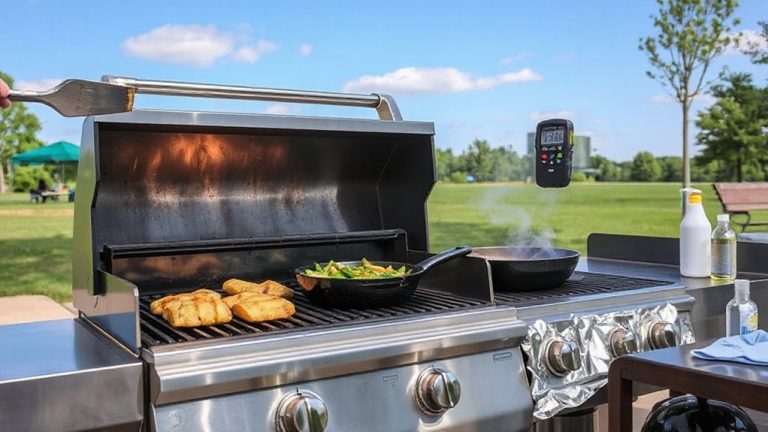
Since radiant heat can make or break your outdoor cook, positioning a reflective fire shield correctly improves both safety and cooking precision. You’re likely dealing with uneven temperatures and stray flames when grilling or camping, but heat reflection from a quality shield directs warmth where it’s needed-toward food, not your skin. This controlled distribution enhances browning and reduces hot spots on meats or vegetables. Flame containment keeps open fires predictable, especially in windy conditions, minimizing flare-ups and accidental spread. For backyard grilling, a compact shield works fine, but when camping or using campfire setups, opt for taller, durable models that fit your fire structure. Most are lightweight yet sturdy, often made from stainless steel or aluminized panels that resist warping. After use, wipe off soot and store in a dry place to prevent corrosion. Properly used, these shields aren’t just protective-they’re performance boosters.
On a final note
You’ll find a reflective fire shield a smart addition to your outdoor cooking setup. It effectively reduces radiant heat, protecting you during grilling or open-flame meals. Aluminum or polished steel models reflect heat well and resist warping. Proper positioning-angled between you and the fire-maximizes comfort and safety. Whether portable for camping or fixed for a backyard BBQ station, the right shield improves control, reduces burn risk, and enhances cooking efficiency without sacrificing performance.