How to Use a Grill Jacket to Retain Heat During Winter Two-Zone Cooking
Use a grill jacket to stabilize heat during winter two-zone cooking by trapping warm air and shielding your grill from wind. It keeps the sear zone hot and the indirect side consistent, improving temperature control. Choose a model suited to your grill type-gas or charcoal-for ideal insulation and safety. Install it snugly, avoiding contact with burners, and preheat with it in place. You’ll save fuel and maintain even cooking, especially when sheltered from the elements. There’s more to maximizing performance in cold weather just ahead.
Notable Insights
- Use a grill jacket designed for your grill type to maintain consistent two-zone temperatures in cold weather.
- Install the jacket snugly, ensuring flaps align with knobs and no fabric contacts burner components.
- Preheat the grill with the jacket on to boost heat retention and stabilize cooking zones.
- Position the grill in a sheltered area to maximize insulation and minimize wind chill effects.
- Operate burners at lower settings-jacket insulation reduces fuel use while sustaining target temperatures.
Why Cold Weather Ruins Two-Zone Grilling
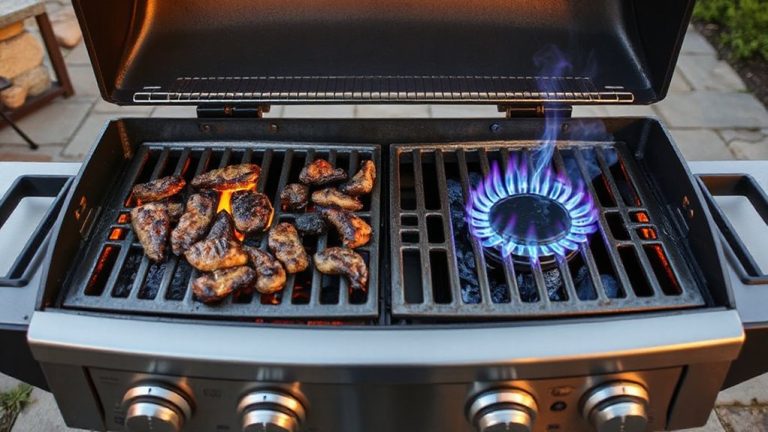
Even though two-zone grilling works well in mild conditions, cold weather throws off the balance you need to cook efficiently, especially when one side of the grill is meant to stay hot while the other remains cooler. You’re battling constant heat loss as frigid air pulls warmth from the grill surface and internal chamber, forcing burners to work harder and still fall short. That uneven temperature control disrupts searing on the hot side while delaying gentle cooking on the cool side. Worse, prolonged cook times due to poor heat retention lead to flavor dilution-smoke doesn’t cling as well, and natural juices evaporate before they caramelize. You lose the bold, concentrated taste you’re aiming for, especially with longer cooks like ribs or brisket. Fuel consumption climbs, cooking windows narrow, and results become unpredictable. Cold weather doesn’t just chill the air-it fundamentally undermines the precision two-zone grilling requires.
How Grill Jackets Fix Winter Temperature Swings
When you’re dealing with freezing gusts and dropping ambient temperatures, a grill jacket becomes more than just a cover-it’s a critical insulating layer that stabilizes heat and restores the balanced environment two-zone grilling demands. The jacket enhances thermal regulation by trapping hot air near the grill’s exterior, reducing drastic temperature drops caused by wind or cold exposure. This means your cooking zones stay consistent-hot on the direct side, cooler on the indirect-without constant fuel adjustment. It also promotes even heat diffusion across the cooking surface, preventing cold spots that sabotage searing and slow-roasting alike. You’ll notice fewer flare-ups and steadier burner performance, especially in gas grills. While not a cure-all, a well-fitted jacket markedly improves temperature control, making winter grilling far more predictable. With proper placement and a snug fit, you maintain efficiency and extend cooking windows, even in harsh conditions.
Gas vs. Charcoal: Choose the Right Grill Jacket
Why do some grill jackets work better on gas grills while others are built for charcoal? It boils down to heat output and design. Gas grills produce steady, controlled flames and usually have more metal components, so jackets made for them often use insulated, reflective grill material to manage moderate, even heat. Charcoal grills, though, generate intense, radiating heat and have different shapes, requiring thicker, more fire-resistant jackets with careful jacket compatibility. You’ll find that universal jackets sometimes fit both, but performance suffers-especially in winter. If you use a charcoal kettle, go with a jacket designed specifically for high heat and airflow control. For gas models, prioritize a snug fit around knobs and lids. Matching the grill material to your fuel type guarantees better heat retention and long-term durability. Choose wisely-it affects safety and cooking results.
How to Install a Grill Jacket (Without Fire Risks)
You’ve picked the right grill jacket for your setup-now it’s time to get it on properly. Safe installation is critical, especially when fire safety is a concern. Always begin with a cool, clean grill-never install the jacket while components are hot. Follow these key installation tips to avoid hazards and guarantee maximum performance:
| Step | Action | Purpose |
|---|---|---|
| 1 | Measure your grill dimensions | Guarantees snug fit, reduces fabric overlap near burners |
| 2 | Position access flaps over controls | Allows easy adjustments without full removal |
| 3 | Secure with heat-resistant straps | Prevents shifting without melting risks |
| 4 | Avoid contact with burner components | Minimizes fire safety risks from direct heat |
| 5 | Check airflow around vents | Maintains proper combustion and heat distribution |
Proper installation isn’t just about fit-it directly affects efficiency and safety during winter grilling.
Fuel-Saving Tips for Winter Grill Jacket Use
Though winter grilling demands more heat to overcome ambient cold, using a grill jacket wisely can cut your fuel consumption by nearly 30% compared to unprotected cooking. You maintain better insulation efficiency when you preheat your grill with the jacket in place, trapping heat where it’s needed. Position your setup away from gusty zones-excellent wind resistance is built into most jackets, but you still need a barrier like a wall or screen to maximize the effect. Avoid running your grill at full blast; the jacket retains heat so well you can lower the burners and still hit target temps. Keep the jacket clean and dry between uses to preserve its thermal properties. Over time, this reduces wear and sustains performance. You’ll notice less fuel gauge drop per session, especially in sub-40°F weather. Smart use means steady temps, fewer flare-ups, and yes, lower propane bills. It’s not magic-just smart thermal management.
On a final note
You’ll find a grill jacket essential for stable two-zone cooking in cold weather, cutting heat loss by up to 40% and smoothing temperature swings. It works best on gas and charcoal grills when properly installed, boosting fuel efficiency and control. Just make certain airflow isn’t restricted and check for clearance to prevent fire hazards. A well-maintained jacket extends grill life and performance, making it a smart, cost-effective upgrade for serious winter BBQ.