How to Replicate Kansas City Flavor Layers Using Sweet Rub, Smoke, and Thick Sauce
You start by applying a sweet rub with brown sugar, paprika, and garlic to well-marbled brisket or pork shoulder, letting it rest for a flavorful crust. Then, smoke low and slow at 225–250°F using hickory or hickory-cherry blends for that bold, balanced smokiness. Finish with a thick molasses-based sauce in the last 15 minutes, layering glaze for a sticky, glossy bark-each step builds the authentic KC profile. There’s more to mastering the balance just ahead.
Notable Insights
- Start with a sweet rub using a 3:2:1 ratio of brown sugar, spices, and salt for authentic Kansas City flavor.
- Choose well-marbled meats like brisket or pork shoulder to retain moisture during long, slow smoking.
- Smoke at 225°F–250°F using hickory or hickory-fruitwood blends for rich, balanced smoke flavor.
- Develop a thick, molasses-based sauce simmered to concentrate flavor and ensure proper cling.
- Apply sauce in thin layers during the final 15–20 minutes to caramelize without burning.
Use the Classic Kansas City Sweet Rub
A well-balanced sweet rub is the backbone of authentic Kansas City flavor, and getting it right makes a noticeable difference in your barbecue. You’ll want a precise sweet rub balance-too much sugar burns, while too little undermines the regional profile. The ideal rub ingredient ratios lean on brown sugar as the base, then blend in paprika, garlic powder, onion powder, salt, black pepper, and a touch of chili for depth. Most pitmasters stick to a 3:2:1 ratio of sugar to spices to salt, adjusting heat and smoke elements as needed. This balance enhances caramelization without overpowering the meat. When applied several hours before cooking, the rub forms a flavorful crust. It interacts seamlessly with smoke and sauce later, so accuracy now pays off. You’re not just seasoning-you’re building a foundation. Stick to tested proportions, and your rub will deliver consistent, authentic results every time. For deeper insight into regional flavors, exploring top-rated Kansas City BBQ sauces can help refine your sauce pairings.
Pick the Best Meat for Kansas City–Style BBQ
When it comes to Kansas City–style barbecue, brisket isn’t just a choice-it’s a benchmark. You’ll want to prioritize the best cuts for maximum flavor and texture, and brisket flat or packer cut delivers every time. It holds up well to long cooking, rendering fat slowly and absorbing the sweet rub deeply. But don’t overlook other top contenders-pork shoulder, beef ribs, and smoked sausage are staples in KC joints for good reason. Your meat selection shapes the entire outcome, so go for well-marbled, evenly graded pieces. Grass-fed or lean cuts often dry out, so choose wisely. A proper brisket should have a thick fat cap and consistent thickness throughout. This isn’t just about tradition-it’s practical. The best cuts retain moisture, develop bark, and pull apart with just the right resistance. Meat selection isn’t luck; it’s strategy. Get this right, and you’re already halfway to authentic Kansas City flavor. For even better results, consider starting with USDA Prime or Choice graded beef, as these best BBQ beef cuts are specifically recognized for their superior marbling and tenderness.
Smoke Low and Slow With Hickory or Fruitwood
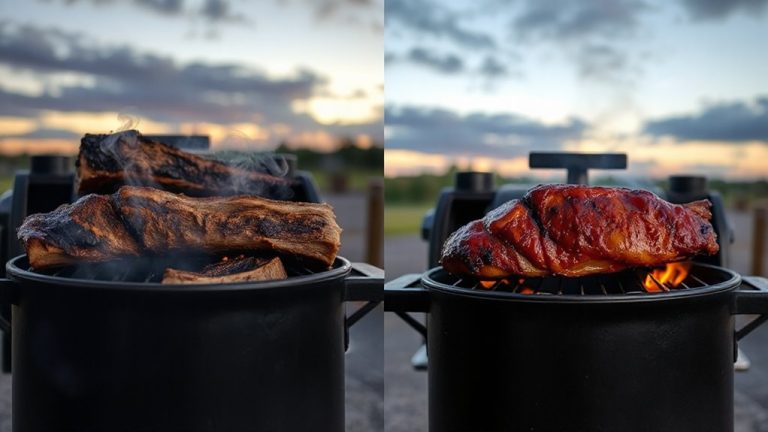
You’ve picked the right cut-now it’s time to treat it the way Kansas City pitmasters do: with patience and smoke. Low and slow isn’t just a phrase-it’s the foundation of deep, layered flavor. Maintain steady temperature control between 225°F and 250°F; any higher and you risk drying out the meat, any lower and the collagen won’t break down properly. Consistent heat guarantees even smoke penetration and predictable cook times. For wood selection, hickory delivers bold, earthy notes that define traditional Kansas City profiles, while fruitwoods like apple or cherry add subtle sweetness without overpowering. Many pitmasters blend both for balance. Hardwood logs or chunks outperform chips by burning longer and cleaner. Monitor smoke color-thin, blue smoke is ideal; thick, white smoke creates bitterness. Proper setup and attention to these details transform good barbecue into authentic, competition-level results.
Make a Molasses-Based BBQ Sauce
Let’s get one thing straight-molasses isn’t just a sweetener in Kansas City–style barbecue sauce; it’s the backbone that gives the sauce its signature depth and cling. You’ll rely on molasses sweetness to balance tangy vinegar and savory tomato, creating a complex flavor base that’s richer than plain sugar. When you simmer the sauce, the natural sugars caramelize slightly, deepening the profile without burning. Achieving ideal sauce thickness starts with using full-strength molasses, not light or blackstrap, which can turn bitter. Simmer gently for twenty minutes-this reduces water content and concentrates flavor while letting the sauce thicken naturally. Stir consistently to prevent sticking. A well-made molasses-based sauce clings to meat without dripping, proof of proper viscosity. This balance of molasses sweetness and sauce thickness defines authentic Kansas City style, delivering a glossy, robust coat that enhances, not overwhelms, smoked protein.
Sauce at the Right Time for Maximum Impact
Though slathering sauce too early can lead to burning or a soggy bark, applying it at the right moment enhances both texture and taste, locking in flavor without sacrificing the smoky crust you’ve spent hours building. You want to wait until the final 15 to 20 minutes of cooking-this is when glaze timing matters most. Your sauce consistency should be thick enough to cling, not drip, coating the meat evenly without pooling. Brush on thin layers, letting each set before adding more, so the sauce caramelizes into a glossy finish instead of steaming off. Too runny, and it won’t adhere properly; too thick, and it burns easily. Proper timing guarantees the sugars develop depth without charring, giving that signature Kansas City shine and stickiness. It’s not just flavor-it’s physics and chemistry working together for maximum impact.
Layer Flavors for Authentic Kansas City Taste
Because authentic Kansas City flavor isn’t built in a single step, layering ingredients throughout the cooking process makes all the difference-it’s what separates a good rack of ribs from a truly memorable one. You start with a sweet, smoky rub that sticks to the meat early, building the foundation for bark development as smoke adheres during low-and-slow cooking. That crust isn’t just texture-it’s concentrated flavor, formed through careful moisture control and consistent heat. Midway, a spritz of apple juice keeps things moist and helps new layers bond. Then comes the sauce-applied late, so it doesn’t burn. Each stage contributes to the overall flavor balance, letting sweetness, smoke, salt, and tang coexist without one overpowering the rest. When done right, the result is complex, rich, and unmistakably Kansas City. For the best foundation, choose high-quality grilling spices that enhance rather than mask the meat’s natural flavor.
On a final note
You’ve got the blueprint: a sugar-spice rub, hickory-smoked meat, and a thick molasses sauce. Timing the sauce right keeps the bark intact while adding shine and depth. Kansas City flavor hinges on layering-each step builds complexity. Low and slow isn’t just method; it’s essential for tender, smoky results. Master these elements, and you’re not just grilling-you’re crafting authentic, regional barbecue with balance, richness, and smoke penetration that defines the style.